


Evaluating diabetes care in primary healthcare centers in Abuja, Nigeria: a cross-sectional formative assessment
- PMID: 38969978
- PMCID: PMC11227205
- DOI: 10.1186/s12875-024-02487-1
Evaluating diabetes care in primary healthcare centers in Abuja, Nigeria: a cross-sectional formative assessment
Abstract
Introduction: Noncommunicable diseases (NCDs) are associated with high and rising burden of morbidity and mortality in sub-Saharan Africa, including Nigeria. Diabetes mellitus (DM) is among the leading causes of NCD-related deaths worldwide and is a foremost public health problem in Nigeria. As part of National policy, Nigeria has committed to implement the World Health Organization (WHO) Package of Essential Non-communicable Disease interventions for primary care. Implementing the intervention requires the availability of essential elements, including guidelines, trained staff, health management information systems (HMIS), equipment, and medications, in primary healthcare centers (PHCs). This study assessed the availability of the DM component of the WHO package, and the readiness of the health workers in these PHCs to implement a DM screening, evaluation, and management program to inform future adoption and implementation.
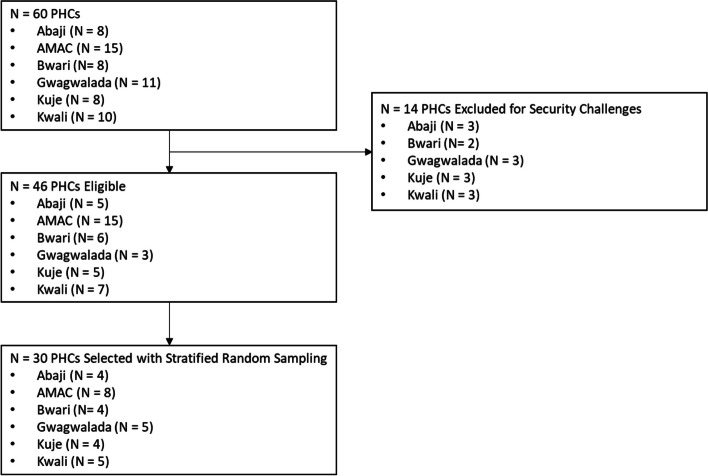
Methods: This cross-sectional formative assessment adapted the WHO Service Availability and Readiness Assessment (SARA) tool to survey 30 PHCs selected by multistage sampling for readiness to deliver DM diagnosis and care in Abuja, Nigeria, between August and October 2021. The SARA tool was adapted to focus on DM services and the availability and readiness indicator scores were calculated based on the proportion of PHCs with available DM care services, minimum staff requirement, diagnostic tests, equipment, medications, and national guidelines/protocols for DM care within the defined SARA domain.
Results: All 30 PHCs reported the availability of at least two full-time staff (median [interquartile range] = 5 [4-9]), which were mostly community health extension workers (median [interquartile range]) = 3 [1-4]. At least one staff member was recently trained in DM care in 11 PHCs (36%). The study also reported high availability of paper-based HMIS (100%), and DM screening services using a glucometer (87%), but low availability of DM job aids (27%), treatment (23%), and national guidelines/protocols (0%).
Conclusion: This formative assessment of PHCs' readiness to implement a DM screening, evaluation, and management program in Abuja demonstrated readiness to integrate DM care into PHCs regarding equipment, paper-based HMIS, and nonphysician health workers' availability. However, strategies are needed to promote DM health workforce training, provide DM management guidelines, and supply essential DM medications.
Keywords: Abuja; Diabetes care; Nigeria; Primary healthcare centers; Service availability; Service readiness.
© 2024. The Author(s).
Conflict of interest statement
MDH has received travel support from the American Heart Association and World Heart Federation and consulting fees from PwC Switzerland. MDH has an appointment at The George Institute for Global Health, which has a patent, license, and has received investment funding with intent to commercialize fixed-dose combination therapy through its social enterprise business, George Medicines. MDH has pending patents for heart failure polypills. All the other authors declare that they have no competing interests.
Figures
Update of
-
Evaluation of Primary Healthcare Centers' Service Availability and Readiness for Implementing Diabetes Care in Abuja, Nigeria: A Cross-Sectional, Formative Assessment.Res Sq [Preprint]. 2024 Mar 26:rs.3.rs-3959541. doi: 10.21203/rs.3.rs-3959541/v1. Res Sq. 2024. Update in: BMC Prim Care. 2024 Jul 5;25(1):243. doi: 10.1186/s12875-024-02487-1. PMID: 38585872 Free PMC article. Updated. Preprint.
References
-
- World Health Organization. Noncommunicable diseases country profiles.2018. Available at: https://www.who.int/publications/i/item/9789241514620 . Accessed 01 Dec 2023.
-
- World Health Organization. Noncommunicable diseases. 2023. Available at: https://www.who.int/news-room/fact-sheets/detail/noncommunicable-diseases . Accessed 01 Dec 2023
-
- International Diabetes Federation. Diabetes atlas. 10th ed. Brussels: International Diabetes Federation; 2021. Available athttps://idf.org/our-network/regions-and-members/africa/members/nigeria/. Accessed 01 Dec 2023
-
- Adeleye OJ. The hazardous terrain of diabetes mellitus in Nigeria: the time for action is now. Res J Health Sci. 2021;9(1):69–76.
-
- World Health Organization. WHO package essential noncommunicable (PEN) disease interventions for primary health care. 7 September 2020. Available at https://www.who.int/publications/i/item/9789240009226. Accessed 01 Dec 2023.
MeSH terms
LinkOut - more resources
Full Text Sources
Medical
Research Materials