


Investigation of coagulation and proteomics profiles in symptomatic feline hypertrophic cardiomyopathy and healthy control cats
- PMID: 38970022
- PMCID: PMC11225243
- DOI: 10.1186/s12917-024-04170-0
Investigation of coagulation and proteomics profiles in symptomatic feline hypertrophic cardiomyopathy and healthy control cats
Abstract
Background: Hypertrophic cardiomyopathy (HCM) is a crucial heart disease in cats. The clinical manifestations of HCM comprise pulmonary edema, dyspnea, syncope, arterial thromboembolism (ATE), and sudden cardiac death. D-dimer and prothrombin time (PT) are powerful biomarkers used to assess coagulation function. Dysregulation in these two biomarkers may be associated with HCM in cats. This study aims to assess D-dimer levels, PT, and proteomic profiling in healthy cats in comparison to cats with symptomatic HCM.
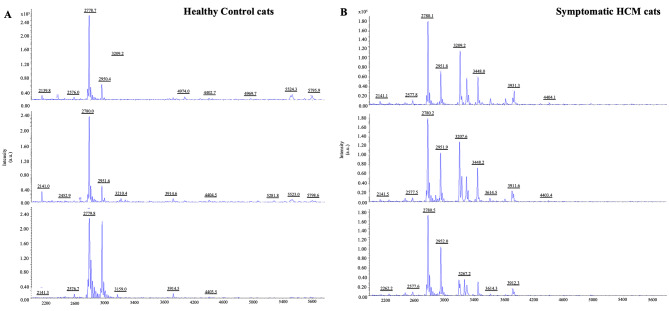
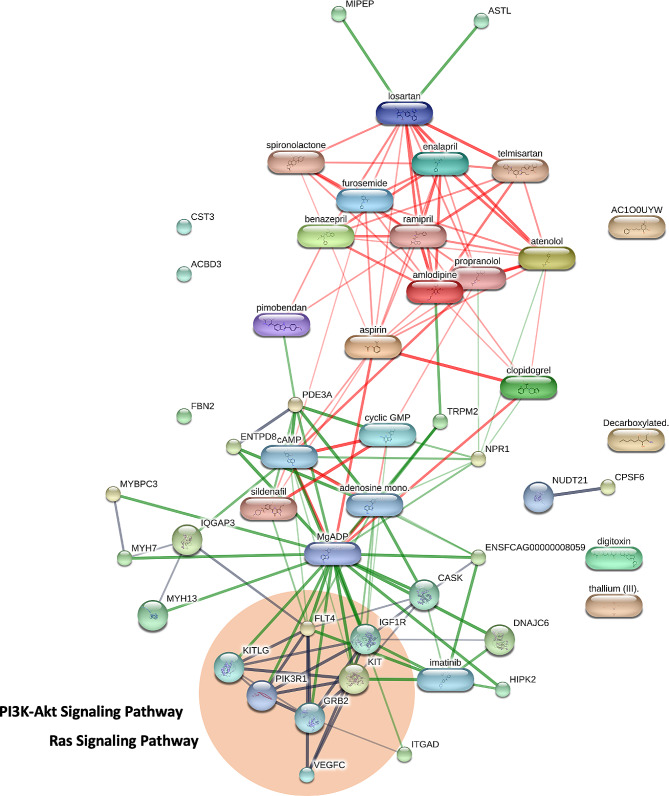
Results: Twenty-nine client-owned cats with HCM were enrolled, including 15 healthy control and 14 symptomatic HCM cats. The D-dimer concentration and PT were examined. Proteomic analysis was conducted by matrix-assisted laser desorption ionization time-of-flight (MALDI-TOF) mass spectrometry and liquid chromatography-tandem mass spectrometry (LC-MS/MS). In symptomatic cats, D-dimer levels were statistically significantly higher (mean ± SEM: 372.19 ng/ml ± 58.28) than in healthy cats (mean ± SEM: 208.54 ng/ml ± 10.92) with P-value of less than 0.01, while PT was statistically significantly lower in symptomatic cats (mean ± SEM: 9.8 s ± 0.15) compared to healthy cats (mean ± SEM: 11.08 s ± 0.23) with P-value of less than 0.0001. The proteomics analysis revealed upregulation of integrin subunit alpha M (ITGAM), elongin B (ELOB), and fibrillin 2 (FBN2) and downregulation of zinc finger protein 316 (ZNF316) and ectonucleoside triphosphate diphosphohydrolase 8 (ENTPD8) in symptomatic HCM cats. In addition, protein-drug interaction analysis identified the Ras signaling pathway and PI3K-Akt signaling pathway.
Conclusions: Cats with symptomatic HCM have higher D-dimer and lower PT than healthy cats. Proteomic profiles may be used as potential biomarkers for the detection and management of HCM in cats. The use of D-dimer as a biomarker for HCM detection and the use of proteomic profiling for a better understanding of disease mechanisms remain to be further studied in cats.
Keywords: Cats; D-dimer; Hypertrophic cardiomyopathy; Proteomics; Prothrombin time.
© 2024. The Author(s).
Conflict of interest statement
The authors declare no competing interests.
Figures



References
MeSH terms
Substances
LinkOut - more resources
Full Text Sources
Research Materials
Miscellaneous
