


Effect of altrenogest treatment before weaning on reproductive performance and production efficiency in primiparous and multiparous sows
- PMID: 38971810
- PMCID: PMC11227700
- DOI: 10.1186/s40813-024-00377-7
Effect of altrenogest treatment before weaning on reproductive performance and production efficiency in primiparous and multiparous sows
Abstract
Background: Most sows will experience negative energy balance during lactation resulting in impaired follicular development. This study aimed to treat 28-day lactating sows with altrenogest (ALT) to suppress follicle enlargement during lactation, and to assess the estrus and reproductive performance post-weaning.
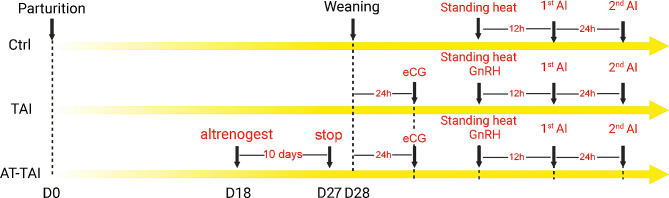
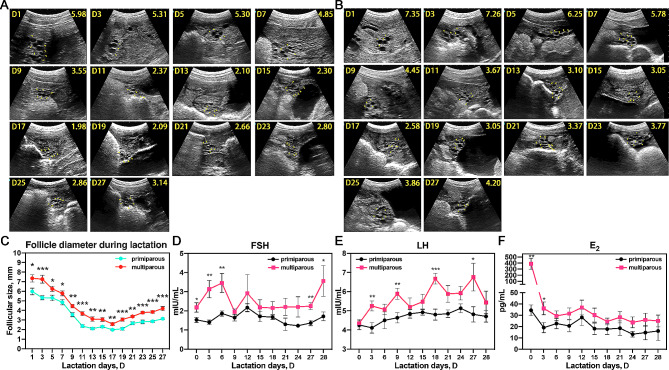
Methods: In this study, we conducted two trials. In trial 1, we monitored the follicular development of lactating sows including 10 primiparous sows and 10 multiparous sows during the whole lactation to confirm the ALT administration time. In trial 2, a total of 42 primiparous and 111 multiparous sows were allocated to three treatments: Ctrl (control group, n = 51): no treatment; TAI (timed artificial insemination group, n = 51): sows were injected with equine chorionic gonadotropin (eCG) after weaning 24 h and gonadotropin-releasing hormone (GnRH) when they expressed estrus; and AT-TAI (ALT treatment-timed artificial insemination group, n = 51): base on the process of TAI group, the sows were fed with 20 mg ALT per day before weaning 10 days. All sows were artificially inseminated twice at 12 h and 36 h after estrus. The follicle size changes and serum hormone levels were explored in this process.
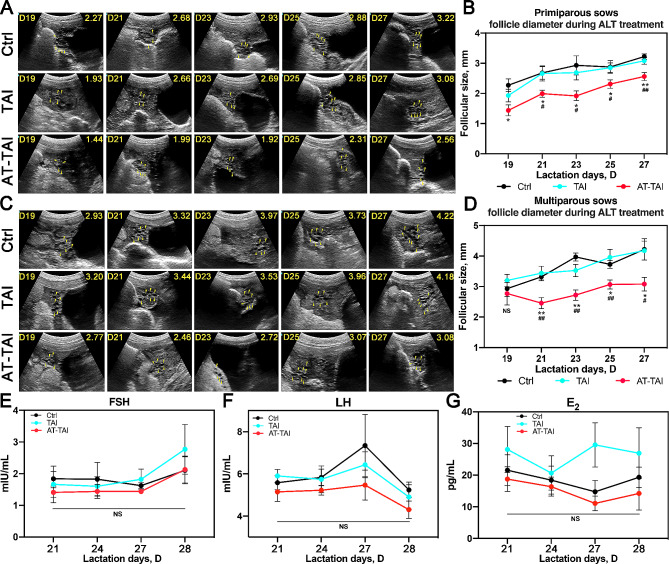
Results: Although the follicle size of multiparous sows was larger than primiparous sows during the whole lactation (P < 0.05), similar change trends of follicle size were observed in primiparous and multiparous sows. Meanwhile, the FSH, LH and E2 levels of multiparous sows were higher than primiparous sows. The ALT treatment significantly inhibits the increase in follicle size (P < 0.05) and reduces the serum levels of FSH, LH and E2 (P > 0.05). Additionally, ALT treatment increases estrus concentration and the preovulatory follicle size (P < 0.05), meanwhile, it delays the weaning-to-estrus interval (WEI, P < 0.001). However, the estrus rate, pregnancy rate, total pigs born and born alive did not differ between treatments (P > 0.05).
Conclusions: There were significant differences in the size of follicles in the lactation between primiparous and multiparous sows. ALT treatment during the last ten days of lactation concentrated estrus expression leading to higher work efficiency of breeder in batch production, however, with no improvement in reproductive performance.
Keywords: Altrenogest; Estrus concentration; Follicle development; Lactation; Weaning sows.
© 2024. The Author(s).
Conflict of interest statement
The authors declare no competing interests.
Figures

References
-
- Vesseur P, Kemp B, Hartog LA. Causes and Consequences of Variation in Weaning to Oestrus Interval in the Sow. PhD Thesis, 1997;165pp.
-
- Quesnel H. Nutritional and lactational effects on follicular development in the pig. Soc Reprod Fertil Suppl. 2009;66:121–34. - PubMed
-
- Lucy MC, Liu J, Boyd CK, Bracken CJ. Ovarian follicular growth in sows. Reprod Suppl. 2001;58:31–45. - PubMed
Grants and funding
- 2023-ZZ-004/the Postdoctoral Research Foundation of Beijing Academy of Agriculture and Forestry Sciences
- 2022YFD1300302/the National Key Research and Development Program, China
- KJCX20230218/the Scientific & Technological Innovation Ability Construction Project of the Beijing Academy of Agriculture and Forestry Sciences
- BAIC05-2024/the Beijing Innovation Consortium of Livestock Research System
- NCTIP-XD/B03/the National Center of Technology Innovation for Pigs
LinkOut - more resources
Full Text Sources
