


The role of anti-citrullinated protein antibody in pathogenesis of RA
- PMID: 38972923
- PMCID: PMC11228005
- DOI: 10.1007/s10238-024-01359-3
The role of anti-citrullinated protein antibody in pathogenesis of RA
Abstract
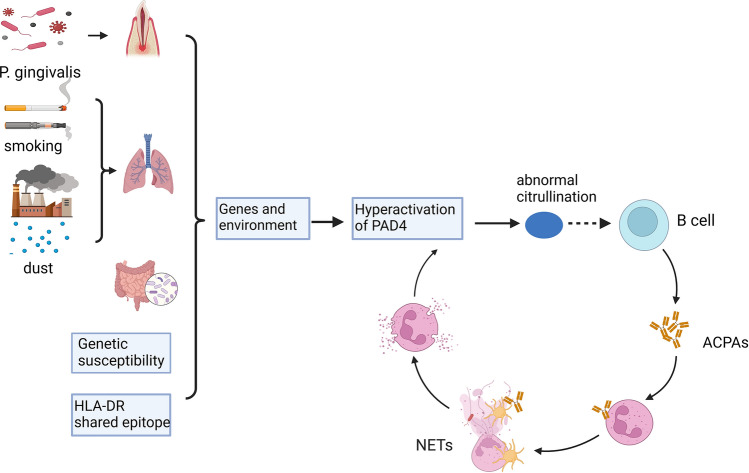
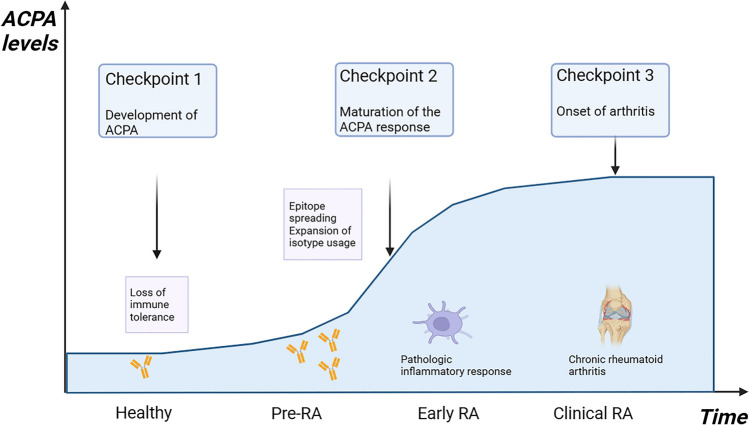
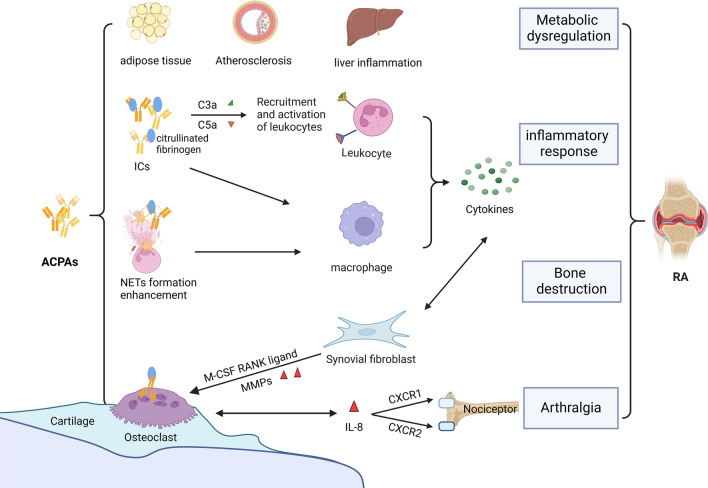
Rheumatoid arthritis (RA) is a common autoimmune rheumatic disease that causes chronic synovitis, bone erosion, and joint destruction. The autoantigens in RA include a wide array of posttranslational modified proteins, such as citrullinated proteins catalyzed by peptidyl arginine deiminase4a. Pathogenic anti-citrullinated protein antibodies (ACPAs) directed against a variety of citrullinated epitopes are abundant both in plasma and synovial fluid of RA patients. ACPAs play an important role in the onset and progression of RA. Intensive and extensive studies are being conducted to unveil the mechanisms of RA pathogenesis and evaluate the efficacy of some investigative drugs. In this review, we focus on the formation and pathogenic function of ACPAs.
Keywords: Anti-citrullinated protein antibody; Citrullination; Neutrophil extracellular traps; Peptidyl arginine deiminase 4; Rheumatoid arthritis.
© 2024. The Author(s).
Conflict of interest statement
The authors have no competing interests, or other interests that might be perceived to influence the results and/or discussion reported in this paper.
Figures
References
-
- Scott D, Wolfe F, Huizinga T. Rheumatoid arthritis. Lancet (London, England). 2010;376(9746):1094–108. - PubMed
-
- Mahler M, Martinez-Prat L, Sparks JA, Deane KD. Precision medicine in the care of rheumatoid arthritis: focus on prediction and prevention of future clinically-apparent disease. Autoimmun Rev. 2020;19(5): 102506. - PubMed
Publication types
MeSH terms
Substances
Grants and funding
LinkOut - more resources
Full Text Sources
Medical
