


A gibberellin-assisted study of the transcriptional and hormonal changes occurring at floral transition in peach buds (Prunus persica L. Batsch)
- PMID: 38973005
- PMCID: PMC11229236
- DOI: 10.1186/s12870-024-05360-6
A gibberellin-assisted study of the transcriptional and hormonal changes occurring at floral transition in peach buds (Prunus persica L. Batsch)
Abstract
Background: Flower load in peach is an important determinant of final fruit quality and is subjected to cost-effective agronomical practices, such as the thinning, to finely balance the sink-source relationships within the tree and drive the optimal amount of assimilates to the fruits. Floral transition in peach buds occurs as a result of the integration of specific environmental signals, such as light and temperature, into the endogenous pathways that induce the meristem to pass from vegetative to reproductive growth. The cross talk and integration of the different players, such as the genes and the hormones, are still partially unknown. In the present research, transcriptomics and hormone profiling were applied on bud samples at different developmental stages. A gibberellin treatment was used as a tool to identify the different phases of floral transition and characterize the bud sensitivity to gibberellins in terms of inhibition of floral transition.
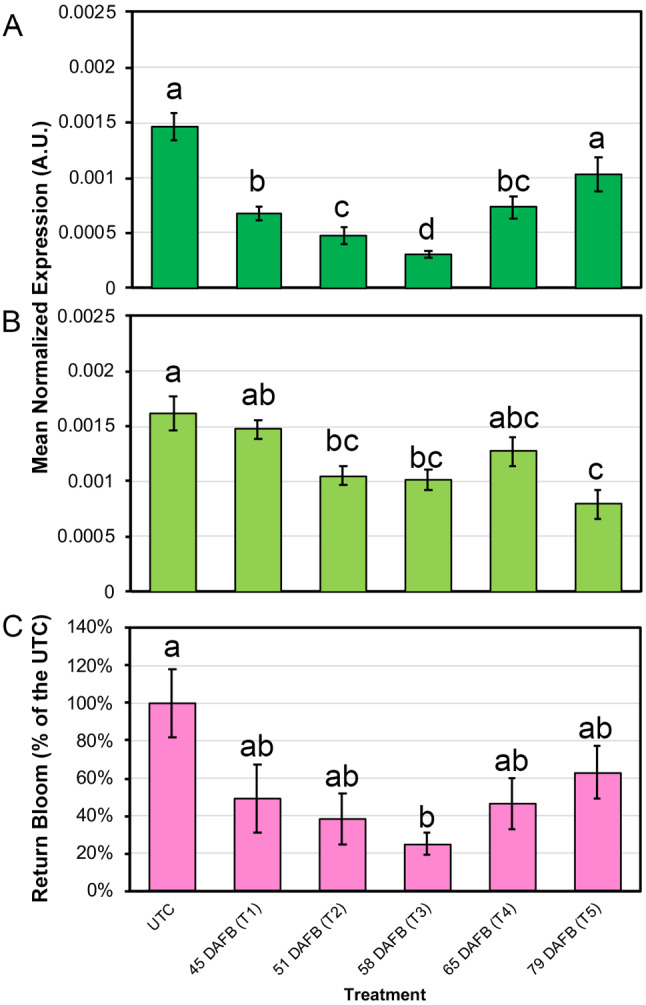
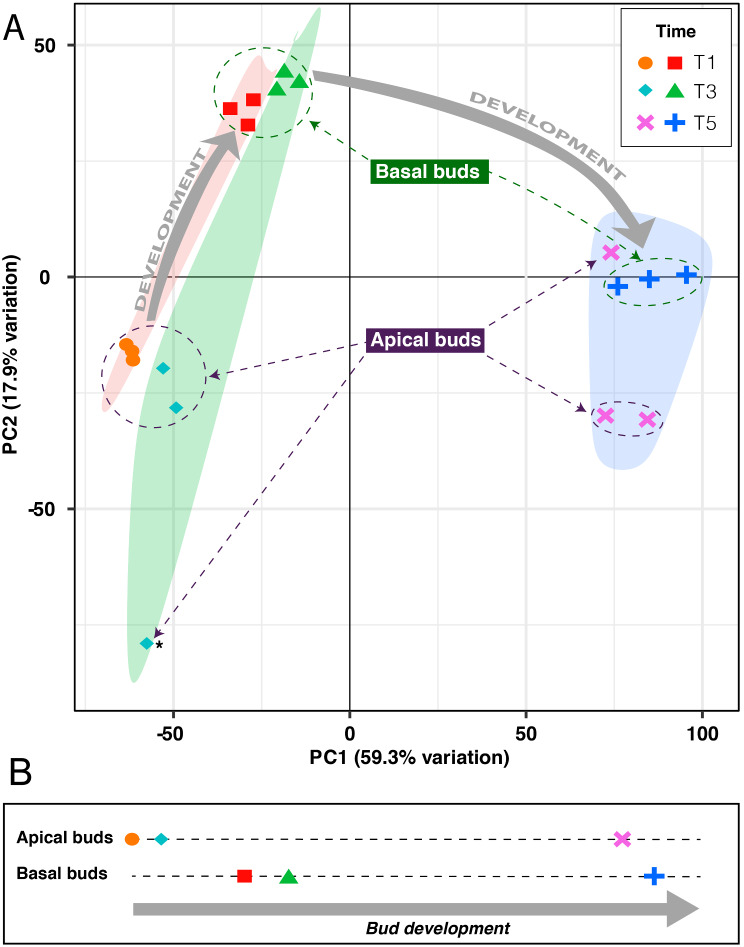
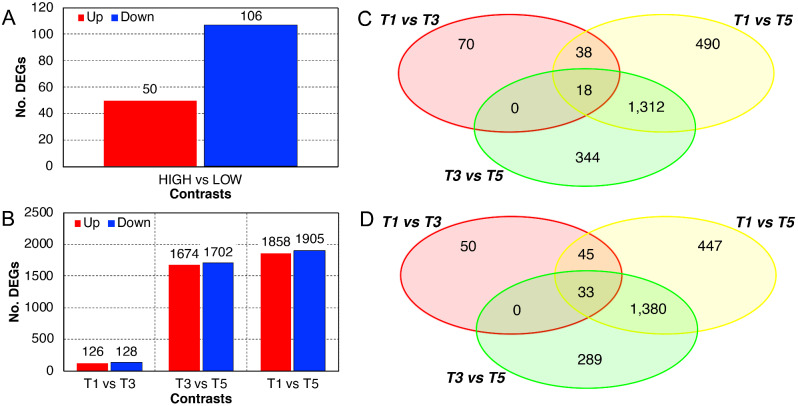
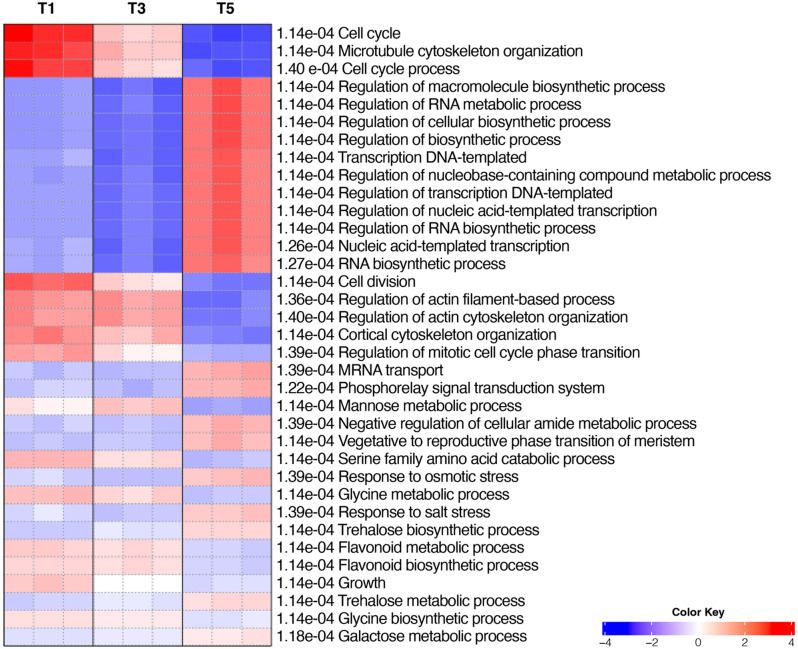
Results: Treatments with gibberellins showed different efficacies and pointed out a timeframe of maximum inhibition of floral transition in peach buds. Contextually, APETALA1 gene expression was shown to be a reliable marker of gibberellin efficacy in controlling this process. RNA-Seq transcriptomic analyses allowed to identify specific genes dealing with ROS, cell cycle, T6P, floral induction control and other processes, which are correlated with the bud sensitivity to gibberellins and possibly involved in bud development during its transition to the reproductive stage. Transcriptomic data integrated with the quantification of the main bioactive hormones in the bud allowed to identify the main hormonal regulators of floral transition in peach, with a pivotal role played by endogenous gibberellins and cytokinins.
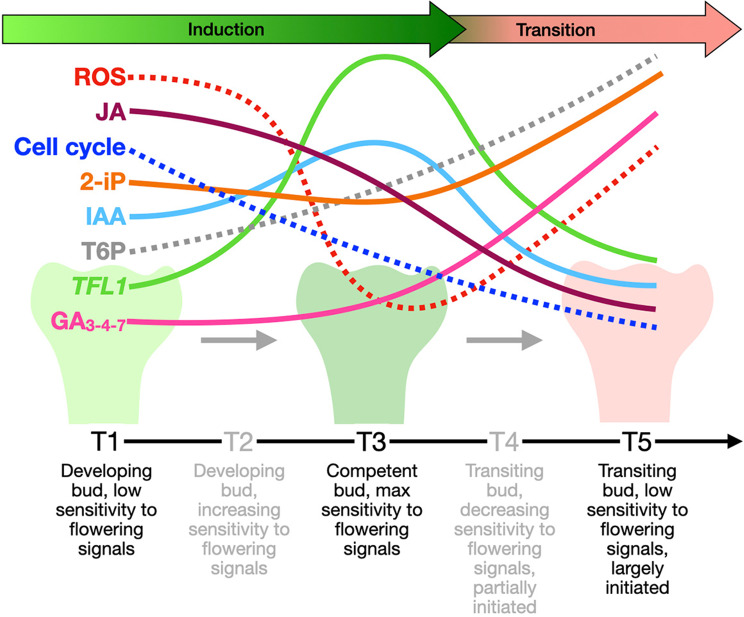
Conclusions: The peach bud undergoes different levels of receptivity to gibberellin inhibition. The stage with maximum responsiveness corresponded to a transcriptional and hormonal crossroad, involving both flowering inhibitors and inductors. Endogenous gibberellin levels increased only at the latest developmental stage, when floral transition was already partially achieved, and the bud was less sensitive to exogenous treatments. A physiological model summarizes the main findings and suggests new research ideas to improve our knowledge about floral transition in peach.
Keywords: Floral transition; Gene expression; Gibberellins; Peach buds; Thinning.
© 2024. The Author(s).
Conflict of interest statement
Alessandro Botton financial support was provided by Fine Agrochemicals Limited. If there are other authors, they declare that they have no known competing financial interests or personal relationships that could have appeared to influence the work reported in this paper.
Figures
References
-
- Luna V, Reinoso H, Lorenzo E, Bottini R, Abdala G. Dormancy in peach (Prunus persica L.) flower buds - II. Comparative morphology and phenology in floral and vegetative buds, and the effect of chilling and gibberellin A3. Trees. 1991;5:244–6. doi: 10.1007/BF00227532. - DOI
-
- Kinet JM, Lejeune P, Bernier G. Shoot-root interactions during floral transition: a possible role for cytokinins. Environ Exp Bot. 1993;33:459–69. doi: 10.1016/0098-8472(93)90019-C. - DOI
MeSH terms
Substances
LinkOut - more resources
Full Text Sources
Molecular Biology Databases
