The Application of High-Intensity Ultrasound on Wet-Dry Combined Aged Pork Loin Induces Physicochemical and Oxidative Alterations
- PMID: 38974732
- PMCID: PMC11222696
- DOI: 10.5851/kosfa.2024.e26
The Application of High-Intensity Ultrasound on Wet-Dry Combined Aged Pork Loin Induces Physicochemical and Oxidative Alterations
Abstract
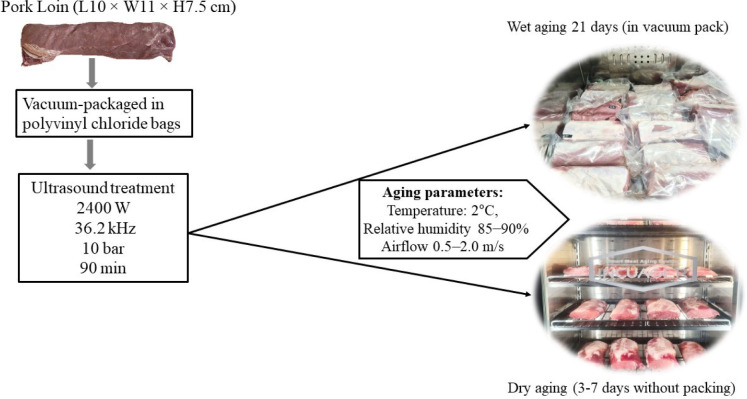
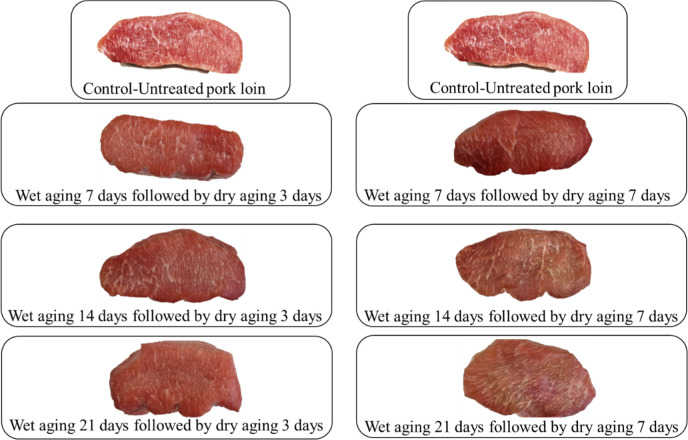
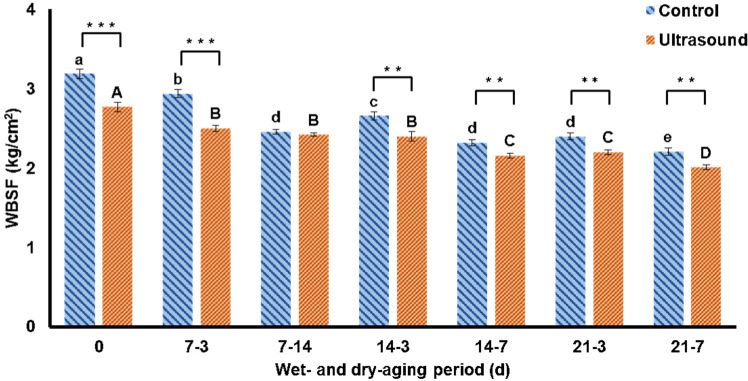
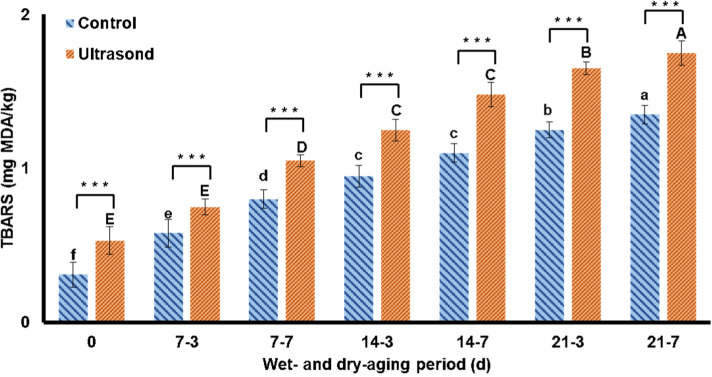
This research investigated the synergic outcome of high intensity ultrasound (HIU) treatment and wet-dry combined aging (WDCA) on physiochemical characteristics and lipid oxidation during refrigerated storage to ameliorate pork meat's quality and shelf life. The CIE b* values, cooking loss (CL %), and pH of the HIU treated samples were higher than those of the control over the aging period. They were significantly (p<0.05) modified by the aging period and ultrasound (US) treatment. However, the released water (RW %) and moisture were not significantly influenced by US treatment (p>0.05). The Warner-Bratzler shear force of HIU-treated samples was lower over control values except in 7-14 d, and it showed a significant difference between control and US treatment according to the significance of HIU (p<0.05). The thiobarbituric acid reactive substance of HIU-treated samples was significantly higher (p<0.05) than control values over the aging period. These results suggested that HIU treatment and WDCA showed a synergistic effect of maximizing the tenderness, but lipid oxidation was higher than before ultrasonic treatment. In agreement with this, the most favorable approach would involve implementing wet aging for a period of two weeks followed by dry aging for a period not exceeding one week after the application of HIU.
Keywords: combined wet-dry aging; high intensity ultrasound; lipid oxidation; physiochemical characteristics; pork loin.
© Korean Society for Food Science of Animal Resources.
Conflict of interest statement
The authors declare no potential conflicts of interest.
Figures
References
-
- Arowolo FK, Yang X, Blaser ME, Nicholson AM, Hosokawa E, Booth JR, Jobsis CT, Russell RL, Meudt JJ, Reichert JL, Crenshaw TD. Presence of lipid oxidation products in swine diet lowers pork quality and stability during storage. Meat Sci. 2020;160:107946. doi: 10.1016/j.meatsci.2019.107946. - DOI - PubMed
LinkOut - more resources
Full Text Sources