


Clinical and hematological characteristics of children infected with the omicron variant of SARS-CoV-2: role of the combination of the neutrophil: lymphocyte ratio and eosinophil count in distinguishing severe COVID-19
- PMID: 38978839
- PMCID: PMC11228319
- DOI: 10.3389/fped.2024.1305639
Clinical and hematological characteristics of children infected with the omicron variant of SARS-CoV-2: role of the combination of the neutrophil: lymphocyte ratio and eosinophil count in distinguishing severe COVID-19
Abstract
Purpose: Investigate the clinical/hematological characteristics of children infected with the Omicron variant of severe acute respiratory syndrome-coronavirus-2 (SARS-CoV-2) and identify an effective indicator to distinguish coronavirus disease 2019 (COVID-19) severity in children.
Methods: A retrospective study was conducted through electronic medical records from pediatric patients. The demographic, clinical, and routine blood test (RBT) features of children diagnosed by real-time PCR for SARS-CoV-2 were collected.
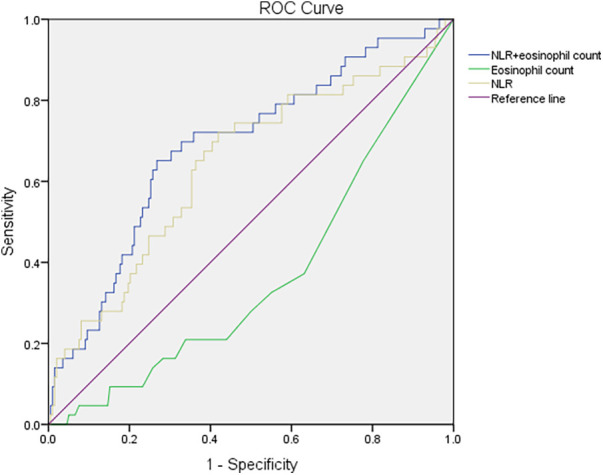
Results: Data of 261 patients were analyzed. The most common abnormality shown by RBTs was increased monocyte count (68%). Children had "mild-moderate" or "severe" forms of COVID-19. Prevalence of abnormal neutrophil count (p = 0.048), eosinophil count (p = 0.006), mean corpuscular volume (p = 0.033), mean platelet volume (p = 0.006), platelet-large cell ratio (p = 0.043), and red blood cell distribution width-standard deviation (p = 0.031) were significantly different in the two types. A combination of the neutrophil: lymphocyte ratio (NLR) and eosinophil count for diagnosing severe COVID-19 presented the largest AUC (0.688, 95% CI = 0.599-0.777; p < 0.001), and the AUC increased with a decrease in age.
Conclusions: Combination of the NLR and eosinophil count might be a promising indicator for identifying severe COVID-19 in children at infection onset.
Keywords: COVID-19; children; eosinophil count; neutrophil: lymphocyte ratio; severe infection.
© 2024 Jin, Ma, Zhang, Wang, Geng, Geng, Zhang, Gao, Zhou, Li, Gou, Zhong, Li, Hou and Lu.
Conflict of interest statement
The authors declare that the research was conducted in the absence of any commercial or financial relationships that could be construed as a potential conflict of interest. The author(s) declared that they were an editorial board member of Frontiers, at the time of submission. This had no impact on the peer review process and the final decision.
Figures
References
-
- Organization WH. Updated Working Definitions and Primary Actions for Sars-Cov-2 Variants (2023). Available online at: https://www.who.int/publications/m/item/updated-working-definitions-and-... (cited March 15, 2023).
LinkOut - more resources
Full Text Sources
Miscellaneous
