


Assessing LLIN distribution implementation using evidence-informed intervention core elements: a qualitative study in a resource-constrained setting
- PMID: 38982325
- PMCID: PMC11234562
- DOI: 10.1186/s12913-024-11223-5
Assessing LLIN distribution implementation using evidence-informed intervention core elements: a qualitative study in a resource-constrained setting
Abstract
Background: The National Malaria Elimination Programme implements the mass LLIN Distribution Campaigns in Ghana. Implementation science promotes the systematic study of social contexts, individual experiences, real-world environments, partnerships, and stakeholder consultations regarding the implementation of evidence-informed interventions. In this paper, we assess the core elements of the mass LLIN distribution campaign in a resource constrained setting to learn best implementation practices. Three core domains were assessed through the application of Galbraith's taxonomy (i.e., implementation, content, and pedagogy) for evidence-informed intervention implementation.
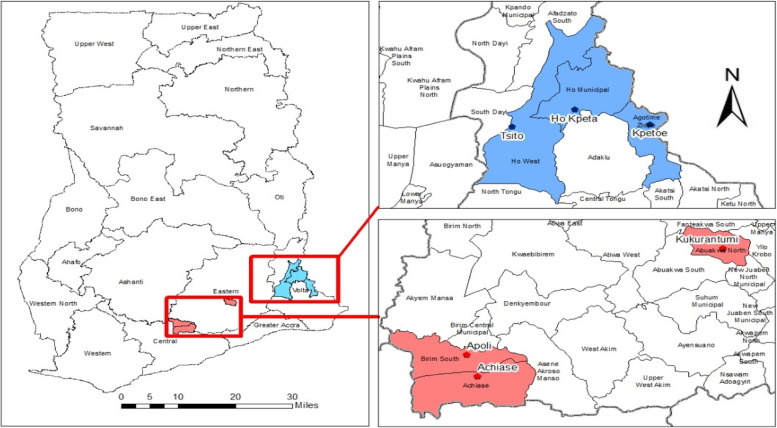
Methods: Six districts in two regions (Eastern and Volta) in Ghana participated in this study. Fourteen Focus Group Discussions (FGDs) were conducted across these communities. Eligible participants were purposively sampled considering age, occupation, gender, and care giving for children under 5 years and household head roles. All audio-recorded FGDs were transcribed verbatim, data was assessed and coded through deductive and inductive processes. NVivo software version 13 was used for the coding process. Themes were refined, legitimized, and the most compelling extracts selected to produce the results.
Results: Sixty-nine (69) caregivers of children under 5 years and sixty (60) household heads participated in the FGDs. All caregivers were females (69), whilst household heads included more males (41). Core elements identified under implementation domain of the LLIN distribution campaign in Ghana include the registration and distribution processes, preceded by engagement with traditional authorities and continuous involvement of community health volunteers during implementation. For pedagogy domain, core elements include delivery of intervention through outreaches, illustrations, demonstrations, and the use of multiple communication channels. Core elements realized within the content domain include information on effective malaria prevention, and provision of information to enhance their self-efficacy. Yet, participants noted gaps (e.g., misuse) in the desired behavioural outcome of LLIN use and a heavy campaign focus on women.
Conclusion and recommendations: Although the implementation of the mass LLIN distribution campaigns exhibit components of core elements of evidence informed interventions (implementation, content and pedagogy), it has not achieved its desired behavioural change intentions (i.e. continuous LLIN use). Future campaigns may consider use of continuous innovative pedagogical approaches at the community level and lessons learnt from this study to strengthen the implementation process of evidence-based health interventions. There is also the need for standardization of core elements to identify the number of core elements required within each domain to achieve efficacy.
Ethical approval: Ethical clearance was obtained from the Ghana Health Service Ethics Review Committee (GHS-ERC: 002/06/21) before the commencement of all data collection.
Keywords: Campaign; Core elements; Evidence informed interventions; Ghana; Implementation; Long lasting insecticide treated nets (LLIN); Malaria; Taxonomy.
© 2024. The Author(s).
Conflict of interest statement
The authors declare no competing interests.
Figures
References
-
- World Health Organization (WHO). World malaria report 2017. Geneva: World Health Organization. 2017.
-
- World Health Organization. Global technical strategy for malaria 2016-2030. Geneva: World Health Organization; 2015.
-
- Smith Paintain L, Awini E, Addei S, Kukula V, Nikoi C, Sarpong D, et al. Evaluation of a universal long-lasting insecticidal net (LLIN) distribution campaign in Ghana: cost effectiveness of distribution and hang-up activities. Malar J. 2014;13(1):1–13. doi: 10.1186/1475-2875-13-71. - DOI - PMC - PubMed
MeSH terms
LinkOut - more resources
Full Text Sources
Medical
