


Social Determinants of Health in Cardio-Oncology: Multi-Level Strategies to Overcome Disparities in Care: JACC: CardioOncology State-of-the-Art Review
- PMID: 38983377
- PMCID: PMC11229550
- DOI: 10.1016/j.jaccao.2024.02.009
Social Determinants of Health in Cardio-Oncology: Multi-Level Strategies to Overcome Disparities in Care: JACC: CardioOncology State-of-the-Art Review
Abstract
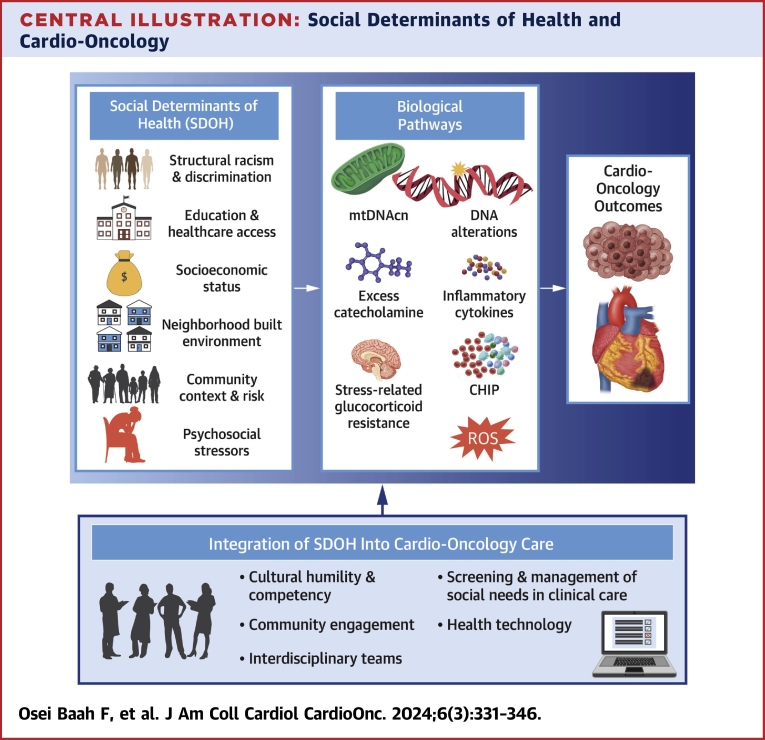
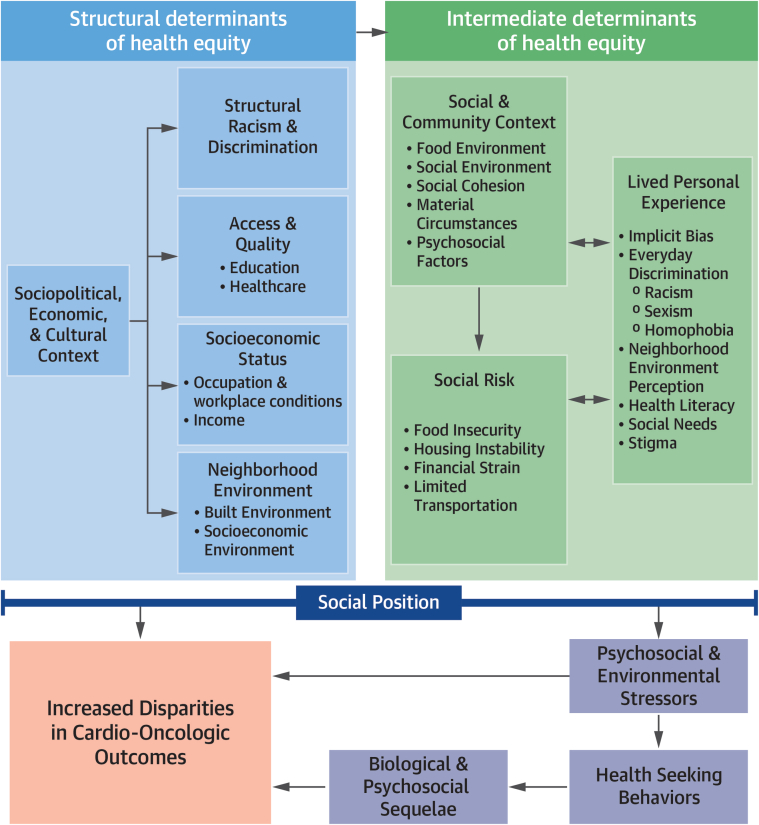
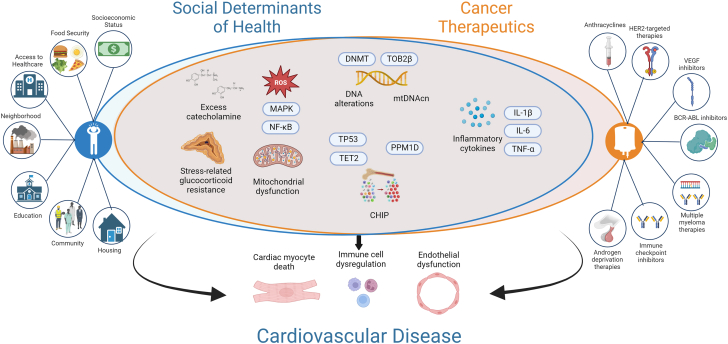
Addressing the need for more equitable cardio-oncology care requires attention to existing disparities in cardio-oncologic disease prevention and outcomes. This is particularly important among those affected by adverse social determinants of health (SDOH). The intricate relationship of SDOH, cancer diagnosis, and outcomes from cardiotoxicities associated with oncologic therapies is influenced by sociopolitical, economic, and cultural factors. Furthermore, mechanisms in cell signaling and epigenetic effects on gene expression link adverse SDOH to cancer and the CVD-related complications of oncologic therapies. To mitigate these disparities, a multifaceted strategy is needed that includes attention to health care access, policy, and community engagement for improved disease screening and management. Interdisciplinary teams must also promote cultural humility and competency and leverage new health technology to foster collaboration in addressing the impact of adverse SDOH in cardio-oncologic outcomes.
Keywords: cardio-oncology; cardiology; care delivery model; disparities; epidemiology; lifestyle risk factors; signaling pathways; social determinants of health.
© 2024 The Authors.
Conflict of interest statement
The Powell-Wiley Lab is funded by the Division of Intramural Research of the National, Heart, Lung, and Blood Institute of the National Institutes of Health and the Intramural Research Program of the National Institute on Minority Health and Health Disparities. This research was made possible through the National Institutes of Health Medical Research Scholars Program, a public-private partnership supported jointly by the National Institutes of Health and generous contributions to the Foundation for the National Institutes of Health from the Doris Duke Charitable Foundation, Genentech, the American Association for Dental Research, the Colgate-Palmolive Company, Elsevier, alumni of student research programs, and other individual supporters via contributions to the Foundation for the National Institutes of Health. The authors have reported that they have no relationships relevant to the contents of this paper to disclose.
Figures
References
-
- Ahmad M.H., Rizvi M.A., Fatima M., Mondal A.C. Pathophysiological implications of neuroinflammation mediated HPA axis dysregulation in the prognosis of cancer and depression. Mol Cell Endocrinol. 2021;520 - PubMed
-
- Gianotti L., Belcastro S., D’Agnano S., Tassone F. The stress axis in obesity and diabetes mellitus: an update. Endocrines. 2021;2:334–347.
-
- Stiekema L.C.A., Schnitzler J.G., Nahrendorf M., Stroes E.S.G. The maturation of a 'neural- hematopoietic' inflammatory axis in cardiovascular disease. Curr Opin Lipidol. 2017;28:507–512. - PubMed
Publication types
LinkOut - more resources
Full Text Sources
