


Multiethnic Perspectives of Shared Decision-Making in Hypertension: A Mixed-Methods Study
- PMID: 38989822
- PMCID: PMC11292762
- DOI: 10.1161/JAHA.123.032568
Multiethnic Perspectives of Shared Decision-Making in Hypertension: A Mixed-Methods Study
Abstract
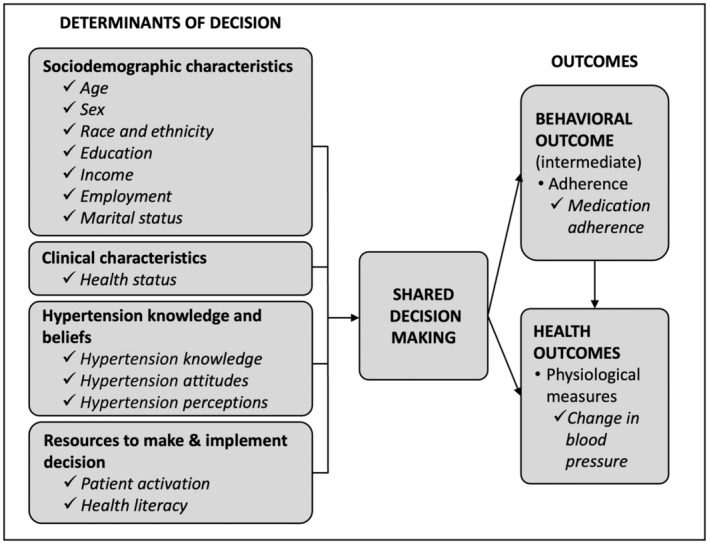
Background: Shared decision-making (SDM) has the potential to improve hypertension care quality and equity. However, research lacks diverse representation and evidence about how race and ethnicity affect SDM. Therefore, this study aims to explore SDM in the context of hypertension management.
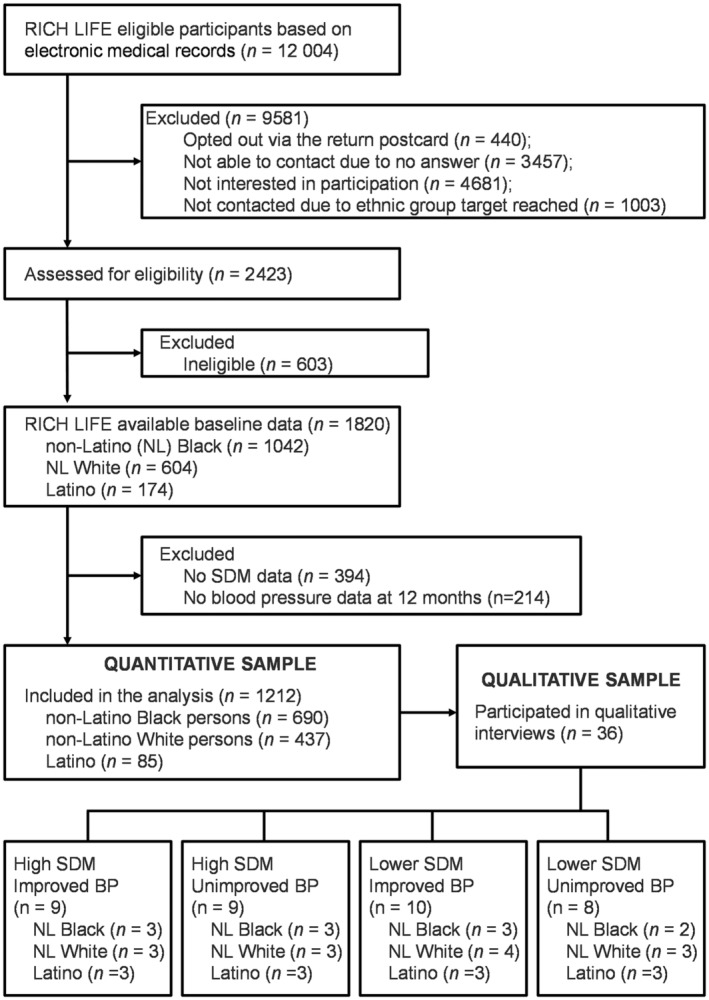
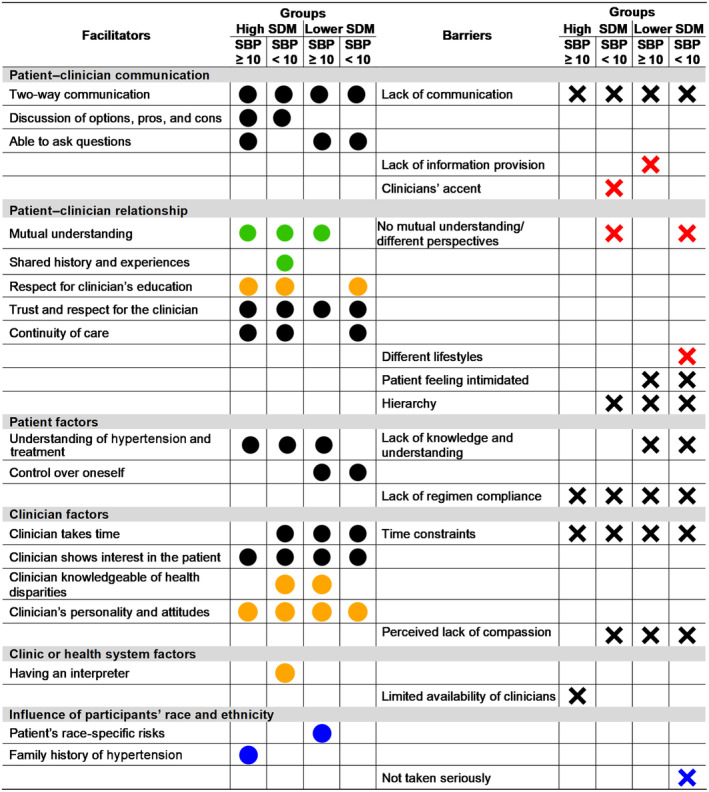
Methods and results: Explanatory sequential mixed-methods design was used. Quantitative data were sourced at baseline and 12-month follow up from RICH LIFE (Reducing Inequities in Care of Hypertension: Lifestyle Improvement for Everyone) participants (n=1212) with hypertension. Qualitative data were collected from semistructured individual interviews, at 12-month follow-up, with participants (n=36) selected based on their SDM scores and blood pressure outcome. Patients were cross- categorized based on high or low SDM scores and systolic blood pressure reduction of ≥10 or <10 mm Hg. Multinomial logistic regression analysis showed that predictors of SDM scores and blood pressure outcome were race and ethnicity (relative risk ratio [RRR], 1.64; P=0.029), age (RRR, 1.03; P=0.002), educational level (RRR, 1.87; P=0.016), patient activation (RRR, 0.98; P<0.001; RRR, 0.99; P=0.039), and hypertension knowledge (RRR, 2.2; P<0.001; and RRR, 1.57; P=0.045). Qualitative and mixed-methods findings highlight that provider-patient communication and relationship influenced SDM, being emphasized both as facilitators and barriers. Other facilitators were patients' understanding of hypertension; clinicians' interest in the patient, and clinicians' personality and attitudes; and barriers included perceived lack of compassion, relationship hierarchy, and time constraints.
Conclusions: Participants with different SDM scores and blood pressure outcomes varied in determinants of decision and descriptions of contextual factors influencing SDM. Results provide actionable information, are novel, and expand our understanding of factors influencing SDM in hypertension.
Keywords: health equity; hypertension; mixed‐methods; shared decision‐making.
Figures
References
-
- Patient Protection and Affordable Care Act (PPACA) ‐ H.R.3590. In: 111th Congress (2009–2010), United States; 2010:119–1024.
MeSH terms
LinkOut - more resources
Full Text Sources
Medical
