


Natural variation of TBR confers plant zinc toxicity tolerance through root cell wall pectin methylesterification
- PMID: 38992052
- PMCID: PMC11239920
- DOI: 10.1038/s41467-024-50106-5
Natural variation of TBR confers plant zinc toxicity tolerance through root cell wall pectin methylesterification
Abstract
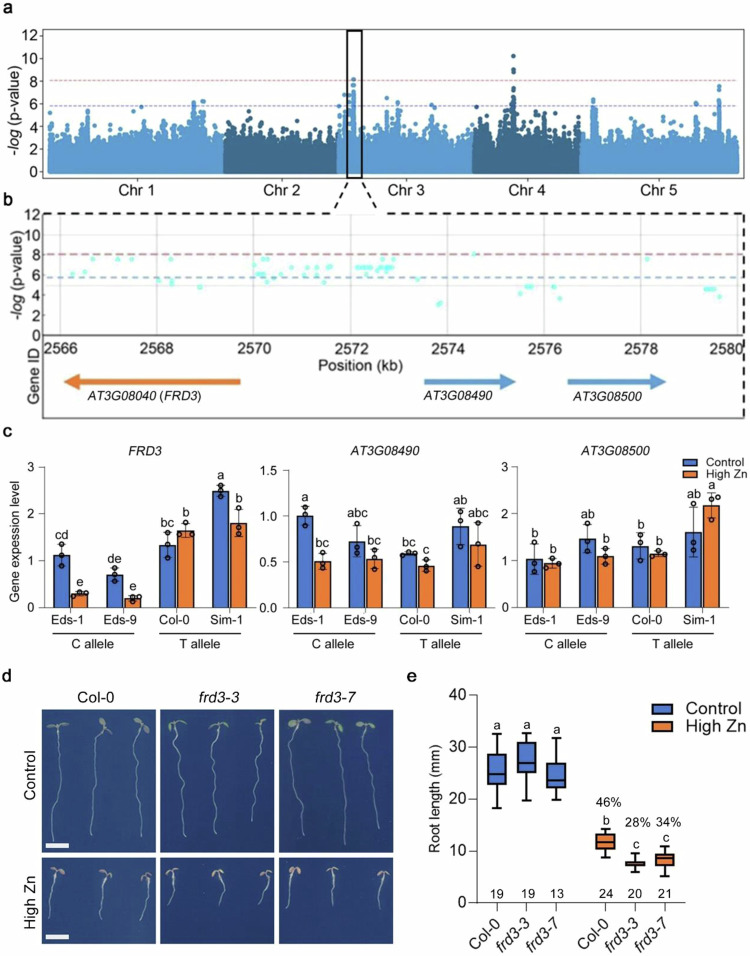
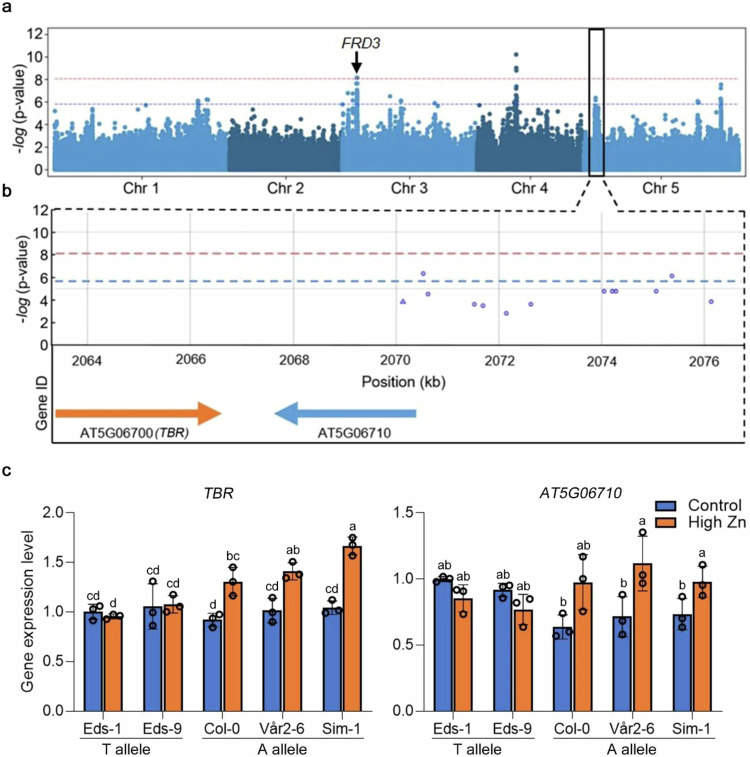
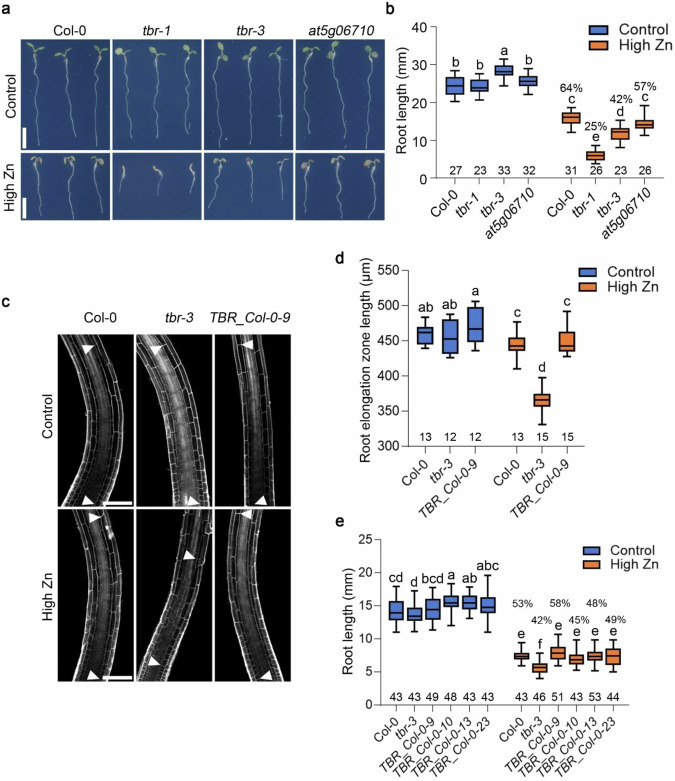
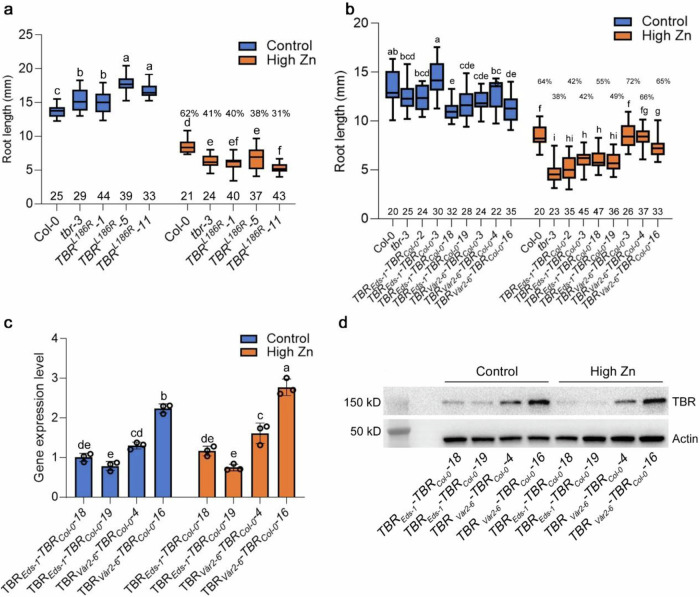
Zinc (Zn) is an essential micronutrient but can be cytotoxic when present in excess. Plants have evolved mechanisms to tolerate Zn toxicity. To identify genetic loci responsible for natural variation of plant tolerance to Zn toxicity, we conduct genome-wide association studies for root growth responses to high Zn and identify 21 significant associated loci. Among these loci, we identify Trichome Birefringence (TBR) allelic variation determining root growth variation in high Zn conditions. Natural alleles of TBR determine TBR transcript and protein levels which affect pectin methylesterification in root cell walls. Together with previously published data showing that pectin methylesterification increase goes along with decreased Zn binding to cell walls in TBR mutants, our findings lead to a model in which TBR allelic variation enables Zn tolerance through modulating root cell wall pectin methylesterification. The role of TBR in Zn tolerance is conserved across dicot and monocot plant species.
© 2024. The Author(s).
Conflict of interest statement
The authors declare no competing interests.
Figures



References
-
- Nagajyoti PC, Lee KD, Sreekanth TVM. Heavy metals, occurrence and toxicity for plants: a review. Environ. chem. Lett. 2010;8:199–216. doi: 10.1007/s10311-010-0297-8. - DOI
-
- Marschner, P. Mineral Nutrition of Higher Plants 3rd edn, (London: Academic Press, 2012).
-
- Chaney, R. L. Zinc phytotoxicity. In: Robson A. D., ed. Zinc in soil and plants. Dordrecht, the Netherlands: Kluwer Academic Publishers, 135–150 (1993).
MeSH terms
Substances
Grants and funding
LinkOut - more resources
Full Text Sources
