


Cladribine Use in Xanthoma Disseminatum: A Rare Case Presentation and Brief Updated Literature Review
- PMID: 38993455
- PMCID: PMC11238744
- DOI: 10.7759/cureus.62168
Cladribine Use in Xanthoma Disseminatum: A Rare Case Presentation and Brief Updated Literature Review
Abstract
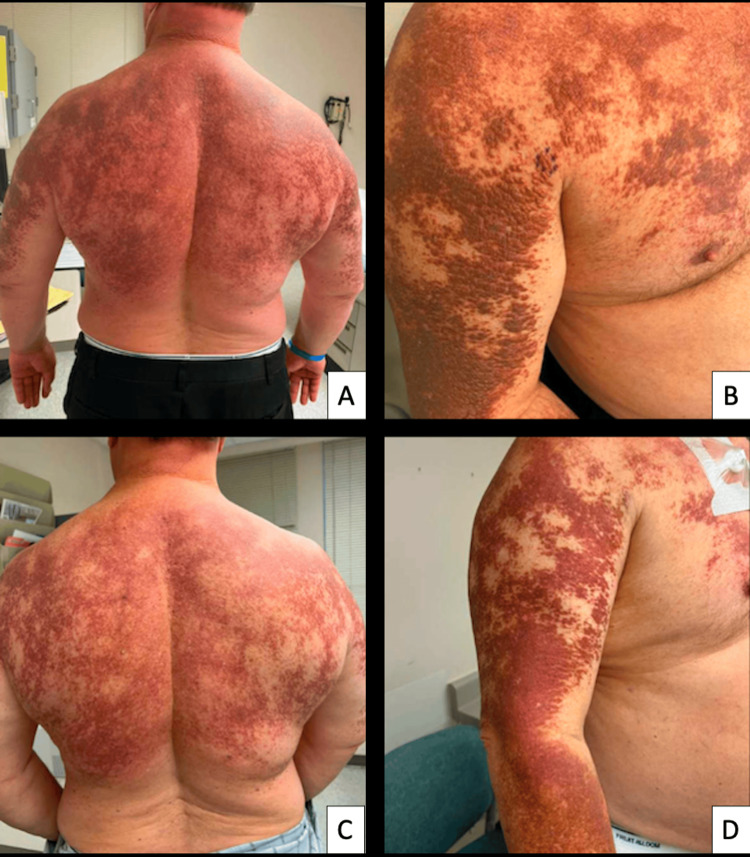
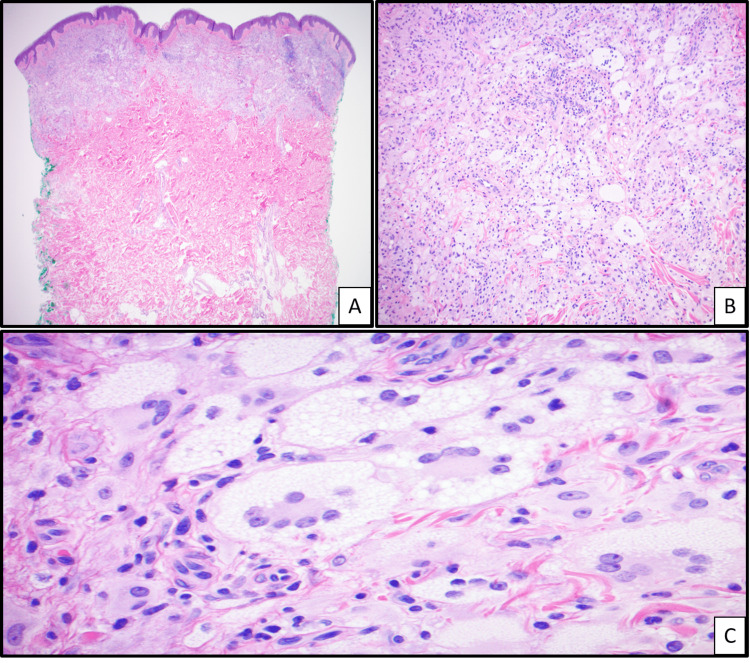
Xanthoma disseminatum (XD) is a rare, non-Langerhans cell histiocytosis. While treatment is notoriously difficult, 2-chlorodeoxyadenosine (cladribine) has recently emerged as a potential effective therapeutic option. Here, we describe the case of a 65-year-old male with XD who experienced significant cutaneous improvement after cladribine treatment. We also provide an updated literature review on cladribine use in patients with XD in light of reported adverse effects (AEs). While the efficacy of cladribine in XD is clear, no consensus exists for treatment duration and AE management. Hence, we strongly encourage interdisciplinary discourse involving dermatology and oncology in these cases.
Keywords: adverse effects; cladribine; non-langerhans cell histiocytosis; oncology; therapeutics.
Copyright © 2024, Gayed et al.
Conflict of interest statement
Human subjects: Consent was obtained or waived by all participants in this study. Conflicts of interest: In compliance with the ICMJE uniform disclosure form, all authors declare the following: Payment/services info: All authors have declared that no financial support was received from any organization for the submitted work. Financial relationships: All authors have declared that they have no financial relationships at present or within the previous three years with any organizations that might have an interest in the submitted work. Other relationships: All authors have declared that there are no other relationships or activities that could appear to have influenced the submitted work.
Figures
References
-
- Xanthoma disseminatum. Altman J, Winkelmann RK. Arch Dermatol. 1962;86:582–596.
-
- The various clinical patterns of xanthoma disseminatum. Considerations on seven cases and review of the literature. Caputo R, Veraldi S, Grimalt R, Gianotti R, Tosti A, Varotti C, de Kaminsky AR. Dermatology. 1995;190:19–24. - PubMed
-
- Xanthoma disseminatum: effective therapy with 2-chlorodeoxyadenosine in a case series. Khezri F, Gibson LE, Tefferi A. Arch Dermatol. 2011;147:459–464. - PubMed
-
- Xanthoma disseminatum effectively treated with 2-chlorodeoxyadenosin (cladribine): a Chinese case series and mini review of the literature. Tuan H, Kang L, Zhou EY, et al. Eur J Dermatol. 2019;29:538–539. - PubMed
Publication types
LinkOut - more resources
Full Text Sources