


BK polyomavirus infection: more than 50 years and still a threat to kidney transplant recipients
- PMID: 38993764
- PMCID: PMC11235301
- DOI: 10.3389/frtra.2024.1309927
BK polyomavirus infection: more than 50 years and still a threat to kidney transplant recipients
Abstract
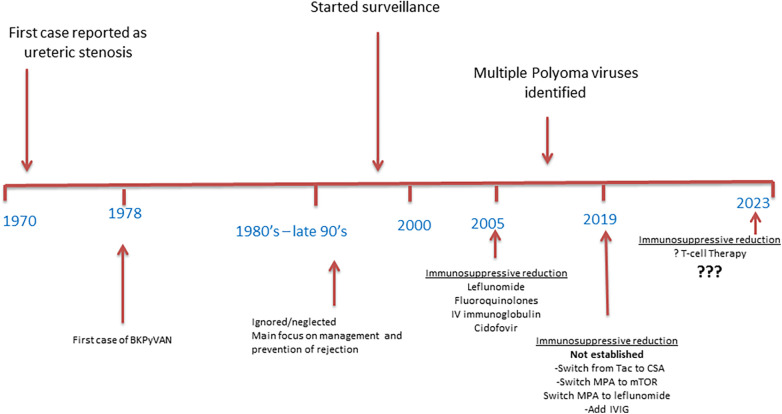
BK polyomavirus (BKPyV) is a ubiquitous human polyomavirus and a major infection after kidney transplantation, primarily due to immunosuppression. BKPyV reactivation can manifest as viruria in 30%-40%, viremia in 10%-20%, and BK polyomavirus-associated nephropathy (BKPyVAN) in 1%-10% of recipients. BKPyVAN is an important cause of kidney graft failure. Although the first case of BKPyV was identified in 1971, progress in its management has been limited. Specifically, there is no safe and effective antiviral agent or vaccine to treat or prevent the infection. Even in the current era, the mainstay approach to BKPyV is a reduction in immunosuppression, which is also limited by safety (risk of de novo donor specific antibody and rejection) and efficacy (graft failure). However, recently BKPyV has been getting more attention in the field, and some new treatment strategies including the utilization of viral-specific T-cell therapy are emerging. Given all these challenges, the primary focus of this article is complications associated with BKPyV, as well as strategies to mitigate negative outcomes.
Keywords: BK polyomavirus (BKPyV); BKPyV management; BKPyV-associated nephropathy (BKPyVAN); acute kidney injury (AKI); antibody-mediated rejection (AMR).
© 2024 Parajuli, Aziz, Zhong and Djamali.
Conflict of interest statement
The authors declare that the research was conducted in the absence of any commercial or financial relationships that could be construed as a potential conflict of interest.
Figures
References
Publication types
LinkOut - more resources
Full Text Sources
