


HIV Subtypes and Drug-resistance-associated Mutations in US Blood Donors, 2015-2020
- PMID: 38994445
- PMCID: PMC11237352
- DOI: 10.1093/ofid/ofae343
HIV Subtypes and Drug-resistance-associated Mutations in US Blood Donors, 2015-2020
Abstract
Background: Monitoring genotypes of HIV infections in blood donors may provide insights into infection trends in the general population.
Methods: HIV RNA was extracted from plasma samples of blood donors confirmed as HIV positive by blood screening nucleic acid and antibody tests. HIV genome target regions were amplified using nested real time-polymerase chain reaction followed by next-generation sequencing. Sequences were compared to those in the Los Alamos National Laboratory (LANL) database. Sequences were also assessed for drug resistance mutations (DRM) using the Stanford HIV DRM Database.
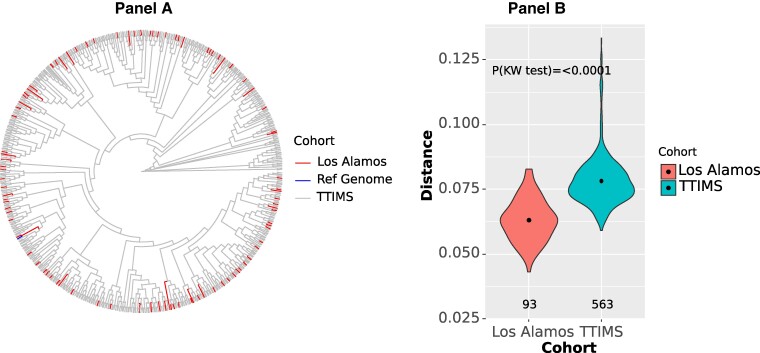
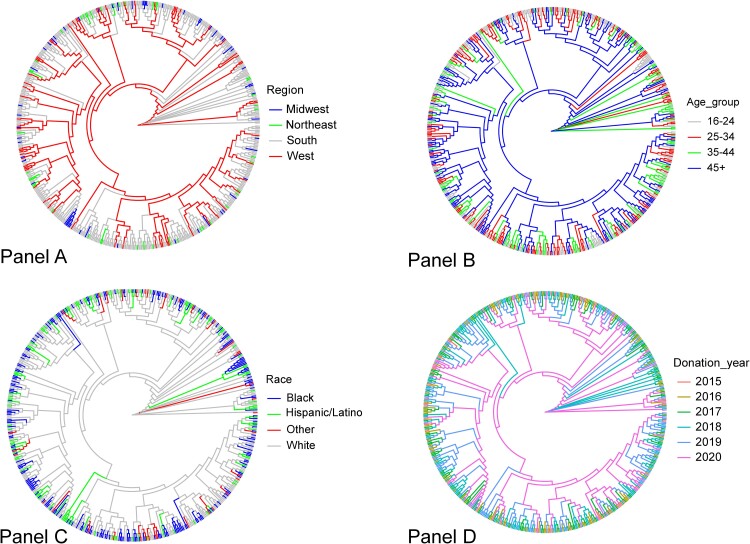
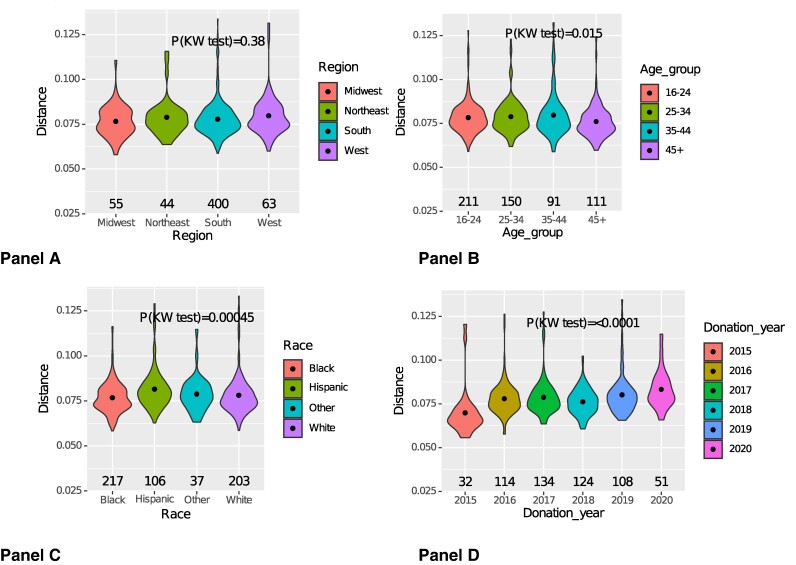
Results: From available HIV-positive donations collected between 1 September 2015 and 31 December 2020, 563 of 743 (75.8%) were successfully sequenced; 4 were subtype A, 543 subtype B, 5 subtype C, 1 subtype G, 5 circulating recombinant forms (CRF), and 2 were subtype B and D recombinants. Overall, no significant differences between blood donor and available LANL genotypes were found, and the genotypes of newly acquired versus prevalent HIV infections in donors were similar. The proportion of non-B subtypes and CRF remained a small fraction, with no other subtype or CRF representing more than 1% of the total. DRM were identified in 122 (21.6%) samples with protease inhibitor, nucleoside reverse transcriptase inhibitor and non-nucleoside reverse transcriptase inhibitor DRMs identified in 4.9%, 4.6% and 14.0% of samples, respectively.
Conclusions: HIV genetic diversity and DRM in blood donors appear representative of circulating HIV infections in the US general population and may provide more information on infection diversity than sequences reported to LANL, particularly for recently transmitted infections.
Keywords: HIV; blood donors; blood screening; genetic sequence analysis; phylogenetics.
© The Author(s) 2024. Published by Oxford University Press on behalf of Infectious Diseases Society of America.
Conflict of interest statement
Potential conflicts of interest. The authors: No reported conflicts of interest. All authors have submitted the ICMJE Form for Disclosure of Potential Conflicts of Interest.
Figures
References
-
- Steele WR, Dodd RY, Notari EP, et al. Prevalence of human immunodeficiency virus, hepatitis B virus, and hepatitis C virus in United States blood donations, 2015 to 2019: the transfusion-transmissible infections monitoring system (TTIMS). Transfusion 2020; 60:2327–39. - PubMed
-
- Steele WR, Dodd RY, Notari EP, et al. HIV, HCV, and HBV incidence and residual risk in US blood donors before and after implementation of the 12-month deferral policy for men who have sex with men. Transfusion 2021; 61:839–50. - PubMed
