


Childbirth preparation and its facilitating and inhibiting factors from the perspectives of pregnant and postpartum women in Tabriz-Iran: a qualitative study
- PMID: 38997718
- PMCID: PMC11241919
- DOI: 10.1186/s12978-024-01844-8
Childbirth preparation and its facilitating and inhibiting factors from the perspectives of pregnant and postpartum women in Tabriz-Iran: a qualitative study
Abstract
Background: The World Health Organization recognizes childbirth preparation as an essential component of antenatal care, as it plays a crucial role in reducing maternal mortality and improving women's childbirth experience. Countries worldwide have implemented various interventions to assist women in preparing for childbirth, based on their own resources. This study was conducted with the aim of exploring the perspectives of pregnant and postpartum women on childbirth preparation and the facilitating and inhibiting factors, in Tabriz, Iran.
Methods: This qualitative study was conducted with 25 participants, selected purposively among pregnant women in weeks 37 to 40 of gestation and postpartum women within 10 days to 6 weeks after childbirth. Data collection was done through semi-structured, in-depth individual interviews using an interview guide. The data was analyzed using content analysis method with conventional approach.
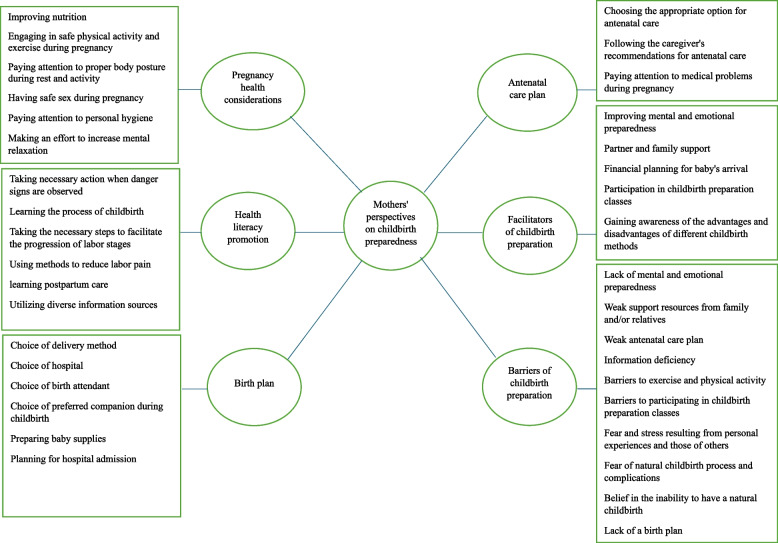
Results: The perspectives of pregnant and postpartum women regarding childbirth preparation revealed that factors such as maternal health during pregnancy, having an antenatal care plan, improving health literacy, and developing a birth plan were identified as crucial elements for effective childbirth preparation. Additionally, mental and emotional preparation, support, financial planning, participation in preparation classes, and awareness of childbirth methods were recognized as facilitators. On the other hand, insufficient mental and emotional preparedness, inadequate support, weak antenatal care, information deficiencies, insufficient physical activity, and a lack of a birth plan were identified as barriers.
Conclusion: The findings highlight the multifaceted nature of childbirth preparedness, necessitating the involvement of families, the healthcare system, and the entire community. Utilizing the study results in strategic planning for pre-pregnancy, during pregnancy, and inter-pregnancy care can enhance childbirth preparedness and contribute to achieving Iran's population rejuvenation policy goals.
© 2024. The Author(s).
Conflict of interest statement
The authors declare no competing interests.
Figures
References
-
- Pinar G, Avsar F, Aslantekin F. Evaluation of the impact of childbirth education classes in Turkey on adaptation to pregnancy process, concerns about birth, rate of vaginal birth, and adaptation to maternity: a case-control study. Clin Nurs Res. 2018;27(3):315–342. doi: 10.1177/1054773816682331. - DOI - PubMed
-
- Mohaghegh Z, Javadnoori M, Najafian M, Montazeri S, Abedi P, Leyli EK, et al. Implementation of birth plans integrated into childbirth preparation classes for vaginal birth: a qualitative study of women, their husbands and clinicians’ perspectives in Iran. BMC Pregnancy Childbirth. 2022;22(1):969. doi: 10.1186/s12884-022-05305-7. - DOI - PMC - PubMed
MeSH terms
LinkOut - more resources
Full Text Sources
Medical
