


Effects of Lactoferrin and Lactobacillus Supplementation on Immune Function, Oxidative Stress, and Gut Microbiota in Kittens
- PMID: 38998061
- PMCID: PMC11240779
- DOI: 10.3390/ani14131949
Effects of Lactoferrin and Lactobacillus Supplementation on Immune Function, Oxidative Stress, and Gut Microbiota in Kittens
Abstract
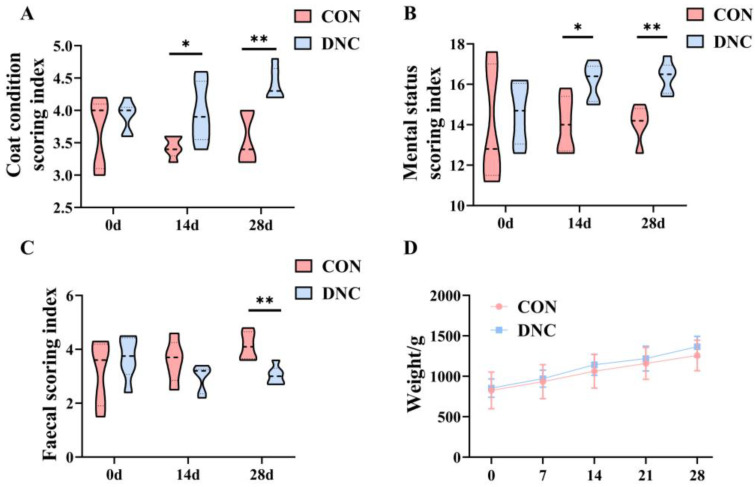
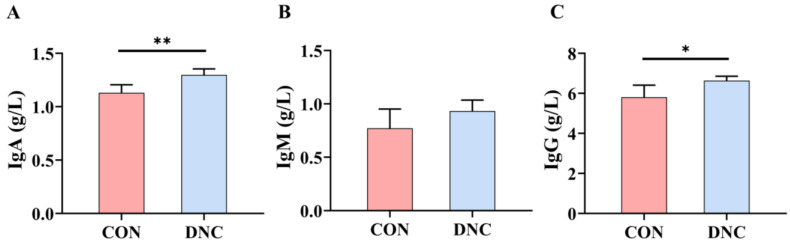
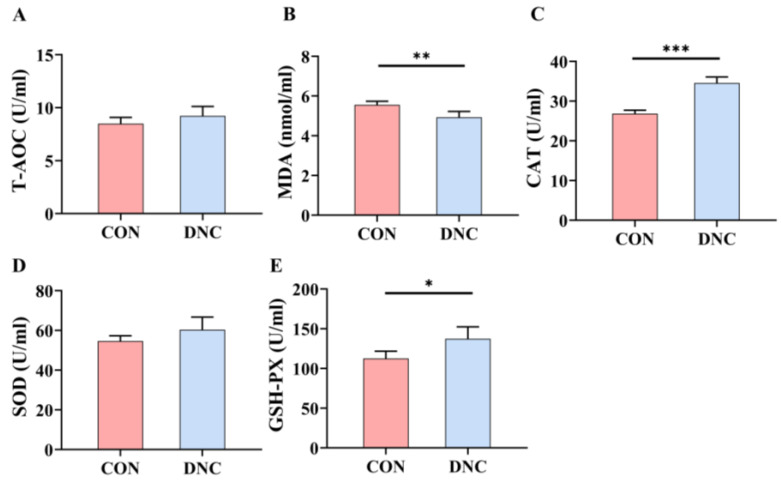
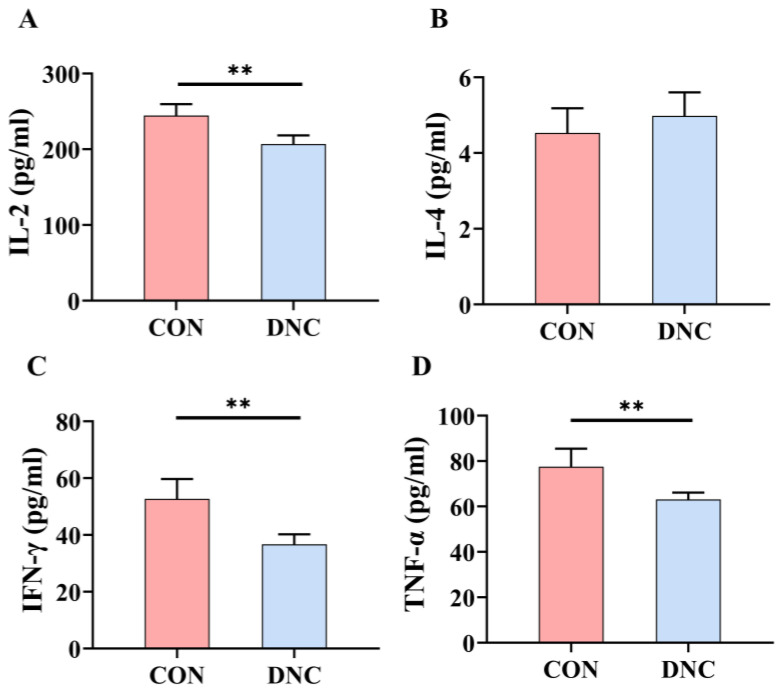
Immune deficiency is a prevalent issue among kittens, severely threatening their health and development by increasing susceptibility to infections and diseases. This study investigates the effects of dietary supplements containing lactoferrin and Lactobacillus plantarum (L. plantarum) on the immune function, intestinal health, and microbiota composition of kittens. The results demonstrate that these supplements significantly enhance immune responses, with immunoglobulin A (IgA) levels increasing by 14.9% and IgG levels by 14.2%. Additionally, there was a notable 28.7% increase in catalase activity, indicating a reduction in oxidative stress. Gastrointestinal (GI) health improved markedly, evidenced by increased populations of beneficial bacteria such as Lactobacillus, which rose from 4.13% to 79.03% over the study period. The DNC group also showed significant reductions in pro-inflammatory cytokines, including decreases of 13.94% in IL-2, 26.46% in TNF-α, and 19.45% in IFN-γ levels. Furthermore, improvements in physical conditions were observed, including enhanced coat condition and mental status. These findings underline the potential of lactoferrin and L. plantarum as effective dietary interventions to improve kitten health, thereby reducing dependency on antibiotics and mitigating associated risks. This research provides a scientific foundation for optimizing nutritional management practices to enhance the overall vitality of kittens during their critical growth phases.
Keywords: Lactobacillus; gut microbiota; immune deficiency; kittens; lactoferrin.
Conflict of interest statement
Weiwei Wang, Longjiao Wang, and Wei Xiong, co-authors of the article, are affiliated with Henan Zhiyuan Henuo Technology Co., Ltd. and are employed as technical consultants at the company. The authors declare no conflict of interest.
Figures
References
-
- Estepa-Becerra J.A., Cajiao-Pachón M.N., Monsalve-Barrero S. Canine and feline population management within the One Welfare framework: A retrospective look Bogotá 2004 to 2021. Rev. MVZ Cordoba. 2023;28:27. doi: 10.21897/rmvz.2925. - DOI
-
- Peña-Corona S.I., Gomez-Vazquez J.P., López-Flores E.A., Vargas Estrada D., Arvizu-Tovar L.O., Pérez-Rivero J.J., Juárez Rodríguez I., Sierra Resendiz A., Soberanis-Ramos O. Use of an extrapolation method to estimate the population of cats and dogs living at homes in Mexico in 2022. Vet. Mex. 2022;9 doi: 10.22201/fmvz.24486760e.2022.1001. - DOI
-
- Biezus G., Machado G., Ferian P.E., da Costa U.M., da Silva Pereira L.H.H., Withoeft J.A., Nunes I.A.C., Muller T.R., de Cristo T.G., Casagrande R.A. Prevalence of and factors associated with feline leukemia virus (FeLV) and feline immunodeficiency virus (FIV) in cats of the state of Santa Catarina, Brazil. Comp. Immunol. Microb. 2019;63:17–21. doi: 10.1016/j.cimid.2018.12.004. - DOI - PubMed
Grants and funding
LinkOut - more resources
Full Text Sources
Miscellaneous
