


Unraveling the Physicochemical, Nutritional and Antioxidant Properties of the Honey Produced from the Fallopia japonica Plant
- PMID: 38998468
- PMCID: PMC11240986
- DOI: 10.3390/foods13131959
Unraveling the Physicochemical, Nutritional and Antioxidant Properties of the Honey Produced from the Fallopia japonica Plant
Abstract
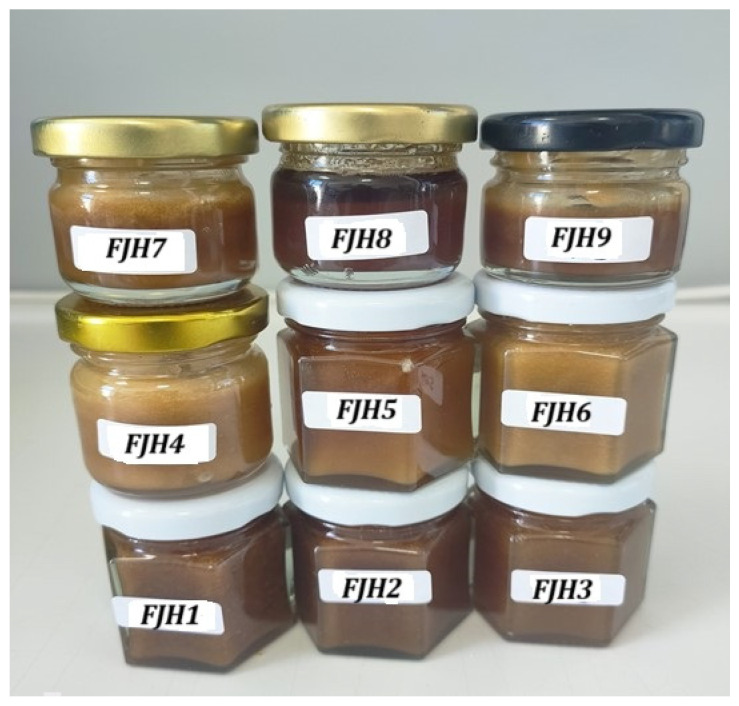
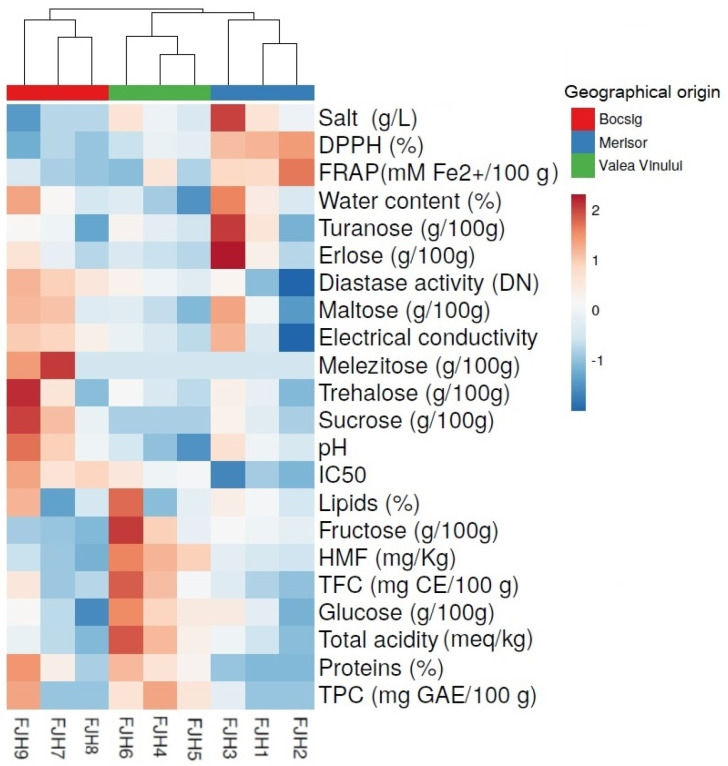
Fallopia japonica (FJ), commonly known as Japanese knotweed, is now recognized as one of the most invasive plants in Europe and globally. Despite its widespread presence in Europe and its significant nectar production, there is currently limited scientific data on the unique unifloral honey derived from it. This study examines the physicochemical composition of Fallopia japonica honey (FJH) samples collected from various regions in Romania. Additionally, the nutritional and antioxidant profiles of FJH were assessed. The sensory analysis revealed a honey with a brown-caramel color and an intense flavor, characterized by fine, consistent crystals during crystallization. The results indicated that FJH has a high carbohydrate content (fructose: 35.12-40.65 g/100 g; glucose: 28.06-37.79 g/100 g); elevated electrical conductivity (387-692 µS/cm), diastase activity (9.11-17.01 DN), and acidity (21.61-42.89 meq/kg); and substantial total phenolic (89.87-120.08 mg/100 g) and flavonoid (18.13-39.38 mg/g) contents. These findings highlight FJH's favorable nutritional properties, aligning with the standard codex for honey. The antioxidant profile of FJH demonstrated strong DPPH and ferric reduction antioxidant power (FRAP) activities, comparable to those of buckwheat honey, underscoring its potential health benefits and commercial value. These results provide new insights into how this invasive plant can be harnessed as a valuable resource for sustainable beekeeping practices.
Keywords: Fallopia japonica honey; antioxidant capacity; nutritional benefits.
Conflict of interest statement
The authors declare no conflicts of interest.
Figures
References
-
- Cucu A.A., Baci G.M., Moise A.R., Dezsi Ş., Marc B.D., Stângaciu Ş., Dezmirean D.S. Towards a Better Understanding of Nutritional and Therapeutic Effects of Honey and Their Applications in Apitherapy. Appl. Sci. 2021;11:4190. doi: 10.3390/app11094190. - DOI
-
- Hernanz D., Jara-Palacios M.J., Santos J.L., Gómez Pajuelo A., Heredia F.J., Terrab A. The Profile of Phenolic Compounds by HPLC-MS in Spanish Oak (Quercus) Honeydew Honey and Their Relationships with Color and Antioxidant Activity. LWT. 2023;180:114724. doi: 10.1016/j.lwt.2023.114724. - DOI
-
- Wang L., Ning F., Liu T., Huang X., Zhang J., Liu Y., Wu D., Luo L. Physicochemical Properties, Chemical Composition, and Antioxidant Activity of Dendropanax Dentiger Honey. LWT. 2021;147:111693. doi: 10.1016/j.lwt.2021.111693. - DOI
LinkOut - more resources
Full Text Sources
Miscellaneous
