


In Silico Electrophysiological Investigation of Transient Receptor Potential Melastatin-4 Ion Channel Biophysics to Study Detrusor Overactivity
- PMID: 38999984
- PMCID: PMC11241520
- DOI: 10.3390/ijms25136875
In Silico Electrophysiological Investigation of Transient Receptor Potential Melastatin-4 Ion Channel Biophysics to Study Detrusor Overactivity
Abstract
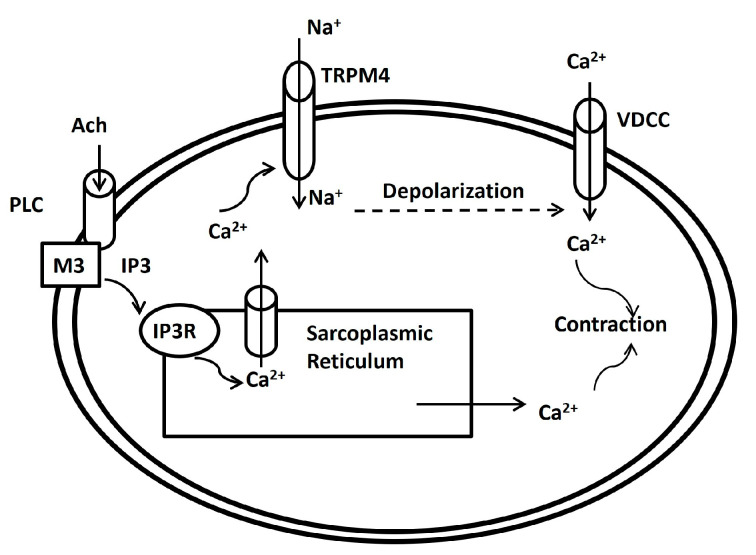
Enhanced electrical activity in detrusor smooth muscle (DSM) cells is a key factor in detrusor overactivity which causes overactive bladder pathological disorders. Transient receptor potential melastatin-4 (TRPM4) channels, which are calcium-activated cation channels, play a role in regulating DSM electrical activities. These channels likely contribute to depolarizing the DSM cell membrane, leading to bladder overactivity. Our research focuses on understanding TRPM4 channel function in the DSM cells of mice, using computational modeling. We aimed to create a detailed computational model of the TRPM4 channel based on existing electrophysiological data. We employed a modified Hodgkin-Huxley model with an incorporated TRP-like current to simulate action potential firing in response to current and synaptic stimulus inputs. Validation against experimental data showed close agreement with our simulations. Our model is the first to analyze the TRPM4 channel's role in DSM electrical activity, potentially revealing insights into bladder overactivity. In conclusion, TRPM4 channels are pivotal in regulating human DSM function, and TRPM4 channel inhibitors could be promising targets for treating overactive bladder.
Keywords: TRPM4 ion channel; action potential; computational modeling; urinary incontinence.
Conflict of interest statement
The authors declare no conflicts of interest.
Figures


References
-
- de Groat W.C., Yoshimura N.A. Anatomy and physiology of the lower urinary tract. Handb. Clin. Neurol. 2015;130:61–108. - PubMed
-
- Tyagi S., Tyagi P., Yoshimura N., Chancellor M.B. Textbook of Female Urology and Urogynecology-Two-Volume Set. CRC Press; Boca Raton, FL, USA: 2017. Physiology of micturition; pp. 232–246.
-
- Wein A.J., Rackley R.R. Overactive bladder: A better understanding of pathophysiology, diagnosis, and management. J. Urol. 2006;175:S5–S10. - PubMed
-
- Drake M.J. Textbook of Female Urology and Urogynecology-Two-Volume Set. CRC Press; Boca Raton, FL, USA: 2017. The Overactive Bladder; pp. 584–593.
MeSH terms
Substances
LinkOut - more resources
Full Text Sources
Medical
Molecular Biology Databases
