


Biofungicides Based on Plant Extracts: On the Road to Organic Farming
- PMID: 38999990
- PMCID: PMC11241162
- DOI: 10.3390/ijms25136879
Biofungicides Based on Plant Extracts: On the Road to Organic Farming
Abstract
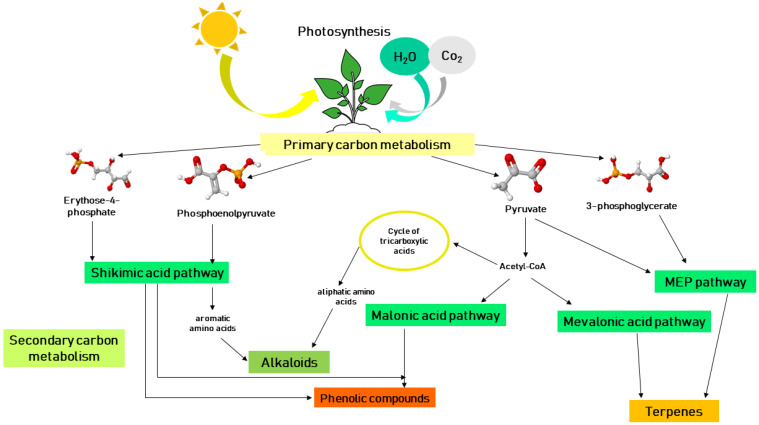
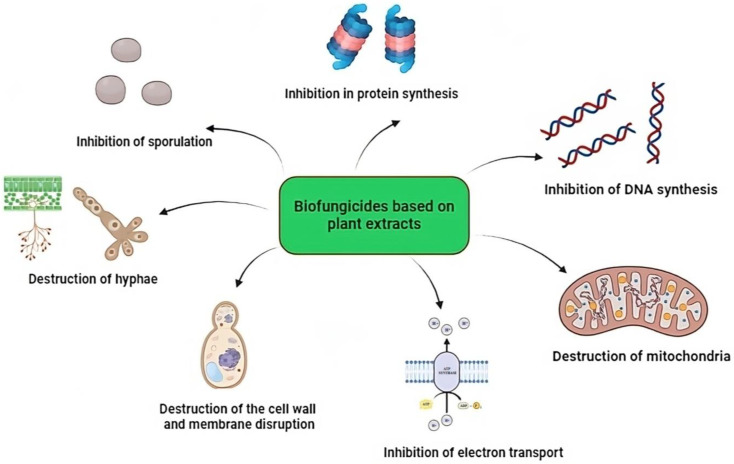
Phytopathogenic fungi are responsible for diseases in commercially important crops and cause major supply problems in the global food chain. Plants were able to protect themselves from disease before humans played an active role in protecting plants. They are known to synthesize a variety of secondary metabolites (SMs), such as terpenes, alkaloids, and phenolic compounds, which can be extracted using conventional and unconventional techniques to formulate biofungicides; plant extracts have antifungal activity and various mechanisms of action against these organisms. In addition, they are considered non-phytotoxic and potentially effective in disease control. They are a sustainable and economically viable alternative for use in agriculture, which is why biofungicides are increasingly recognized as an attractive option to solve the problems caused by synthetic fungicides. Currently, organic farming continues to grow, highlighting the importance of developing environmentally friendly alternatives for crop production. This review provides a compilation of the literature on biosynthesis, mechanisms of action of secondary metabolites against phytopathogens, extraction techniques and formulation of biofungicides, biological activity of plant extracts on phytopathogenic fungi, regulation, advantages, disadvantages and an overview of the current use of biofungicides in agriculture.
Keywords: agricultural sustainability; agroecology; phytopathogenic fungi; phytosanitary products; secondary metabolites.
Conflict of interest statement
The authors declare no conflicts of interest.
Figures

References
-
- Ray M.K., Mishra A.K., Mohanta Y.K., Mahanta S., Chakrabartty I., Kungwani N.A., Pudake R.N. Nanotechnology as a promising tool against phytopathogens: A futuristic approach to agriculture. Agriculture. 2023;13:1856. doi: 10.3390/agriculture13091856. - DOI
-
- Košćak L., Lamovšek J., Đermić E., Prgomet I., Godena S. Microbial and plant-based compounds as alternatives for the control of phytopathogenic bacteria. Horticulturae. 2023;9:1124. doi: 10.3390/horticulturae9101124. - DOI
-
- De Mello-Sampayo C., Viana P., Lopes A., Carvalho da Silva R., de Jesus R., Sarmento G., Meisel L. Survey of Antifungal in Surface-and Groundwater: A Portuguese Environmental Case Study. Sustainability. 2024;16:594. doi: 10.3390/su16020594. - DOI
-
- Lengai G.M., Fulano A.M., Muthomi J.W. Improving access to export market for fresh vegetables through reduction of phytosanitary and pesticide residue constraints. Sustainability. 2022;14:8183. doi: 10.3390/su14138183. - DOI
Publication types
MeSH terms
Substances
LinkOut - more resources
Full Text Sources
