


Liver and Pancreatic Toxicity of Endocrine-Disruptive Chemicals: Focus on Mitochondrial Dysfunction and Oxidative Stress
- PMID: 39000526
- PMCID: PMC11242905
- DOI: 10.3390/ijms25137420
Liver and Pancreatic Toxicity of Endocrine-Disruptive Chemicals: Focus on Mitochondrial Dysfunction and Oxidative Stress
Abstract
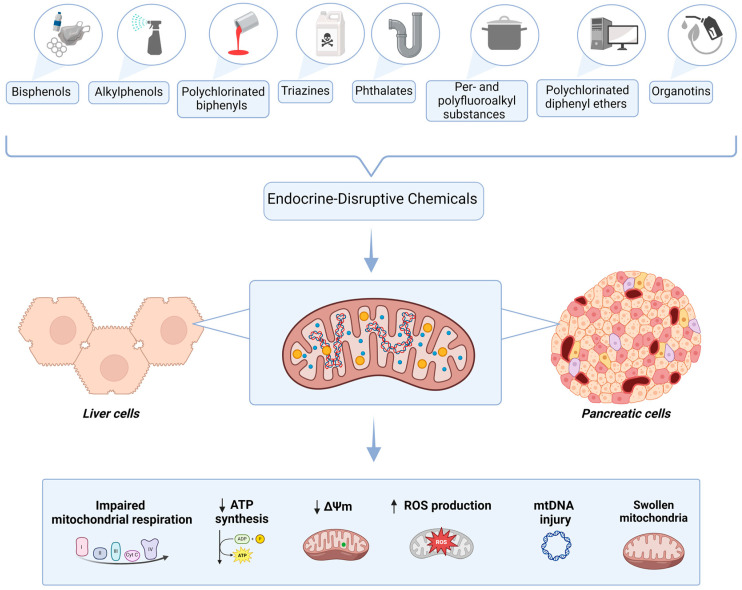
In recent years, the worldwide epidemic of metabolic diseases, namely obesity, metabolic syndrome, diabetes and metabolic-associated fatty liver disease (MAFLD) has been strongly associated with constant exposure to endocrine-disruptive chemicals (EDCs), in particular, the ones able to disrupt various metabolic pathways. EDCs have a negative impact on several human tissues/systems, including metabolically active organs, such as the liver and pancreas. Among their deleterious effects, EDCs induce mitochondrial dysfunction and oxidative stress, which are also the major pathophysiological mechanisms underlying metabolic diseases. In this narrative review, we delve into the current literature on EDC toxicity effects on the liver and pancreatic tissues in terms of impaired mitochondrial function and redox homeostasis.
Keywords: endocrine disruptors; liver; metabolism-disrupting chemicals; mitochondrial dysfunction; oxidative stress; pancreas.
Conflict of interest statement
The authors declare no conflicts of interest.
Figures
References
-
- Lopez-Jimenez F., Almahmeed W., Bays H., Cuevas A., Di Angelantonio E., le Roux C.W., Sattar N., Sun M.C., Wittert G., Pinto F.J., et al. Obesity and cardiovascular disease: Mechanistic insights and management strategies. A joint position paper by the World Heart Federation and World Obesity Federation. Eur. J. Prev. Cardiol. 2022;29:2218–2237. doi: 10.1093/eurjpc/zwac187. - DOI - PubMed
Publication types
MeSH terms
Substances
LinkOut - more resources
Full Text Sources
