. 2024 Jul 13;150(7):351.
doi: 10.1007/s00432-024-05877-1.

LncRNA ZFAS1 regulates ATIC transcription and promotes the proliferation and migration of hepatocellular carcinoma through the PI3K/AKT signaling pathway

Affiliations

LncRNA ZFAS1 regulates ATIC transcription and promotes the proliferation and migration of hepatocellular carcinoma through the PI3K/AKT signaling pathway

Baoyang Luo et al. J Cancer Res Clin Oncol. .

Abstract

Purpose: Long noncoding RNAs (lncRNAs) exert a significant influence on various cancer-related processes through their intricate interactions with RNAs. Among these, lncRNA ZFAS1 has been implicated in oncogenic roles in multiple cancer types. Nevertheless, the intricate biological significance and underlying mechanism of ZFAS1 in the initiation and progression of hepatocellular carcinoma (HCC) remain largely unexplored.

Methods: Analysis of The Cancer Genome Atlas Program (TCGA) database revealed a notable upregulation of lncRNA ZFAS1 in HCC tissues. To explore its function, we investigated colony formation and performed CCK-8 assays to gauge cellular proliferation and wound healing, Transwell assays to assess cellular migration, and an in vivo study employing a nude mouse model to scrutinize tumor growth and metastasis. Luciferase reporter assay was used to confirm the implicated interactions. Rescue experiments were conducted to unravel the plausible mechanism underlying the activation of the PI3K/AKT pathway by lncRNAs ZFAS1 and ATIC.

Results: ZFAS1 and ATIC were significantly upregulated in the HCC tissues and cells. ZFAS1 knockdown inhibited cell proliferation and migration. We observed a direct interaction between the lncRNA ZFAS1 and ATIC. ATIC knockdown also suppressed cell proliferation and migration. SC79, an activator of AKT, partially restores the effects of lncRNA ZFAS1/ATIC knockdown on cell proliferation and migration. Knockdown of lncRNA ZFAS1/ATIC inhibited tumor growth and lung metastasis in vivo.

Conclusion: Overall, lncRNA ZFAS1 regulates ATIC transcription and contributes to the growth and migration of HCC cells through the PI3K/AKT signaling pathway.

Keywords: ATIC; Hepatocellular carcinoma; PI3K/AKT signaling pathway; SC79; lncRNA ZFAS1.


Conflict of interest statement

The authors declare that they have no conflict of interest.

Figures
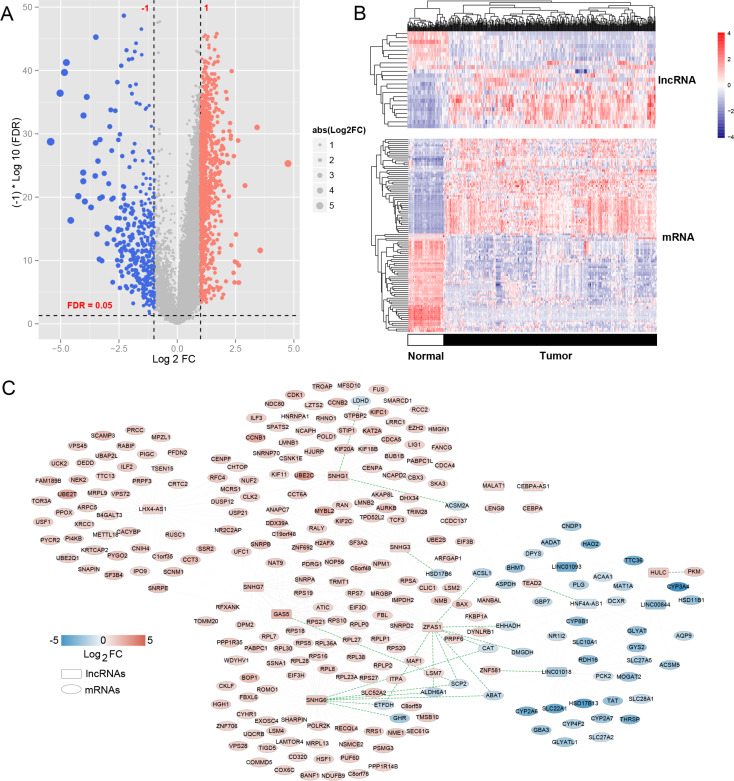
Fig. 1
Fig. 1
Expression of long non-coding RNA (lncRNA) ZFAS1 and ATIC in hepatocellular carcinoma (HCC). (A) Volcano plot of DE-lncRNAs and DEGs in the cancer genome atlas (TCGA) database. (B) Clustering heat map of DE-lncRNAs and DEGs in the TCGA database. (C) A DE-lncRNAs - DEGs co-expression network
Fig. 2
Fig. 2
Long non-coding RNA (lncRNA) ZFAS1 and ATIC expression increased in hepatocellular carcinoma (HCC) cell lines. (A) Expression of lncRNA ZFAS1 analyzed in 369 HCC tissues and 160 normal samples by using the cancer genome atlas (TCGA) database. (B) Survival analysis of patients in TCGA according to lncRNA ZFAS1 expression. (C) Expression of ATIC analyzed in 369 HCC tissues and 160 normal samples by using TCGA database. (D) Survival analysis of patients in TCGA according to ATIC expression. (E) Expression of lncRNA ZFAS1 and ATIC in HCC and control tissues detected via RT-RCR. *P < 0.05, compared with control group. RT-RCR was applied to detect the relative expression of lncRNA ZFAS1 (F) and ATIC (G) in HCC cell lines (HepG2, Hep3B, and WRL68). *P < 0.05, compared with WRL68
Fig. 3
Fig. 3
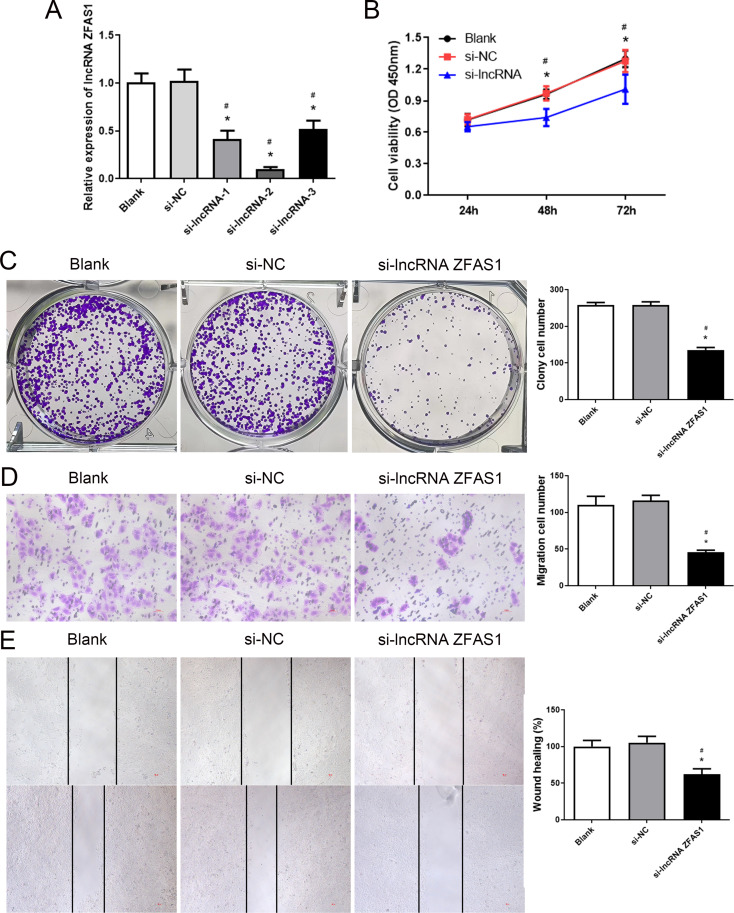
Knockdown of long non-coding RNA (lncRNA) ZFAS1 regulates the proliferation and migration of hepatocellular carcinoma (HCC) cells. (A) RT-PCR analysis of lncRNA ZFAS1 expression in HCC cells transfected with control (scrambled), si-lncRNA ZFAS1-1, si-lncRNA ZFAS1-2, and si-lncRNA ZFAS1-3. (B) CCK-8 assays showing the viability of HCC cells treated with si-lncRNA ZFAS1. (C) Colony formation assays showing the proliferation of si-lncRNA ZFAS1-transfected HCC cells and colonies were counted and captured. (D) Transwell assays showing the migration of HCC cells treated with si-lncRNA ZFAS1. (E) Wound healing assays showing the migration of HCC cells treated with si-lncRNA ZFAS1. *P < 0.05, compared with Blank group. #P < 0.05, compared with si-NC group
Fig. 4
Fig. 4
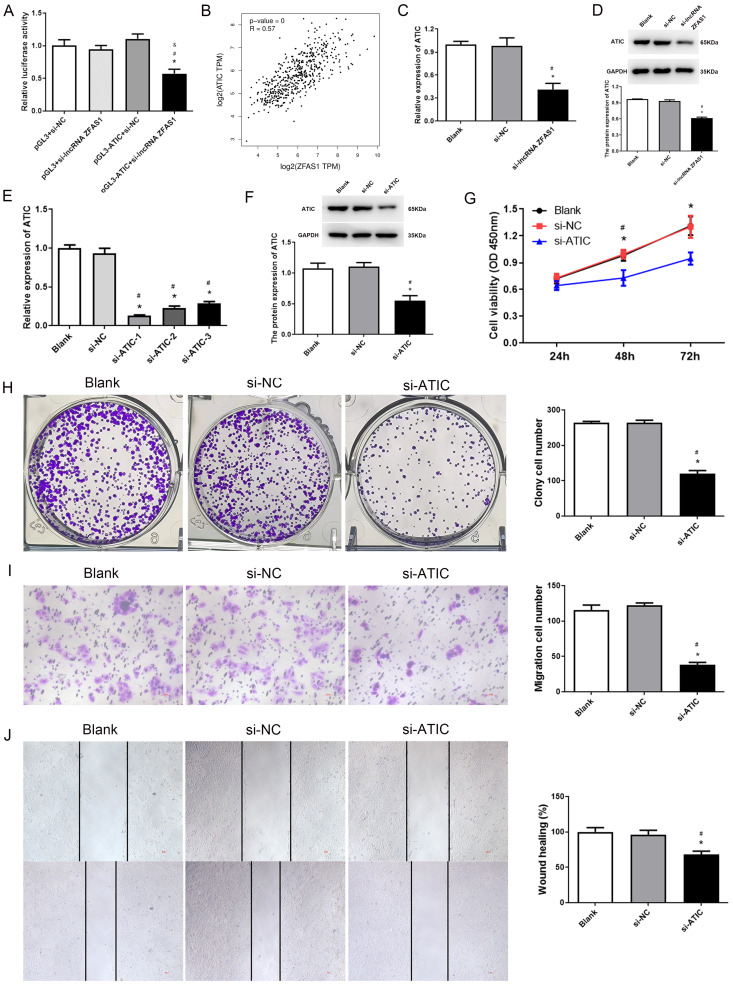
Knockdown of ATIC regulated proliferation and migration of hepatocellular carcinoma (HCC) cells. (A) Bioinformatic analysis indicating that the region upstream of ATIC transcription start site harbors a long non-coding RNA (lncRNA) ZFAS1 binding site. Region upstream of ATIC transcription start site cloned into the luciferase reporter vector. Cells co-transfected with si-NC and si-lncRNA ZFAS1. RT-PCR performed after transfection to detect luciferase activity. (B) The cancer genome atlas (TCGA) dataset revealed a positive correlation between lncRNA ZFAS1 and ATIC. (C) RT-PCR results of ATIC expressions in HepG2 cells treated with si-lncRNA ZFAS1. (D) Western blot results of ATIC expressions in HepG2 cells treated with si-lncRNA ZFAS1. (E) RT-PCR analysis of ATIC expression in HCC cells transfected with control (scrambled), si-ATIC-1, si-ATIC-2, and si-ATIC-3. (F) Western blot analysis of ATIC expression in HCC cells transfected with control (scrambled), si-ATIC. (G) CCK-8 assay results showing the viability of HCC cells treated with si-ATIC. (H) Colony formation assay results revealing the proliferation of si-ATIC-transfected HCC cells and colonies. (I) Transwell assay results revealing the migration of HCC cells treated with si-ATIC. (J) Wound healing assay results revealing the migration of HCC cells treated with si-ATIC. *P < 0.05, compared with Blank group. #P < 0.05, compared with si-NC group
Fig. 5
Fig. 5
Western blot results of PI3K, p-PI3K, AKT, and p-AKT expressions in HepG2 cells treated with si-lncRNA ZFAS1 (A) and si-ATIC (B)
Fig. 6
Fig. 6
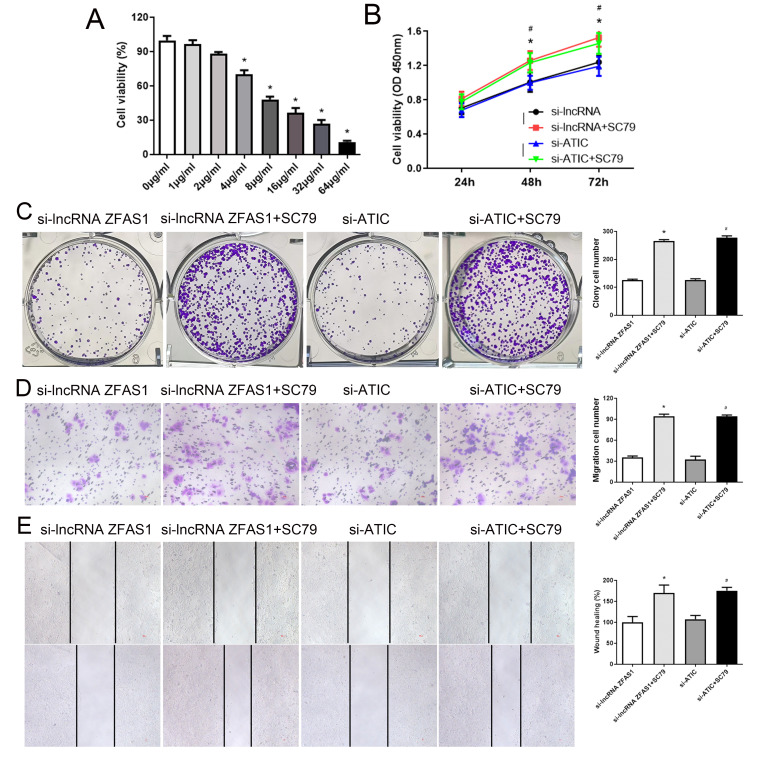
SC79 (a AKT activator) partially restores long non-coding RNA (lncRNA) ZFAS1 and ATIC knockdown HepG2 cells. (A) CCK-8 assay results revealing the viability of HCC cells treated with different concentration of SC79. (B) CCK-8 assay results revealing the viability of HCC cells treated with different treatments. (C) Colony formation assay results revealing the proliferation of HCC cells treated with different treatments and colonies were counted and captured. (D) Transwell assay results revealing the migration of HCC cells treated with different treatments. (E) Wound healing assay results revealing the migration of HCC cells treated with different treatments. *P < 0.05, compared with si-lncRNA ZFAS1. #P < 0.05, compared with si-ATIC
Fig. 7
Fig. 7
Knocking down lncRNA ZFAS1 and ATIC could inhibit the growth of HCC in vivo. (A) HepG2 cells transfected with si-lncRNA ZFAS1 or si-ATIC were subcutaneously injected into the armpit of nude mice (n = 3 each group). Tumors before and after carrying from the nude mice. (B) Tumor volumes calculated after injection every week. (C) Tumor inhibition rate of each group. (D) Tumor sections with hematoxylin and eosin (H&E) staining. (E) Representative image and analysis of luminescence intensity in the mice models. (F) Tumor sections with immunohistochemistry (IHC) staining. *P < 0.05, compared with control group
Fig. 8
Fig. 8
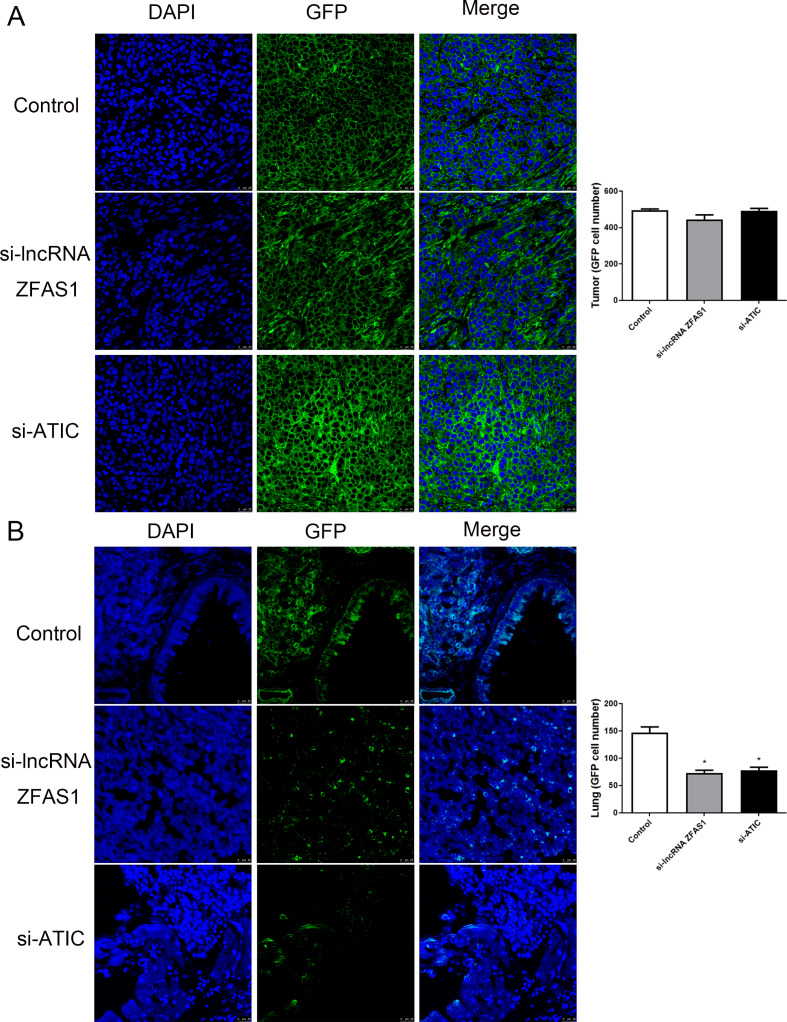
Immunofluorescence staining of tumor tissues (A) and lung tissues (B)
Fig. 9
Fig. 9
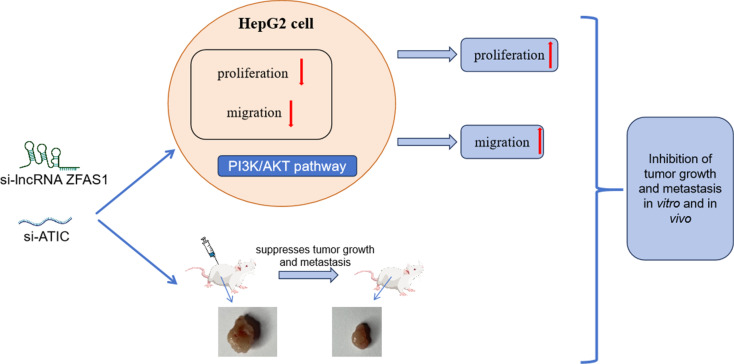
Regulatory mechanism of LncRNA ZFAS1 in modulating ATIC transcription and promoting the growth and migration of HCC through the PI3K/AKT signaling pathway is elucidated. In in vitro experiments showing the inhibition of HepG2 cell proliferation and migration upon the knockdown of si-lncRNA ZFAS1 and si-ATIC, which was reversed upon the addition of an AKT activator. In vivo experiments showed that si-lncRNA ZFAS1 and si-ATIC could inhibit tumor growth and lung metastasis

References

    1. Abbastabar M et al (2018) lncRNA involvement in hepatocellular carcinoma metastasis and prognosis. EXCLI J 17:900. 10.17179/excli2018-1541 - PMC - PubMed
    1. Abozeid F et al (2022) Diagnostic value of long non-coding RNA ZFAS1 as a potential biomarker for Hepatocellular Carcinoma. Med J Viral Hepat 6:18–24. 10.21608/mjvh.2022.234479
    1. Askarian-Amiri ME et al (2011) SNORD-host RNA Zfas1 is a regulator of mammary development and a potential marker for breast cancer. RNA 17:878–891. 10.1261/rna.2528811 - PMC - PubMed
    1. Chen X et al (2018) SP1-induced lncRNA-ZFAS1 contributes to colorectal cancer progression via the miR-150-5p/VEGFA axis. Cell Death Dis 9:982. 10.1038/s41419-018-0962-6 - PMC - PubMed
    1. Chidambaranathan-Reghupaty S et al (2021) Hepatocellular carcinoma (HCC): epidemiology, etiology and molecular classification. Adv Cancer Res 149:1–61. 10.1016/bs.acr.2020.10.001 - PMC - PubMed

MeSH terms

Substances

LinkOut - more resources