


Transcriptome-wide association study and Mendelian randomization in pancreatic cancer identifies susceptibility genes and causal relationships with type 2 diabetes and venous thromboembolism
- PMID: 39002386
- PMCID: PMC11284564
- DOI: 10.1016/j.ebiom.2024.105233
Transcriptome-wide association study and Mendelian randomization in pancreatic cancer identifies susceptibility genes and causal relationships with type 2 diabetes and venous thromboembolism
Abstract
Background: Two important questions regarding the genetics of pancreatic adenocarcinoma (PDAC) are 1. Which germline genetic variants influence the incidence of this cancer; and 2. Whether PDAC causally predisposes to associated non-malignant phenotypes, such as type 2 diabetes (T2D) and venous thromboembolism (VTE).
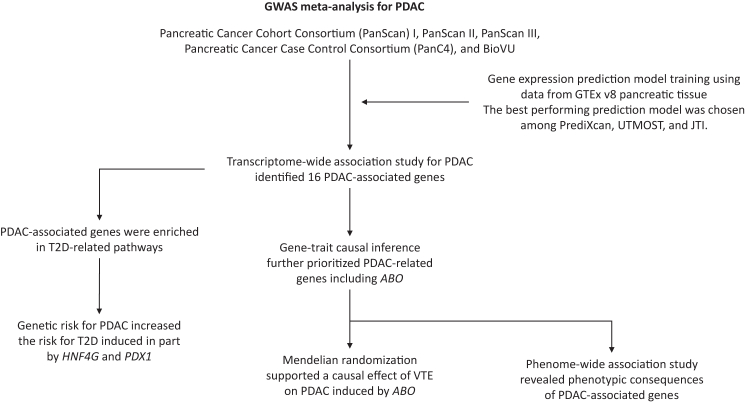
Methods: In this study of 8803 patients with PDAC and 67,523 controls, we first performed a large-scale transcriptome-wide association study to investigate the association between genetically determined gene expression in normal pancreas tissue and PDAC risk. Secondly, we used Mendelian Randomization (MR) to analyse the causal relationships among PDAC, T2D (74,124 cases and 824,006 controls) and VTE (30,234 cases and 172,122 controls).
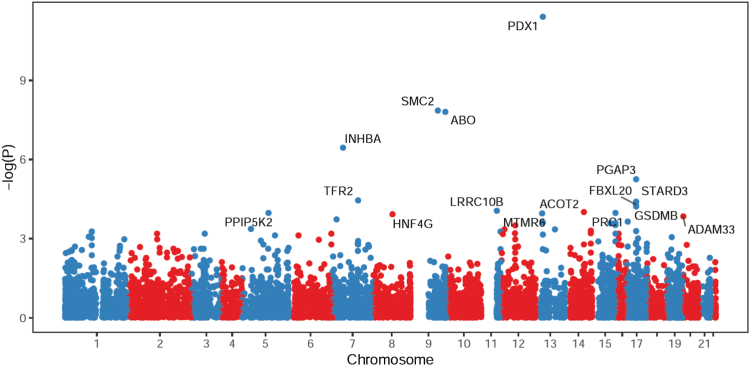
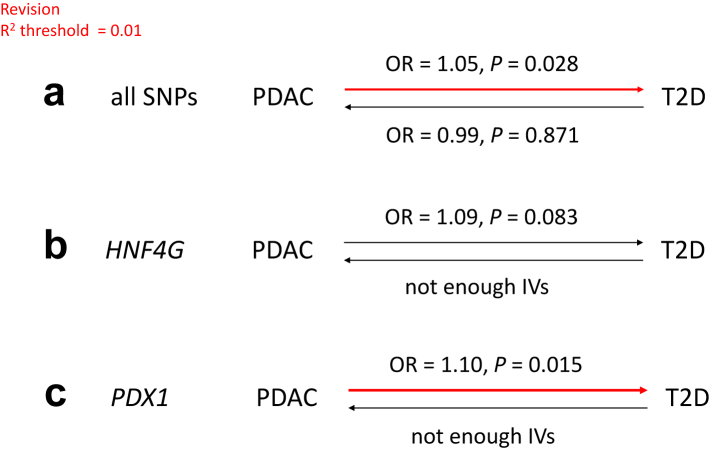
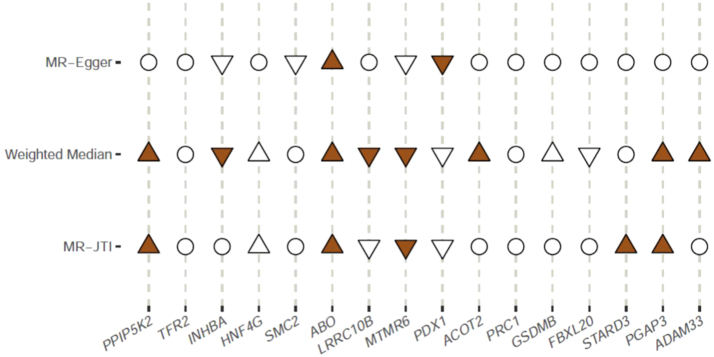
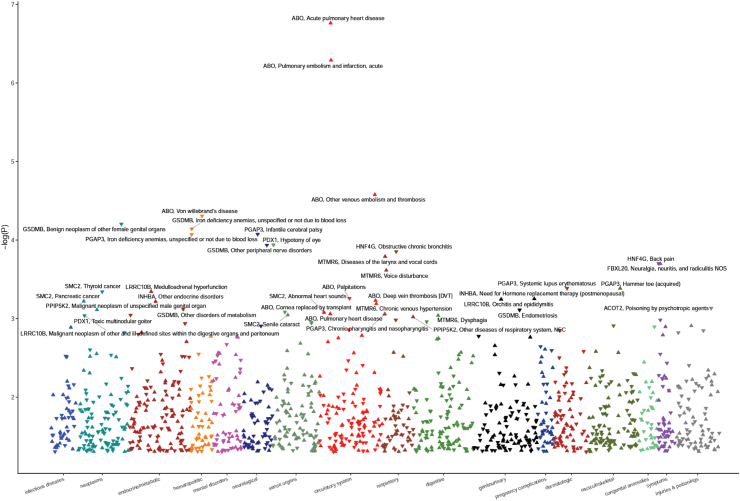
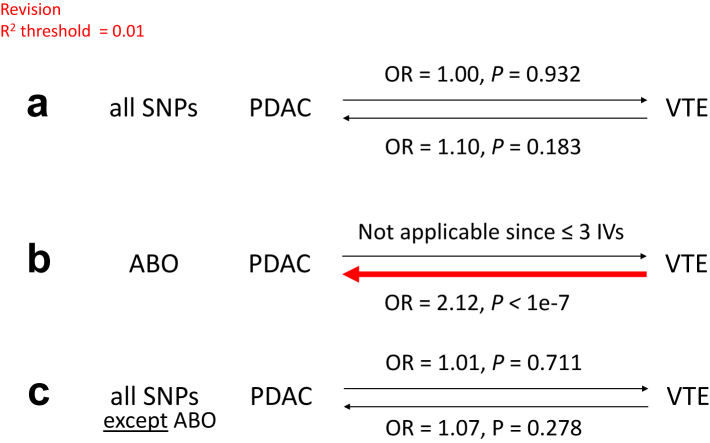
Findings: Sixteen genes showed an association with PDAC risk (FDR <0.10), including six genes not yet reported for PDAC risk (PPIP5K2, TFR2, HNF4G, LRRC10B, PRC1 and FBXL20) and ten previously reported genes (INHBA, SMC2, ABO, PDX1, MTMR6, ACOT2, PGAP3, STARD3, GSDMB, ADAM33). MR provided support for a causal effect of PDAC on T2D using genetic instruments in the HNF4G and PDX1 loci, and unidirectional causality of VTE on PDAC involving the ABO locus (OR 2.12, P < 1e-7). No evidence of a causal effect of PDAC on VTE was found.
Interpretation: These analyses identified candidate susceptibility genes and disease relationships for PDAC that warrant further investigation. HNF4G and PDX1 may induce PDAC-associated diabetes, whereas ABO may induce the causative effect of VTE on PDAC.
Funding: National Institutes of Health (USA).
Keywords: Case-control studies; Genetic; Genome-wide association study; Mendelian randomization analysis; Models; Polymorphism; Single nucleotide.
Copyright © 2024 The Authors. Published by Elsevier B.V. All rights reserved.
Conflict of interest statement
Declaration of interests L.W. provided consulting service to Pupil Bio Inc. and reviewed manuscripts for Gastroenterology Report, not related to this study, and received honorarium. E.R.G. has received funding from the NIH (NIMH R01MH126459 and NIMH RF1MH125933), participated in a NIH study section, and received honorarium, all unrelated to this study. Group members and funding sources for the INVENT Consortium are listed in Supplemental Files 2 and 3, respectively. The other authors declare no potential conflicts of interest.
Figures
References
-
- Siegel R.L., Miller K.D., Wagle N.S., Jemal A. Cancer statistics, 2023. CA Cancer J Clin. 2023;73(1):17–48. - PubMed
-
- Walker A.J., Card T.R., West J., Crooks C., Grainge M.J. Incidence of venous thromboembolism in patients with cancer – a cohort study using linked United Kingdom databases. Eur J Cancer. 2013;49(6):1404–1413. - PubMed
