


Effects of major air pollutants on angina hospitalizations: a correlation study
- PMID: 39004712
- PMCID: PMC11247793
- DOI: 10.1186/s12889-024-19380-2
Effects of major air pollutants on angina hospitalizations: a correlation study
Abstract
Background: Angina is a crucial risk signal for cardiovascular disease. However, few studies have evaluated the effects of ambient air pollution exposure on angina.
Objective: We aimed to explore the short-term effects of air pollution on hospitalization for angina and its lag effects.
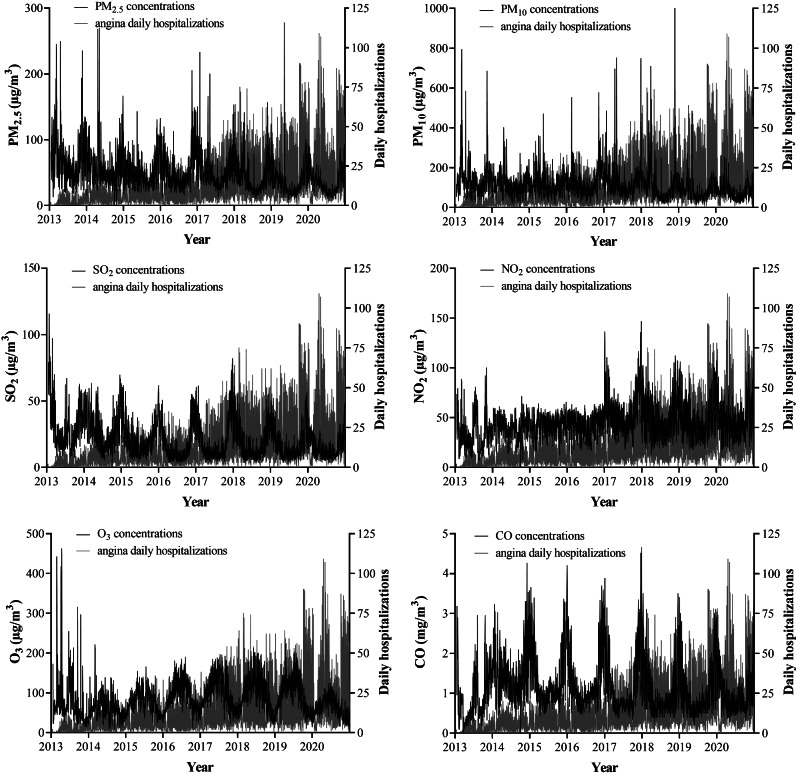
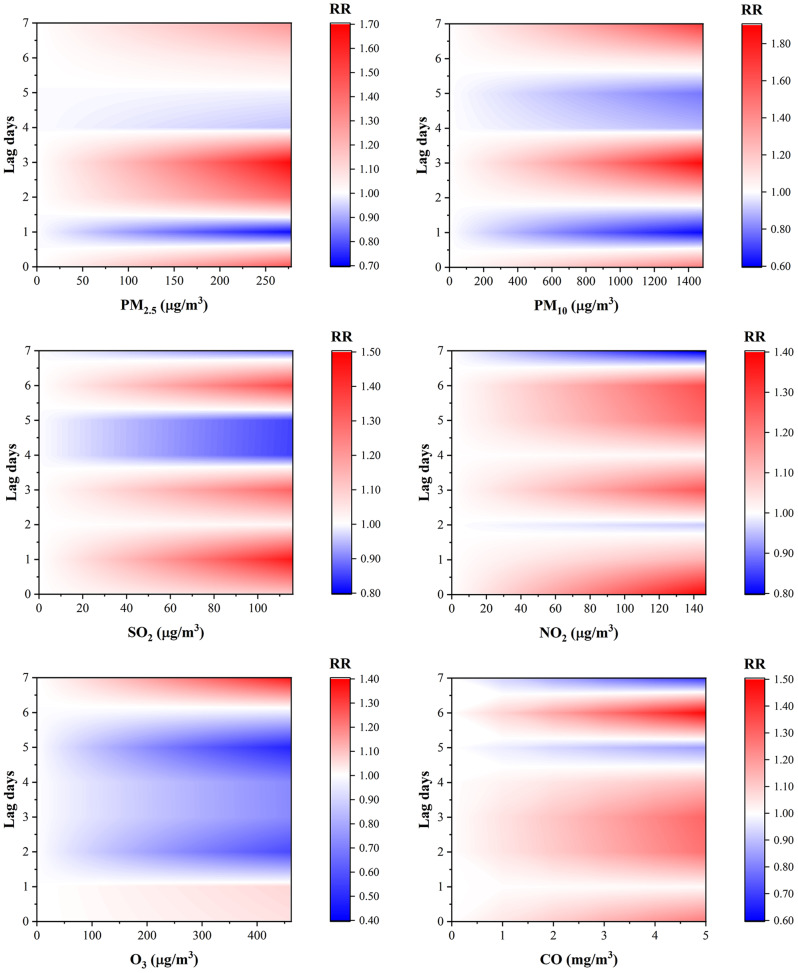
Methods: We collected data on air pollutant concentrations and angina hospitalizations from 2013 to 2020. Distributed lag nonlinear model (DLNM) was used to evaluate the short-term effects of air pollutants on angina hospitalization under different lag structures. Stratified analysis by sex, age and season was obtained.
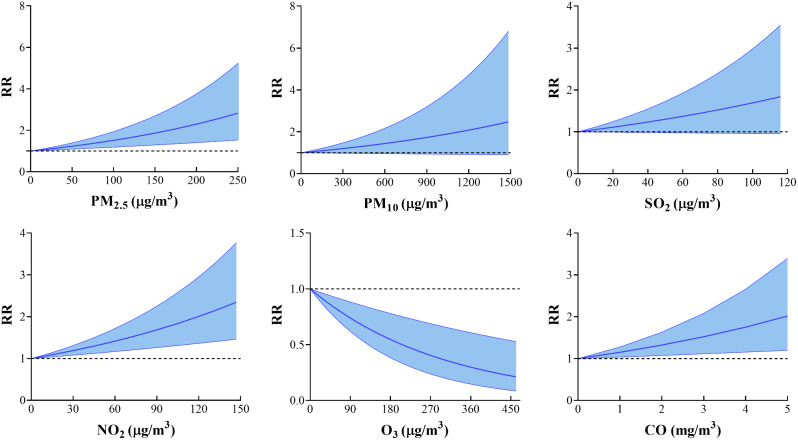
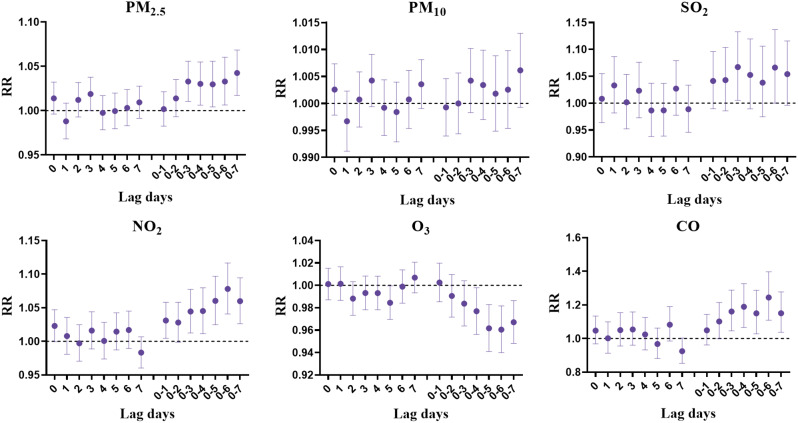
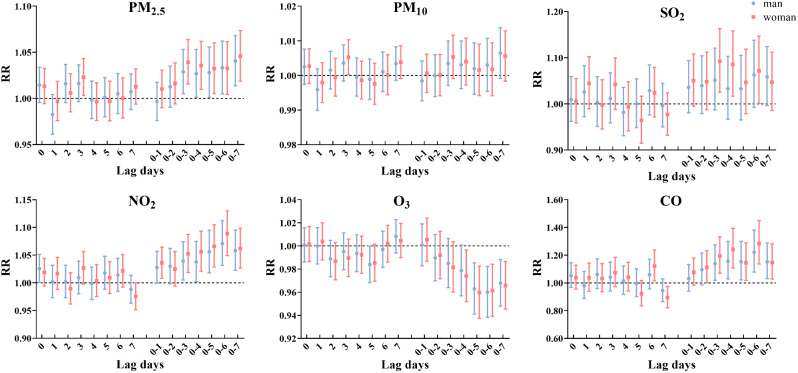
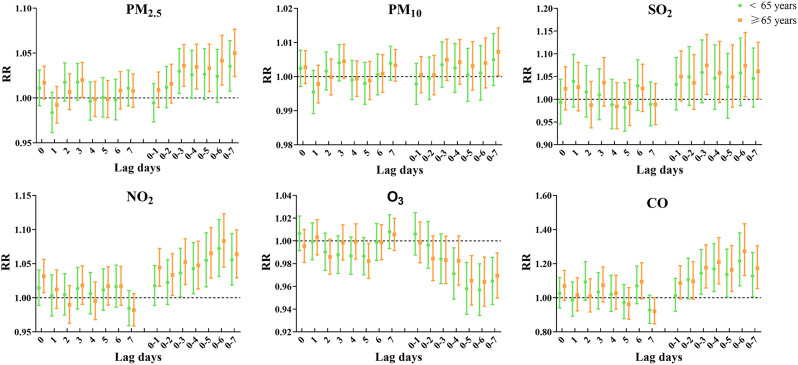
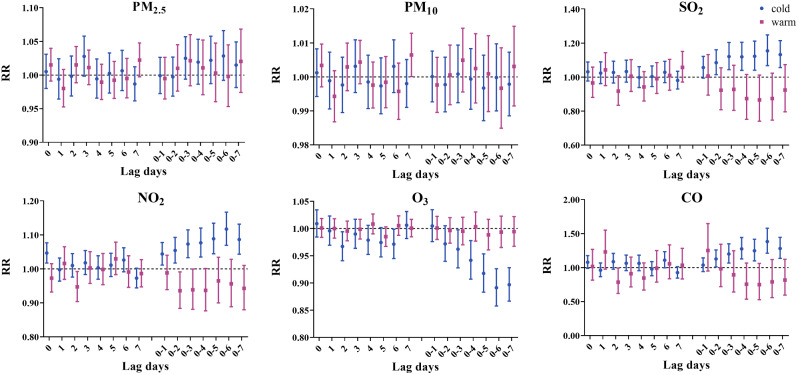
Results: A total of 39,110 cases of angina hospitalization were included in the study. The results showed a significant positive correlation between PM2.5, SO2, NO2, and CO and angina hospitalization. Their maximum harmful effects were observed at lag0-7 (RR = 1.042; 95% CI: 1.017, 1.068), lag0-3 (RR = 1.067; 95% CI: 1.005, 1.133), lag0-6 (RR = 1.078; 95% CI: 1.041, 1.117), and lag0-6 (RR = 1.244; 95% CI: 1.109, 1.397), respectively. PM10 did not have an overall risk effect on angina hospitalization, but it did have a risk effect on women and the elderly. O3 was significantly negatively correlated with angina hospitalization, with the most pronounced effect observed at lag0-6 (RR = 0.960; 95% CI: 0.940, 0.982). Stratified analysis results showed that women and the elderly were more susceptible to pollutants, and the adverse effects of pollutants were stronger in the cold season.
Conclusion: Short-term exposure to PM2.5, SO2, NO2, and CO increases the risk of hospitalization for angina.
Keywords: Air pollution; Angina pectoris; Hospitalization; Relative risk.
© 2024. The Author(s).
Conflict of interest statement
The authors declare no competing interests.
Figures
References
-
- Gibbons RJ, Abrams J, Chatterjee K, Daley J, Deedwania PC, Douglas JS, Ferguson TB, Fihn SD, Fraker TD, Gardin JM, et al. ACC/AHA 2002 guideline update for the management of patients with chronic stable angina - summary article - A report of the American College of Cardiology/American Heart Association Task Force on Practice Guidelines (Committee on the management of patients with chronic stable angina) Circulation. 2003;107(1):149–58. doi: 10.1161/01.CIR.0000047041.66447.29. - DOI - PubMed
Publication types
MeSH terms
Substances
Grants and funding
LinkOut - more resources
Full Text Sources
Medical
