


This is a preprint.
Developing, characterizing and modeling CRISPR-based point-of-use pathogen diagnostics
- PMID: 39005318
- PMCID: PMC11244977
- DOI: 10.1101/2024.07.03.601853
Developing, characterizing and modeling CRISPR-based point-of-use pathogen diagnostics
Update in
-
Developing, Characterizing, and Modeling CRISPR-Based Point-of-Use Pathogen Diagnostics.ACS Synth Biol. 2025 Jan 17;14(1):129-147. doi: 10.1021/acssynbio.4c00469. Epub 2024 Dec 13. ACS Synth Biol. 2025. PMID: 39670656 Free PMC article.
Abstract
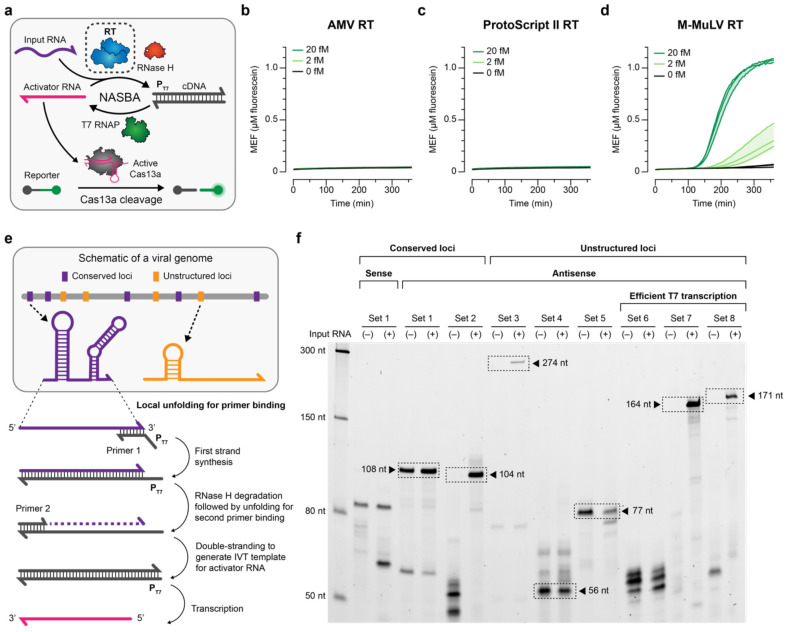
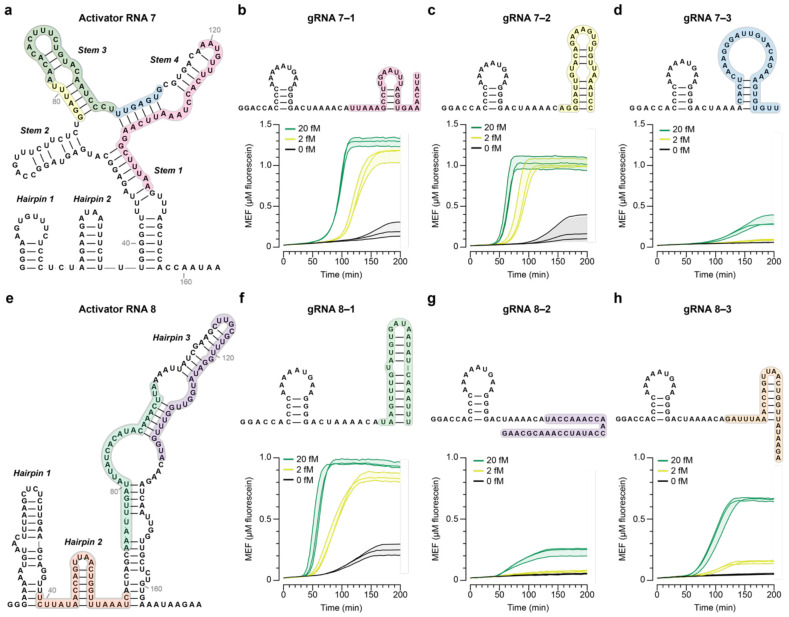
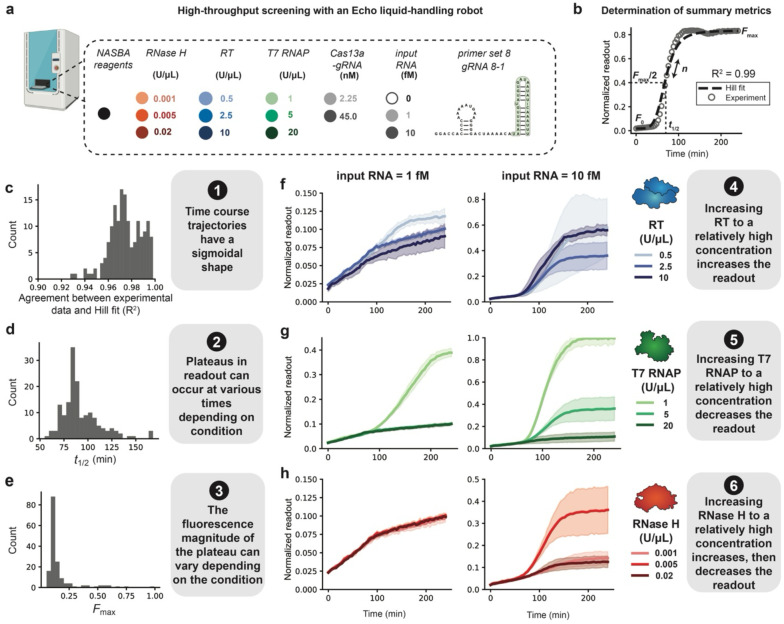
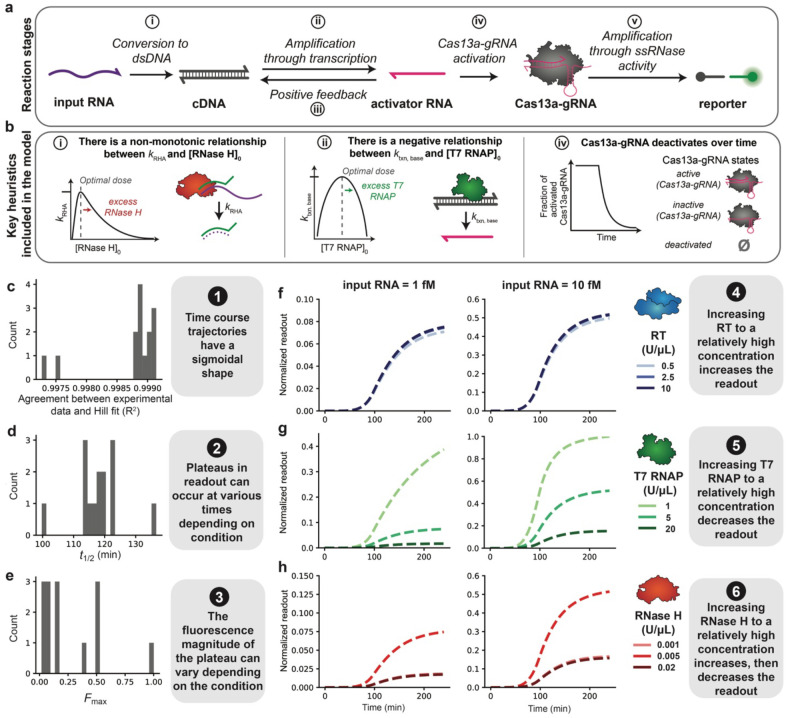
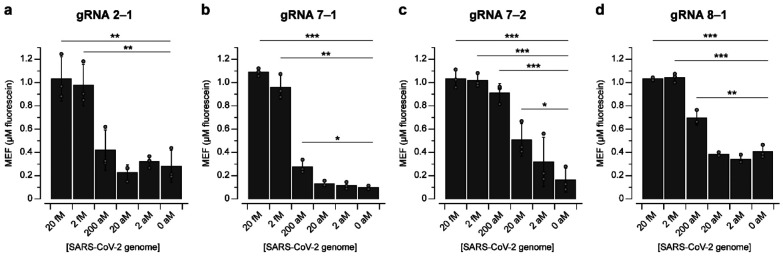
Recent years have seen intense interest in the development of point-of-care nucleic acid diagnostic technologies to address the scaling limitations of laboratory-based approaches. Chief among these are combinations of isothermal amplification approaches with CRISPR-based detection and readouts of target products. Here, we contribute to the growing body of rapid, programmable point-of-care pathogen tests by developing and optimizing a one-pot NASBA-Cas13a nucleic acid detection assay. This test uses the isothermal amplification technique NASBA to amplify target viral nucleic acids, followed by Cas13a-based detection of amplified sequences. We first demonstrate an in-house formulation of NASBA that enables optimization of individual NASBA components. We then present design rules for NASBA primer sets and LbuCas13a guide RNAs for fast and sensitive detection of SARS-CoV-2 viral RNA fragments, resulting in 20 - 200 aM sensitivity without any specialized equipment. Finally, we explore the combination of high-throughput assay condition screening with mechanistic ordinary differential equation modeling of the reaction scheme to gain a deeper understanding of the NASBA-Cas13a system. This work presents a framework for developing a mechanistic understanding of reaction performance and optimization that uses both experiments and modeling, which we anticipate will be useful in developing future nucleic acid detection technologies.
Conflict of interest statement
CONFLICT OF INTEREST DISCLOSURE K.K.A. M. C. J. & J.B.L. are founders and have financial interest in Stemloop, Inc, and these interests are reviewed and managed by Northwestern University and Stanford University in accordance with their conflict-of-interest policies. All other authors declare no conflicts of interest.
Figures
References
Publication types
Grants and funding
LinkOut - more resources
Full Text Sources
Miscellaneous
