


This is a preprint.
IGF-1 Acts through Kiss1-expressing Cells to Influence Metabolism and Reproduction
- PMID: 39005405
- PMCID: PMC11244982
- DOI: 10.1101/2024.07.02.601722
IGF-1 Acts through Kiss1-expressing Cells to Influence Metabolism and Reproduction
Abstract
Objective: Kisspeptin, encoded by the Kiss1 gene, ties puberty and fertility to energy status; however, the metabolic factors that control Kiss1-expressing cells need to be clarified.
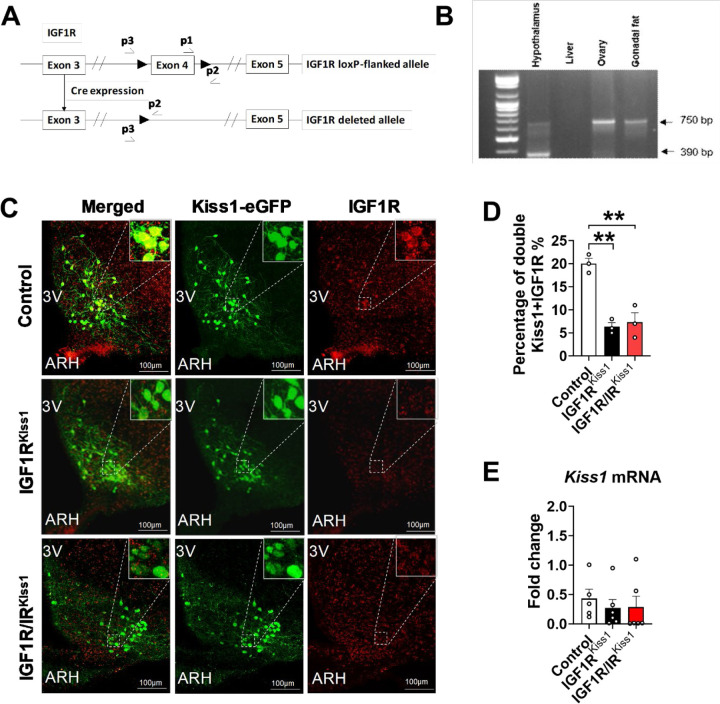
Methods: To evaluate the impact of IGF-1 on the metabolic and reproductive functions of kisspeptin producing cells, we created mice with IGF-1 receptor deletion driven by the Kiss1 promoter (IGF1RKiss1 mice). Previous studies have shown IGF-1 and insulin can bind to each other's receptor, permitting IGF-1 signaling in the absence of IGF1R. Therefore, we also generated mice with simultaneous deletion of the IGF1R and insulin receptor (IR) in Kiss1-expressing cells (IGF1R/IRKiss1 mice).
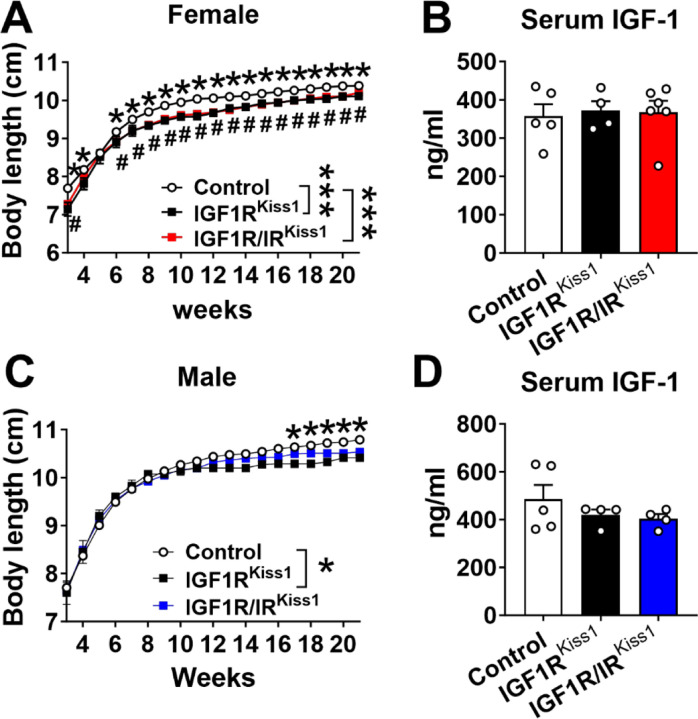
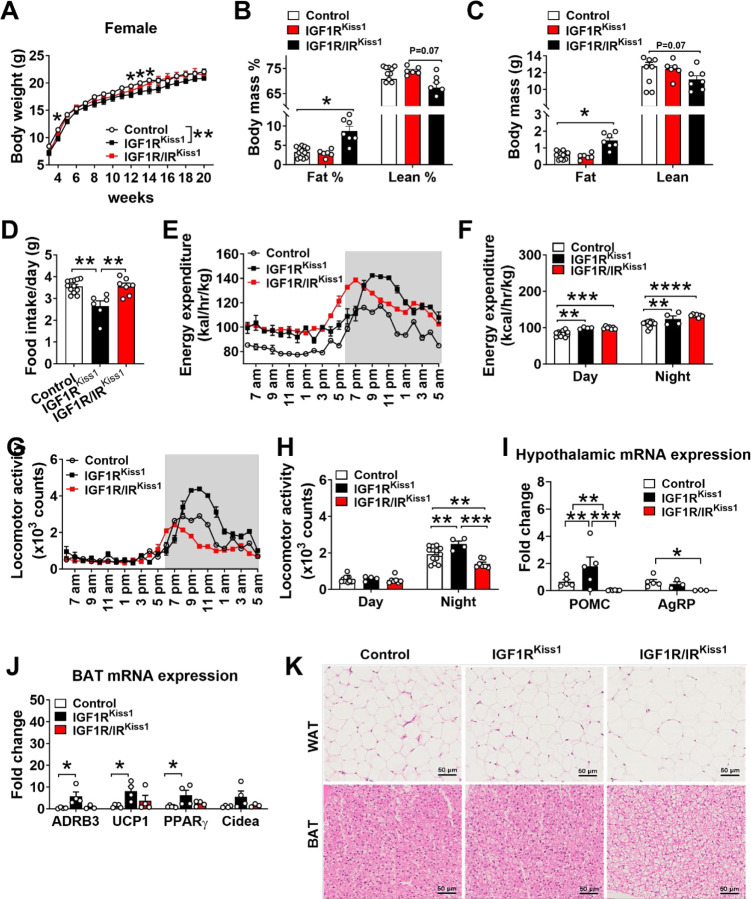
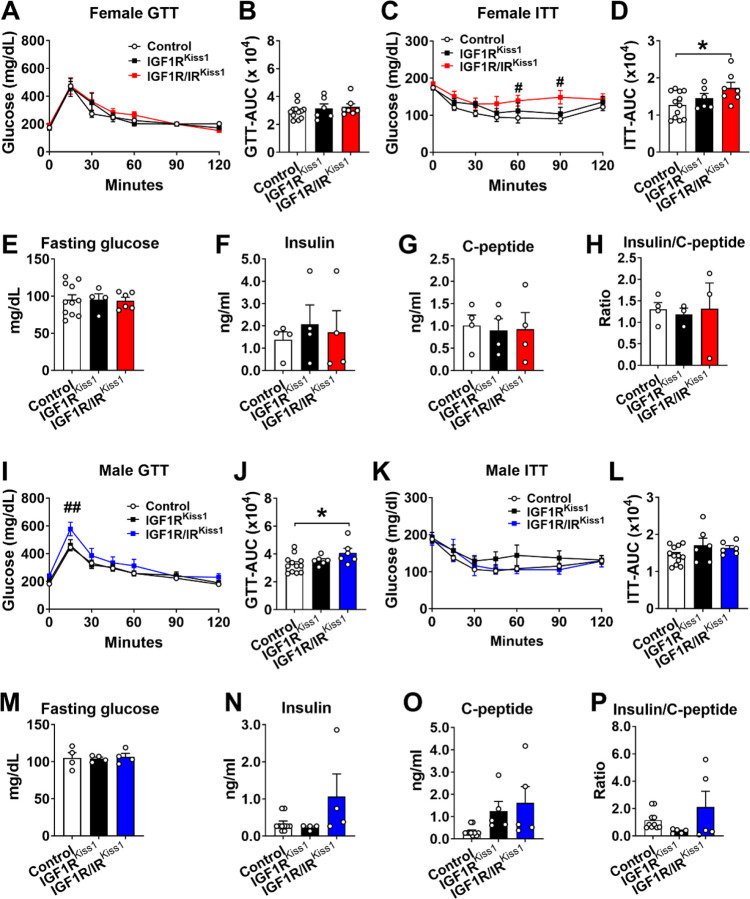
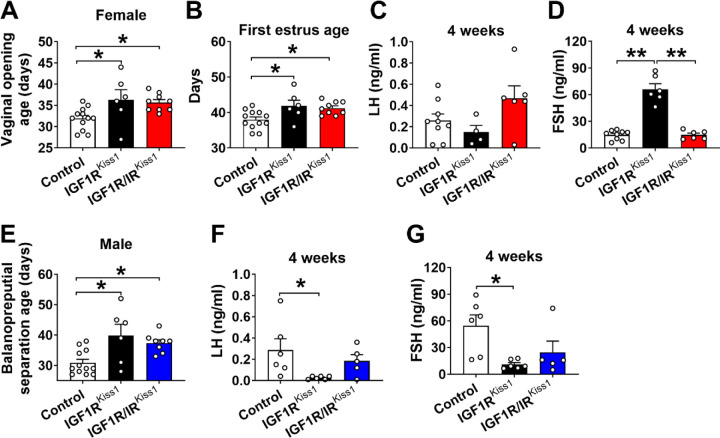
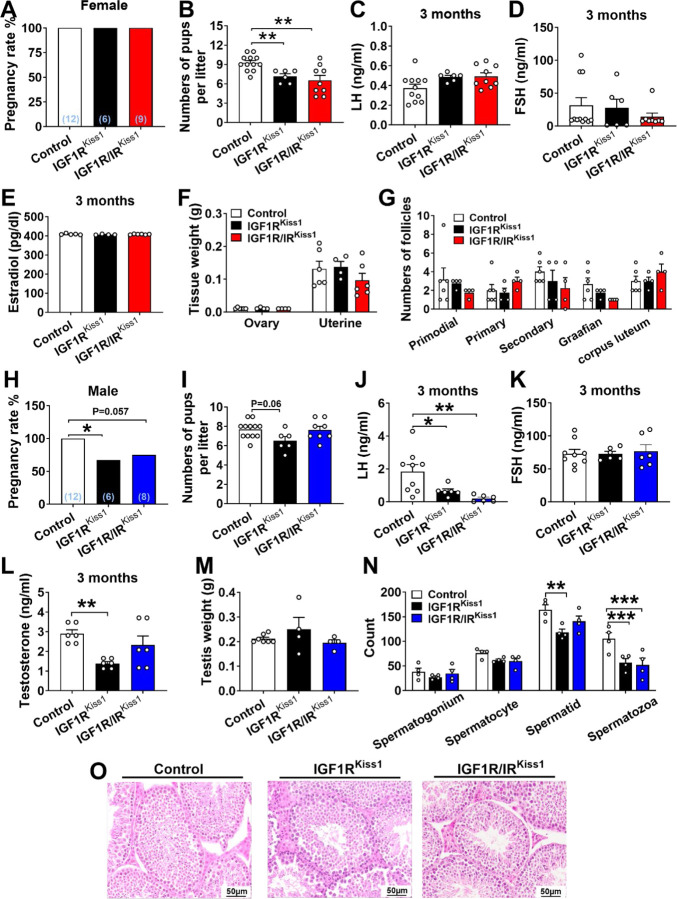
Results: Loss of IGF1R in Kiss1 cells caused stunted body length. In addition, female IGF1RKiss1 mice displayed lower body weight and food intake plus higher energy expenditure and physical activity. This phenotype was linked to higher proopiomelanocortin (POMC) expression and heightened brown adipose tissue (BAT) thermogenesis. Male IGF1RKiss1 mice had mild changes in metabolic functions. Moreover, IGF1RKiss1 mice of both sexes experienced delayed puberty. Notably, male IGF1RKiss1 mice had impaired adulthood fertility accompanied by lower gonadotropin and testosterone levels. Thus, IGF1R in Kiss1-expressing cells impacts metabolism and reproduction in a sex-specific manner. IGF1R/IRKiss1 mice had higher fat mass and glucose intolerance, suggesting IGF1R and IR in Kiss1-expressing cells together regulate body composition and glucose homeostasis.
Conclusions: Overall, our study shows that IGF1R and IR in Kiss1 have cooperative roles in body length, metabolism, and reproduction.
Keywords: Body weight; IGF-1 receptor; Insulin receptor; Kiss1-expressing cells; Reproduction.
Conflict of interest statement
DECLARATION OF COMPETING INTEREST The authors declare that they have no known competing financial interests or personal relationships that could have appeared to influence the work reported in this paper.
Figures


References
-
- Herbison A.E., 2016. Control of puberty onset and fertility by gonadotropin-releasing hormone neurons. Nat Rev Endocrinol 12(8):452–466. - PubMed
-
- d’Anglemont de Tassigny X., Colledge W.H., 2010. The role of kisspeptin signaling in reproduction. Physiology (Bethesda) 25(4):207–217. - PubMed
-
- Kirilov M., Clarkson J., Liu X., Roa J., Campos P., Porteous R., et al. , 2013. Dependence of fertility on kisspeptin-Gpr54 signaling at the GnRH neuron. Nat Commun 4:2492. - PubMed
Publication types
Grants and funding
LinkOut - more resources
Full Text Sources
Miscellaneous
