


Curcumin supplementation prevents cisplatin-induced nephrotoxicity: a randomized, double-blinded, and placebo-controlled trial
- PMID: 39005571
- PMCID: PMC11246108
- DOI: 10.4103/1735-5362.389952
Curcumin supplementation prevents cisplatin-induced nephrotoxicity: a randomized, double-blinded, and placebo-controlled trial
Abstract
Background and purpose: Cisplatin-induced nephrotoxicity (CIN) remains the most prevailing unfavorable influence and may affect its clinical usage. This study sought to explore the possible impacts of curcumin on preventing CIN in human subjects.
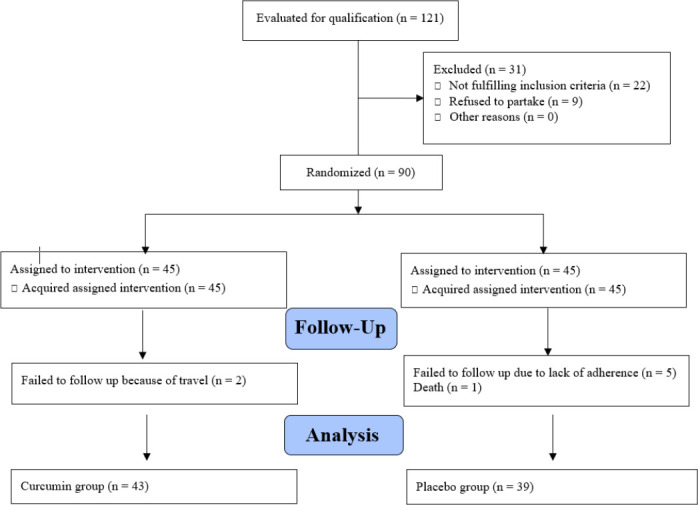
Clinical design: The investigation was a placebo-controlled, double-blinded, randomized clinical trial conducted on 82 patients receiving nano-curcumin (80 mg twice daily for five days) or an identical placebo with standard nephroprotective modalities against CIN. Data was gathered on patients' demographics, blood, urinary nitrogen, creatinine (Cr) levels, urinary electrolytes, and urine neutrophil gelatinase-associated lipocalin (NGAL) levels in treatment and placebo groups, 24 h and five days after initiating the administration of cisplatin.
Findings/results: Both investigation groups were alike considering the demographic characteristics and clinical baseline data. Curcumin administration led to a significant improvement in blood-urine nitrogen (BUN). BUN, Cr, glomerular filtration rate (GFR), and the ratio of NGAL-to-Cr considerably altered during the follow-up periods. However, the further alterations in other indices, including urinary sodium, potassium, magnesium, NGAL values, and potassium-to-Cr ratio were not statistically noteworthy. The significant differences in the NGAL-to-Cr ratio between the two groups may indicate the potential protective impact of curcumin supplementation against tubular toxicity. Curcumin management was safe and well-accepted; only insignificant gastrointestinal side effects were reported.
Conclusion and implications: Curcumin supplementation may have the potential to alleviate CIN and urinary electrolyte wasting in cancer patients. Future research investigating the effects of a longer duration of follow-up, a larger participant pool, and a higher dosage of curcumin are recommended.
Keywords: Cisplatin; Clinical trial; Curcumin; Electrolyte; Nephrotoxicity.
Copyright: © 2023 Research in Pharmaceutical Sciences.
Conflict of interest statement
The authors declared no conflicts of interest in this study.
References
-
- Manohar S, Leung N. Cisplatin nephrotoxicity: a review of the literature. J Nephrol. 2018;31(1):15–25. DOI: 10.1007/s40620-017-0392-z. - PubMed
-
- Athira KV, Madhana RM, Lahkar M. Flavonoids, the emerging dietary supplement against cisplatin-induced nephrotoxicity. Chem Biol Interact. 2016;248:18–20. DOI: 10.1016/j.cbi.2016.02.005. - PubMed
-
- Maliakel DM, Kagiya TV, Nair CK. Prevention of cisplatin-induced nephrotoxicity by glucosides of ascorbic acid and alpha-tocopherol. Exp Toxicol Pathol. 2008;60(6):521–527. DOI: 10.1016/j.etp.2008.04.015. - PubMed
LinkOut - more resources
Full Text Sources
Miscellaneous