Genomic Alterations Correlated to Trastuzumab Resistance and Clinical Outcomes in HER2+/HR- Breast Cancers of Patients Living in Northwestern China
- PMID: 39006074
- PMCID: PMC11242333
- DOI: 10.7150/jca.84832
Genomic Alterations Correlated to Trastuzumab Resistance and Clinical Outcomes in HER2+/HR- Breast Cancers of Patients Living in Northwestern China
Abstract
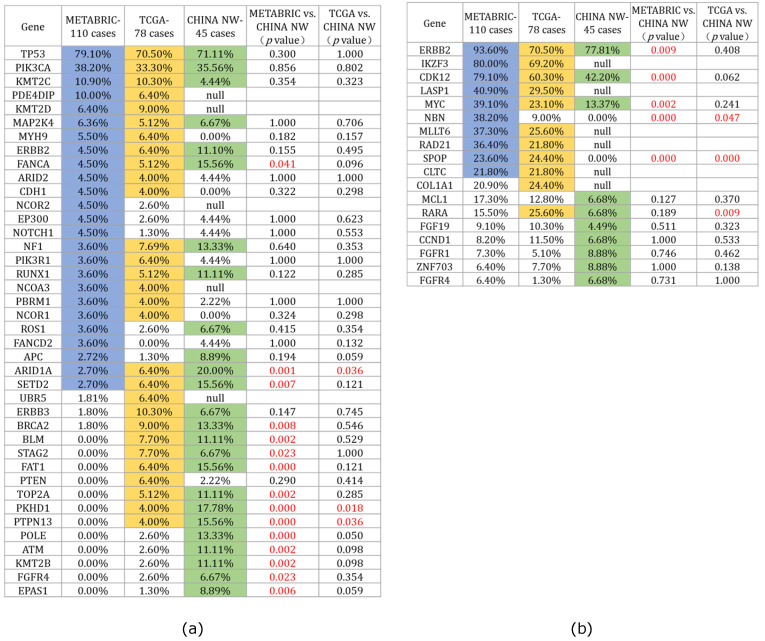
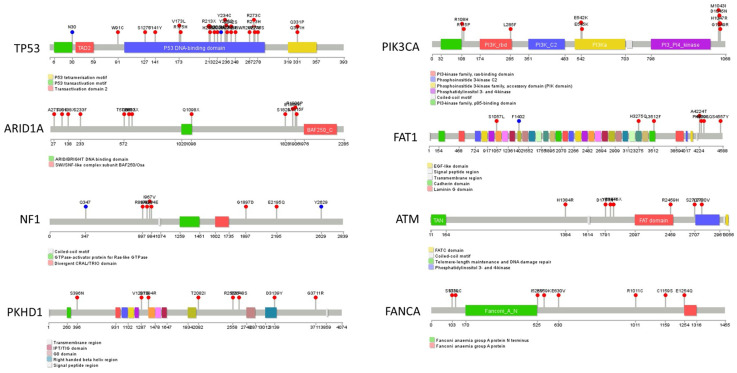
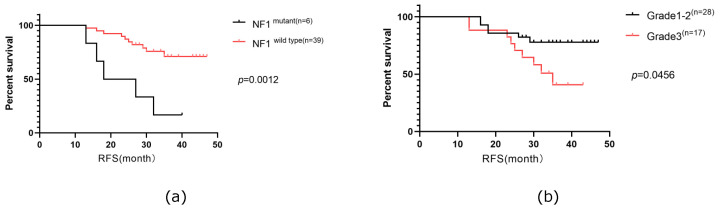
Anti-HER2 therapy has significantly improved the survival rates of patients with HER2+ breast cancer. However, a subset of these patients eventually experience treatment failure, and the underlying genetic mechanisms remain largely unexplored. This underscores the need to investigate the genomic heterogeneity of HER2+ breast cancer. In this study, we focus on HER2+/HR- breast cancer, as it differs from HER2+/HR+ breast cancer in terms of genetic and biological characteristics. We performed gene-targeted genome sequencing on 45 HER2+/HR- breast cancer samples and identified 650 mutations across 268 cancer-related genes. TP53 (71.1%) and PIK3CA (35.6%) were the most frequently mutated genes in our sample. Additionally, ERBB2 (77.8%), CDK12 (42.2%), and MYC (11.1%) exhibited a high frequency of copy number amplifications (CNAs). Comparative analysis with two other HER2+/HR- breast cancer cohorts revealed that our cohort had higher genetic variation rates in ARID1A, PKHD1, PTPN13, FANCA, SETD2, BRCA2, BLM, STAG2, FAT1, TOP2A, POLE, ATM, KMT2B, FGFR4, and EPAS1. Notably, in our cohort, NF1 and ATM mutations were more prevalent in trastuzumab-resistant patients (NF1, p=0.016; ATM, p=0.006) and were associated with primary trastuzumab resistance (NF1, p=0.042; ATM, p=0.021). Moreover, patients with NF1 mutations (p=0.009) and high histological grades (p=0.028) were more likely to experience early relapse. Ultimately, we identified a unique cancer-related gene mutation profile and a subset of genes associated with primary resistance to trastuzumab and RFS in patients with HER2+/HR- breast cancer in Northwest China. These findings could lay the groundwork for future studies aimed at elucidating the mechanisms of resistance to trastuzumab and improving HER2-targeted treatment strategies.
Keywords: Breast cancer; Genomic profiling; HER2 positive; Trastuzumab resistance.
© The author(s).
Conflict of interest statement
Competing Interests: The authors have declared that no competing interest exists.
Figures



References
-
- Zheng R, Zhang S, Zeng H, Wang S, Sun K, Chen R. et al. Cancer incidence and mortality in China, 2016. Journal of the National Cancer Center. 2022;2:1–9.
-
- Loibl S, Gianni L. HER2-positive breast cancer. The Lancet. 2017;389:2415–29. - PubMed
-
- Vernieri C, Milano M, Brambilla M, Mennitto A, Maggi C, Cona MS. et al. Resistance mechanisms to anti-HER2 therapies in HER2-positive breast cancer: Current knowledge, new research directions and therapeutic perspectives. Critical reviews in oncology/hematology. 2019;139:53–66. - PubMed
-
- Wolff AC, Hammond ME, Schwartz JN, Hagerty KL, Allred DC, Cote RJ. et al. American Society of Clinical Oncology/College of American Pathologists guideline recommendations for human epidermal growth factor receptor 2 testing in breast cancer. J Clin Oncol. 2007;25:118–45. - PubMed
LinkOut - more resources
Full Text Sources
Research Materials
Miscellaneous