


Insight into COVID-19 associated liver injury: Mechanisms, evaluation, and clinical implications
- PMID: 39006140
- PMCID: PMC11237249
- DOI: 10.14744/hf.2023.2023.0025
Insight into COVID-19 associated liver injury: Mechanisms, evaluation, and clinical implications
Abstract
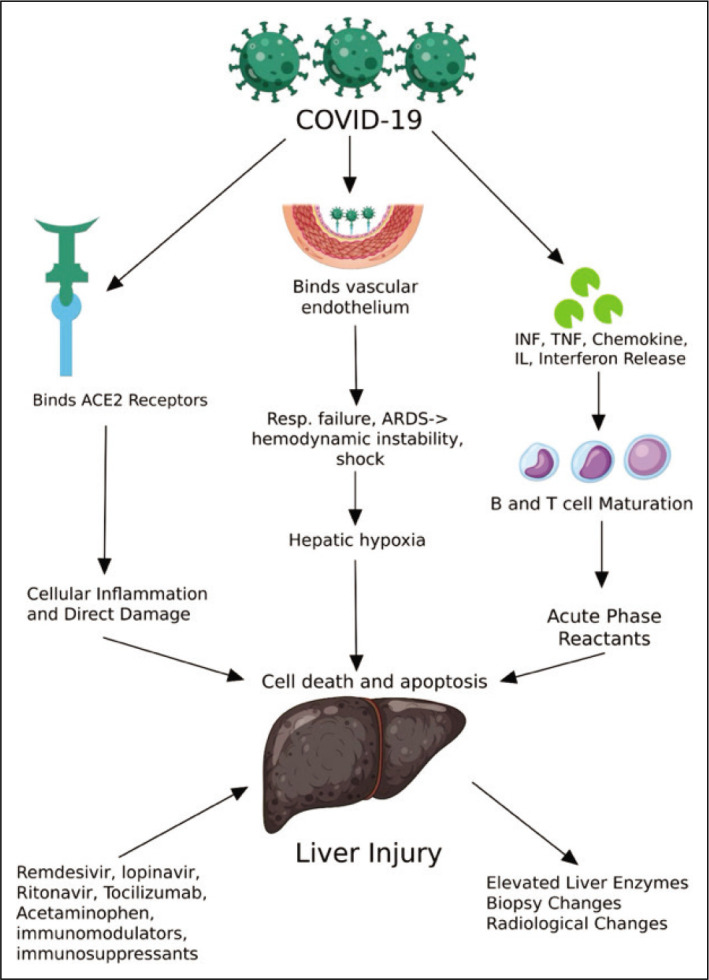
COVID-19 has affected millions worldwide, causing significant morbidity and mortality. While predominantly involving the respiratory tract, SARS-CoV-2 has also caused systemic illnesses involving other sites. Liver injury due to COVID-19 has been variably reported in observational studies. It has been postulated that liver damage may be due to direct damage by the SARS-CoV-2 virus or multifactorial secondary to hepatotoxic therapeutic options, as well as cytokine release syndrome and sepsis-induced multiorgan dysfunction. The approach to a COVID-19 patient with liver injury requires a thorough evaluation of the pattern of hepatocellular injury, along with the presence of underlying chronic liver disease and concurrent medications which may cause drug-induced liver injury. While studies have shown uneventful recovery in the majority of mildly affected patients, severe COVID-19 associated liver injury has been associated with higher mortality, prolonged hospitalization, and greater morbidity in survivors. Furthermore, its impact on long-term outcomes remains to be ascertained as recent studies report an association with metabolic-fatty liver disease. This present review provides insight into the subject by describing the postulated mechanism of liver injury, its impact in the presence of pre-existing liver disease, and its short- and long-term clinical implications.
Keywords: COVID-19 associated liver injury; SARS-CoV-2; cytokine release syndrome.
Conflict of interest statement
The authors have no conflict of interest to declare.
Figures
References
-
- Wise J. Covid-19: WHO declares end of global health emergency. BMJ. 2023;381:1041. - PubMed
Publication types
LinkOut - more resources
Full Text Sources
Miscellaneous