


Foodborne pathogenic bacteria in wild European hedgehogs (Erinaceus europaeus)
- PMID: 39010071
- PMCID: PMC11251316
- DOI: 10.1186/s13028-024-00747-9
Foodborne pathogenic bacteria in wild European hedgehogs (Erinaceus europaeus)
Abstract
Background: European hedgehogs (Erinaceus europaeus) are widely distributed across Europe. They may play an important role by spreading zoonotic bacteria in the environment and to humans and animals. The aim of our work was to study the prevalence and characteristics of the most important foodborne bacterial pathogens in wild hedgehogs.
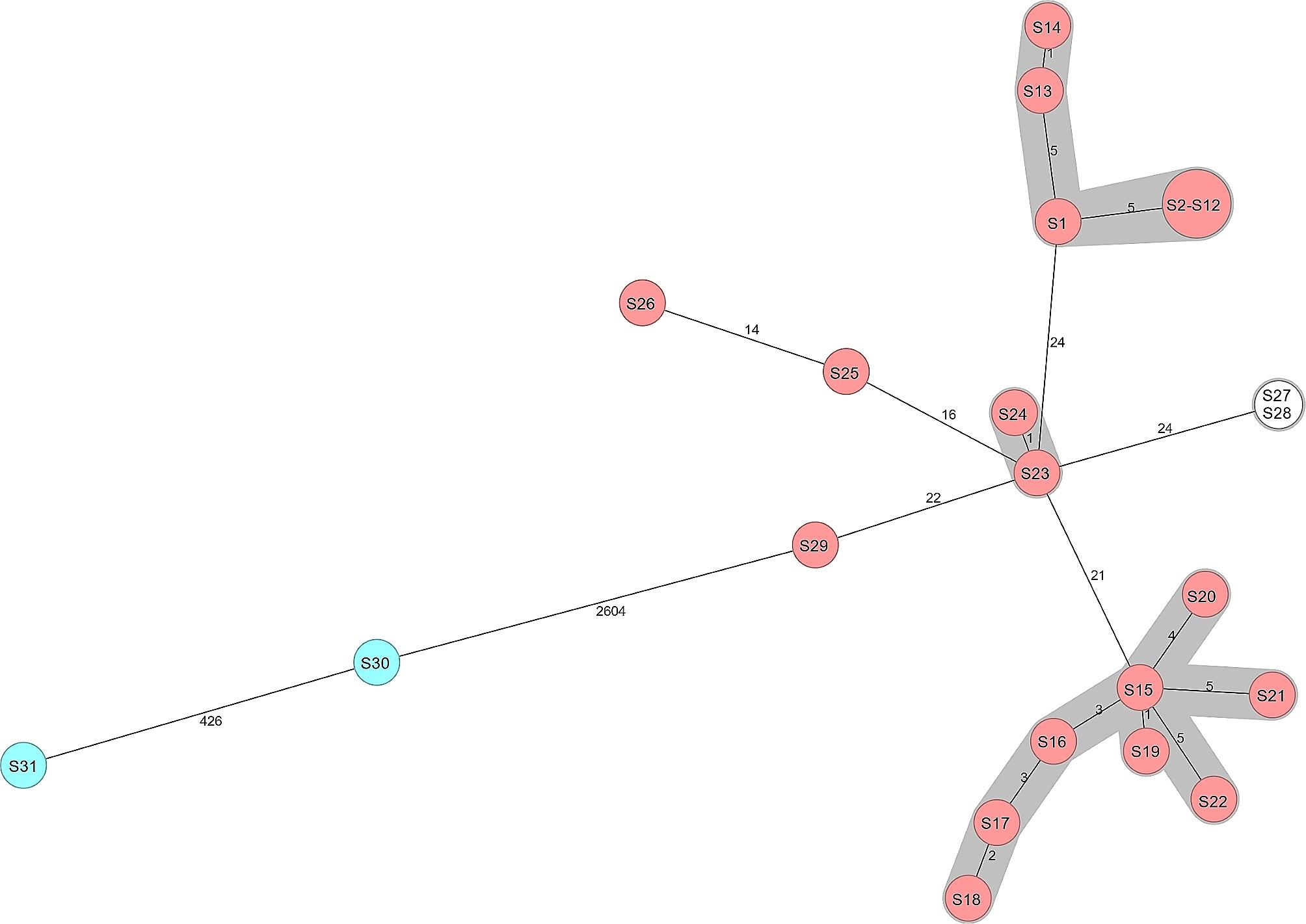
Results: Faecal samples from 148 hospitalised wild hedgehogs originating from the Helsinki region in southern Finland were studied. Foodborne pathogens were detected in 60% of the hedgehogs by PCR. Listeria (26%) and STEC (26%) were the most common foodborne pathogens. Salmonella, Yersinia, and Campylobacter were detected in 18%, 16%, and 7% of hedgehogs, respectively. Salmonella and Yersinia were highly susceptible to the tested antimicrobials. Salmonella Enteritidis and Listeria monocytogenes 2a were the most common types found in hedgehogs. All S. Enteritidis belonged to one sequence type (ST11), forming four clusters of closely related isolates. L. monocytogenes was genetically more diverse than Salmonella, belonging to 11 STs. C. jejuni ST45 and ST677, Y. pseudotuberculosis O:1 of ST9 and ST42, and Y. enterocolitica O:9 of ST139 were also found.
Conclusions: Our study shows that wild European hedgehogs should be considered an important source of foodborne pathogens, and appropriate hygiene measures after any contact with hedgehogs and strict biosecurity around farms are therefore important.
Keywords: European hedgehog; MLST; PCR; Prevalence; WGS; Zoonotic bacteria.
© 2024. The Author(s).
Conflict of interest statement
The authors declare that they have no competing interests.
Figures

References
-
- Rautio A, Valtonen A, Kunnasranta M. The effects of sex and season on home range in European hedgehogs at the northern edge of the species range. BioOne; 2013. pp. 107–23.
-
- Osaka M, Pynnönen-Oudman K, Lavikainen A, Amaike Y, Nishita Y, Masuda R. Genetic diversity and phylogeography of urban hedgehogs (Erinaceus europaeus) around Helsinki, Finland, revealed by mitochondrial DNA and microsatellite analyses. Mammal Res. 2022;67:99–107. doi: 10.1007/s13364-021-00603-5. - DOI
-
- Rautio A, Isomursu M, Valtonen A, Hirvelä-Koski V, Kunnasranta M. Mortality, diseases and diet of European hedgehogs (Erinaceus europaeus) in an urban environment in Finland. Mammal Res. 2016;61:161–9. doi: 10.1007/s13364-015-0256-7. - DOI
-
- Pista A, Silveira L, Ribeiro S, Fontes M, Castro R, Coelho A, et al. Pathogenic Escherichia coli, Salmonella spp. and Campylobacter spp. in two natural conservation centers of wildlife in Portugal: genotypic and phenotypic characterization. Microorganisms. 2022;10:2132. doi: 10.3390/microorganisms10112132. - DOI - PMC - PubMed
MeSH terms
LinkOut - more resources
Full Text Sources
