


Social vulnerability and surgery outcomes: a cross-sectional analysis
- PMID: 39014400
- PMCID: PMC11253435
- DOI: 10.1186/s12889-024-19418-5
Social vulnerability and surgery outcomes: a cross-sectional analysis
Abstract
Background: Post-operative complications present a challenge to the healthcare system due to the high unpredictability of their incidence. Socioeconomic conditions have been established as social determinants of health. However, their contribution relating to postoperative complications is still unclear as it can be heterogeneous based on community, type of surgical services, and sex and gender. Uncovering these relations can enable improved public health policy to reduce such complications.
Methods: In this study, we conducted a large population cross-sectional analysis of social vulnerability and the odds of various post-surgical complications. We collected electronic health records data from over 50,000 surgeries that happened between 2012 and 2018 at a quaternary health center in St. Louis, Missouri, United States and the corresponding zip code of the patients. We built statistical logistic regression models of postsurgical complications with the social vulnerability index of the tract consisting of the zip codes of the patient as the independent variable along with sex and race interaction.
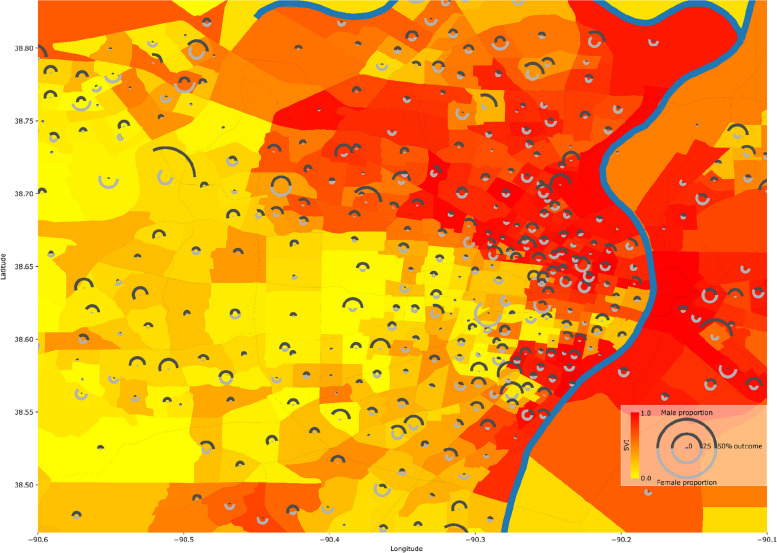
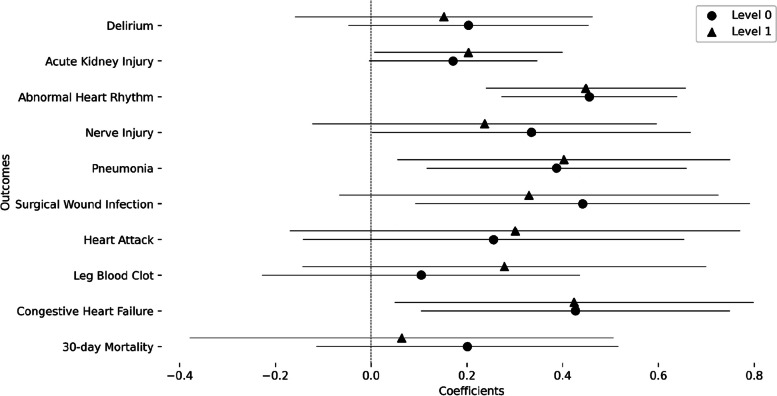
Results: Our sample from the St. Louis area exhibited high variance in social vulnerability with notable rapid increase in vulnerability from the south west to the north of the Mississippi river indicating high levels of inequality. Our sample had more females than males, and females had slightly higher social vulnerability index. Postoperative complication incidence ranged from 0.75% to 41% with lower incidence rate among females. We found that social vulnerability was associated with abnormal heart rhythm with socioeconomic status and housing status being the main association factors. We also found associations of the interaction of social vulnerability and female sex with an increase in odds of heart attack and surgical wound infection. Those associations disappeared when controlling for general health and comorbidities.
Conclusions: Our results indicate that social vulnerability measures such as socioeconomic status and housing conditions could affect postsurgical outcomes through preoperative health. This suggests that the domains of preventive medicine and public health should place social vulnerability as a priority to achieve better health outcomes of surgical interventions.
Keywords: Housing status; Postsurgical complications; Sex interaction; Social vulnerability; Socioeconomic status.
© 2024. The Author(s).
Conflict of interest statement
The authors declare no competing interests.
Figures


Update of
-
Social Vulnerability and Surgery Outcomes: A Cross-sectional Analysis.Res Sq [Preprint]. 2023 Nov 28:rs.3.rs-3580911. doi: 10.21203/rs.3.rs-3580911/v1. Res Sq. 2023. Update in: BMC Public Health. 2024 Jul 16;24(1):1907. doi: 10.1186/s12889-024-19418-5. PMID: 38077013 Free PMC article. Updated. Preprint.
References
-
- Snyders PCS, Swart O, Duvenage RC. Thirty-day readmission rate : a predictor of initial surgical severity or quality of surgical care? A regional hospital analysis. S Afr Med J. 2020;110(6):537–9. - PubMed
MeSH terms
LinkOut - more resources
Full Text Sources
Medical
