


Intensified training augments cardiac function, but not blood volume, in male youth elite ice hockey team players
- PMID: 39014554
- PMCID: PMC12053869
- DOI: 10.1113/EP091674
Intensified training augments cardiac function, but not blood volume, in male youth elite ice hockey team players
Abstract
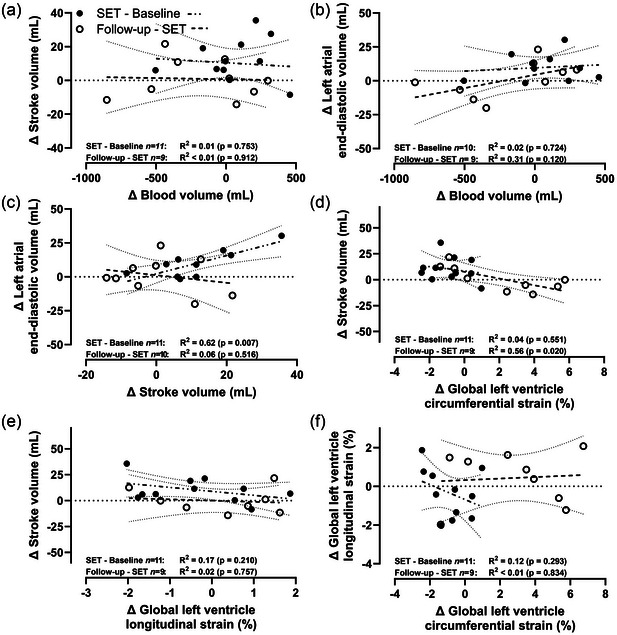
While it is well-established that a period of interval training performed at near maximal effort, such as speed endurance training (SET), enhances intense exercise performance in well-trained individuals, less is known about its effect on cardiac morphology and function as well as blood volume. To investigate this, we subjected 12 Under-20 Danish national team ice hockey players (age 18 ± 1 years, mean ± SD) to 4 weeks of SET, consisting of 6-10 × 20 s skating bouts at maximal effort interspersed by 2 min of recovery conducted three times weekly. This was followed by 4 weeks of regular training (follow-up). We assessed resting cardiac function and dimensions using transthoracic echocardiography and quantified total blood volume with the carbon monoxide rebreathing technique at three time points: before SET, after SET and after the follow-up period. After SET, stroke volume had increased by 10 (2-18) mL (mean (95% CI)), left atrial end-diastolic volume by 10 (3-17) mL, and circumferential strain improved by 0.9%-points (1.7-0.1) (all P < 0.05). At follow-up, circumferential strain and left atrial end-diastolic volume were reverted to baseline levels, while stroke volume remained elevated. Blood volume and morphological parameters for the left ventricle, including mass and end-diastolic volume, did not change during the study. In conclusion, our findings demonstrate that a brief period of SET elicits beneficial central cardiac adaptations in elite ice hockey players independent of changes in blood volume.
Keywords: blood volume; echocardiography; high‐intensity interval training; performance.
© 2024 The Author(s). Experimental Physiology published by John Wiley & Sons Ltd on behalf of The Physiological Society.
Conflict of interest statement
None.
Figures


References
-
- Baggish, A. L. , Wang, F. , Weiner, R. B. , Elinoff, J. M. , Tournoux, F. , Boland, A. , Picard, M. H. , Adolph, M. , Hutter, J. , & Wood, M. J. (2008). Training‐specific changes in cardiac structure and function: A prospective and longitudinal assessment of competitive athletes. Journal of Applied Physiology, 104(4), 1121–1128. - PubMed
-
- Billig, S. , Zayat, R. , Ebeling, A. , Steffen, H. , Nix, C. , Hatam, N. , Schnöring, H. , & Derwall, M. (2021). Transesophageal echocardiography in swine: Evaluation of left and right ventricular structure, function and myocardial work. The International Journal of Cardiovascular Imaging, 37(3), 835–846. - PMC - PubMed
-
- Bonne, T. C. , Doucende, G. , Flück, D. , Jacobs, R. A. , Nordsborg, N. B. , Robach, P. , Walther, G. , & Lundby, C. (2014). Phlebotomy eliminates the maximal cardiac output response to six weeks of exercise training. American Journal of Physiology‐Regulatory Integrative and Comparative Physiology, 306(10), R752–R760.. - PubMed
MeSH terms
Grants and funding
LinkOut - more resources
Full Text Sources
