


Electrokinetic convection-enhanced delivery for infusion into the brain from a hydrogel reservoir
- PMID: 39020197
- PMCID: PMC11255224
- DOI: 10.1038/s42003-024-06404-1
Electrokinetic convection-enhanced delivery for infusion into the brain from a hydrogel reservoir
Abstract
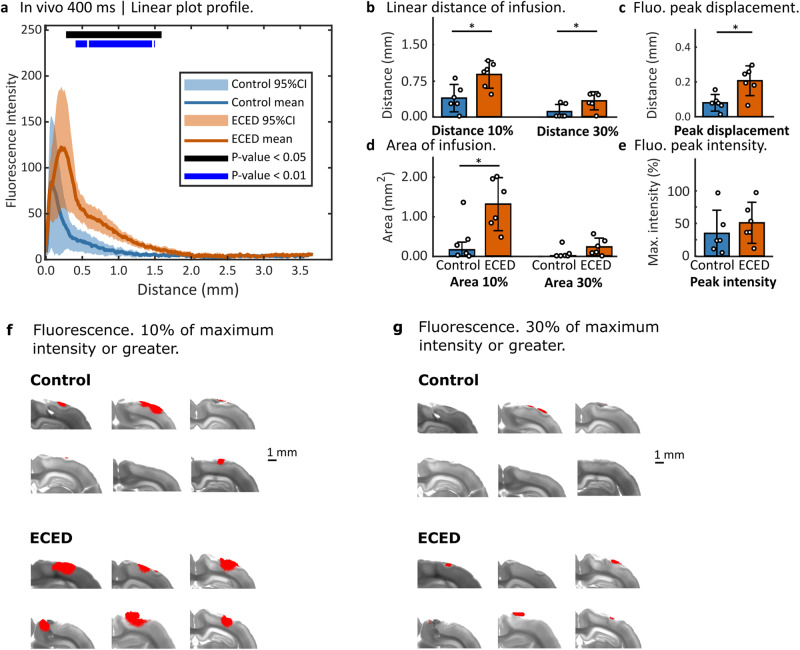
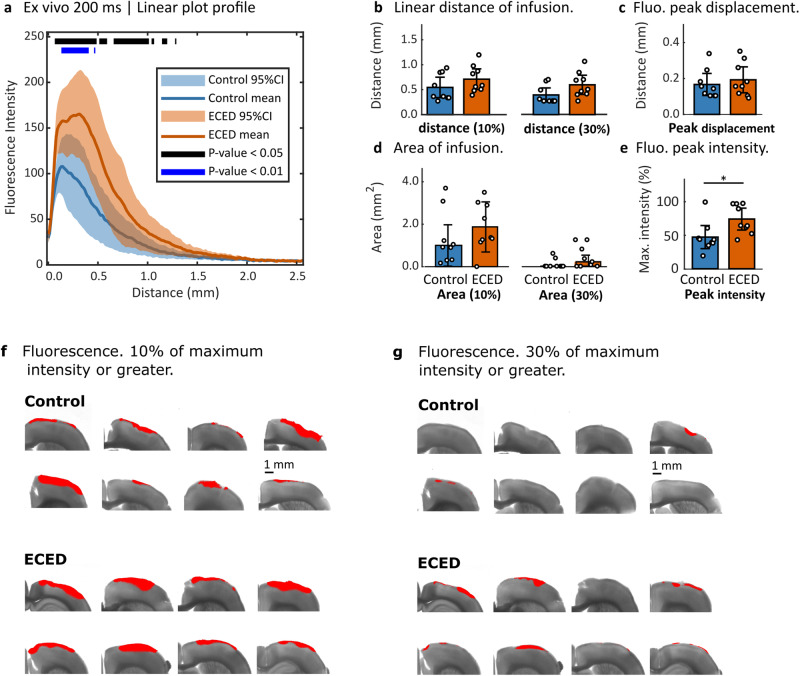
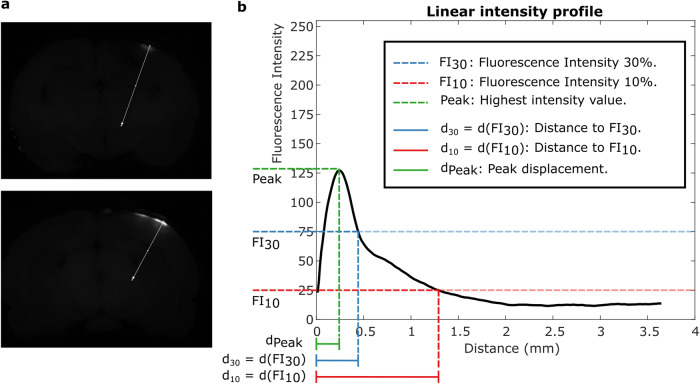
Electrokinetic convection-enhanced delivery (ECED) utilizes an external electric field to drive the delivery of molecules and bioactive substances to local regions of the brain through electroosmosis and electrophoresis, without the need for an applied pressure. We characterize the implementation of ECED to direct a neutrally charged fluorophore (3 kDa) from a doped biocompatible acrylic acid/acrylamide hydrogel placed on the cortical surface. We compare fluorophore infusion profiles using ECED (time = 30 min, current = 50 µA) and diffusion-only control trials, for ex vivo (N = 18) and in vivo (N = 12) experiments. The linear intensity profile of infusion to the brain is significantly higher in ECED compared to control trials, both for in vivo and ex vivo. The linear distance of infusion, area of infusion, and the displacement of peak fluorescence intensity along the direction of infusion in ECED trials compared to control trials are significantly larger for in vivo trials, but not for ex vivo trials. These results demonstrate the effectiveness of ECED to direct a solute from a surface hydrogel towards inside the brain parenchyma based predominantly on the electroosmotic vector.
© 2024. The Author(s).
Conflict of interest statement
A.H.F. is an inventor in a patent for electroosmotic delivery assigned to University of Pittsburgh — of the Commonwealth System of Higher Education, Pittsburgh, PA (US). US Patent 11,471,674. Electroosmotic delivery was implemented in this study for fluorophore delivery to the brain. All other authors declare no competing interests.
Figures

References
Publication types
MeSH terms
Substances
LinkOut - more resources
Full Text Sources
