


Cervical cancer screening by cytology and the burden of epithelial abnormalities in low resource settings: a tertiary-center 42-year study
- PMID: 39020330
- PMCID: PMC11253459
- DOI: 10.1186/s12905-024-03254-1
Cervical cancer screening by cytology and the burden of epithelial abnormalities in low resource settings: a tertiary-center 42-year study
Abstract
Background: Cytological screening remains a high-impact practice, particularly in low-resource settings, for preventing cervical cancer. The examination of screening practices over time and the prevalence of epithelial abnormalities have not been investigated in longitudinal studies in one of the largest countries in the Middle East and Africa.
Methods: Routine healthcare data, between March 1981 and December 2022, were extracted from the database of the Early Cancer Detection Unit in a tertiary referral university hospital in the Greater Cairo Region, Egypt. Cervical smears were obtained using a standardized technique and sent to the cytopathology laboratory for conventional cytology examination by expert pathologists. The anonymous data were analyzed to determine the temporal trend of the number of women screened each year and the prevalence of epithelial abnormalities.
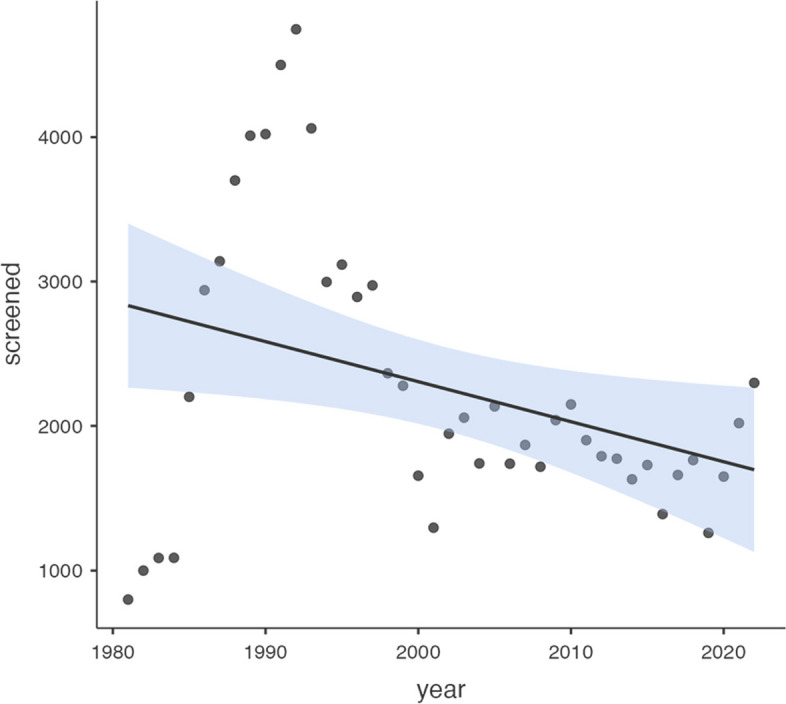
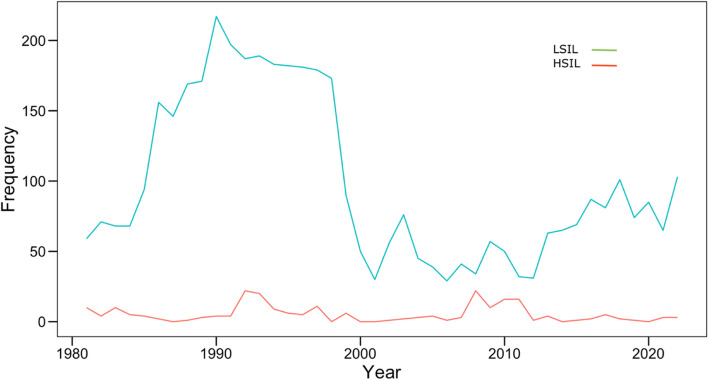
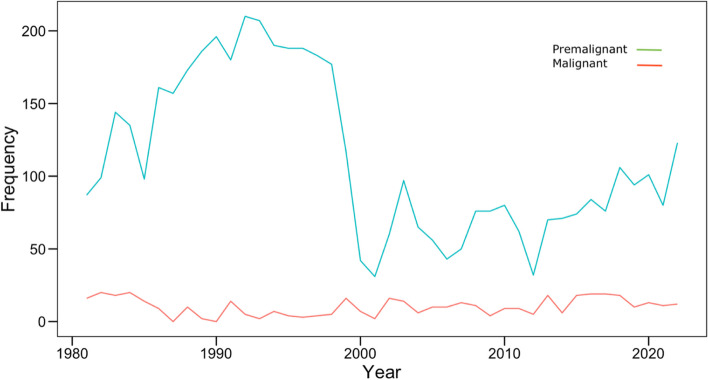
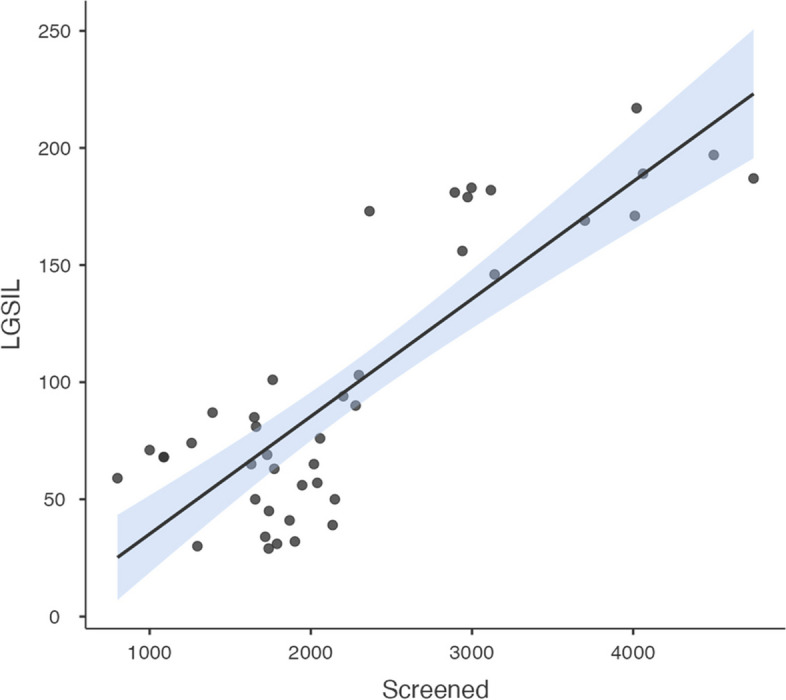
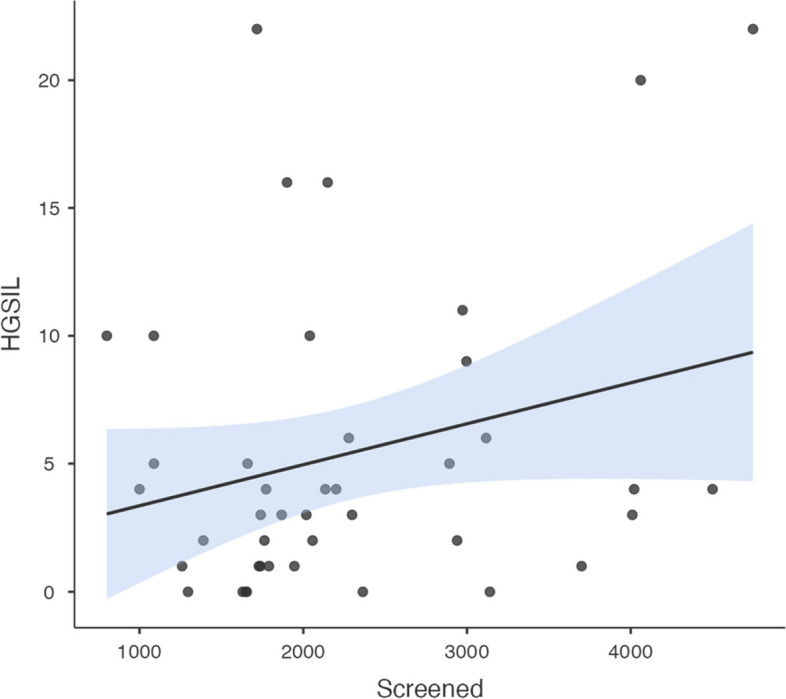
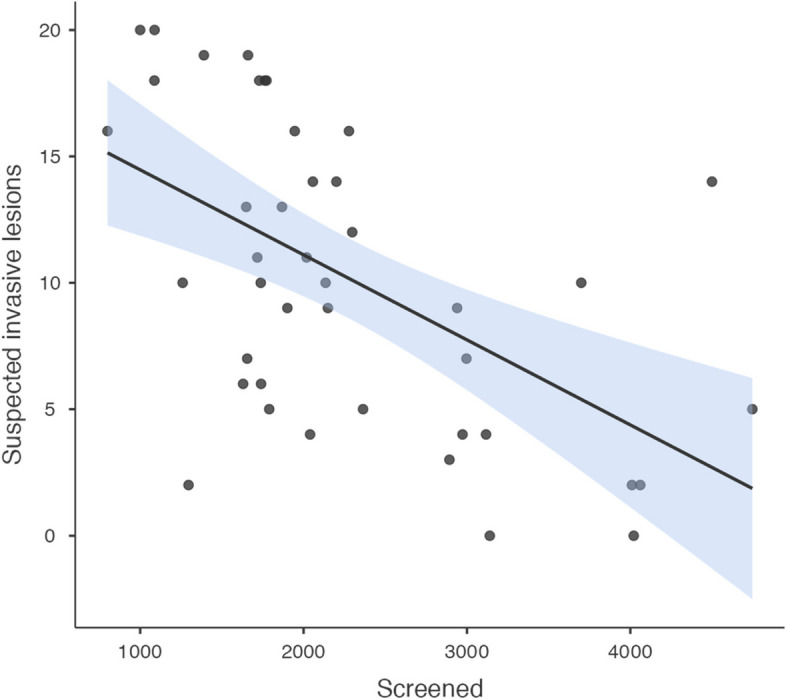
Results: Data included the results of satisfactory smears from 95120 women. The mean age (SD) of the women at the time of screening was 38.5 (10.5). None of the included women received an HPV vaccine. Abnormal epithelial cells were reported in 5174 women (5.44%). Of these epithelial abnormalities, the majority were low-grade squamous intraepithelial lesions in 4144 women (4.36%). Other abnormalities included atypical squamous cells in 378 women (0.40%), high-grade squamous intraepithelial lesions in 226 women (0.24%), atypical glandular cells not otherwise specified in 184 women (0.19%), adenocarcinoma in 165 women (0.17%), squamous cell carcinoma in 70 women (0.07%), and atypical glandular cells favoring neoplasms in 7 women (0.01%). Women who were at an early age at first intercourse, those who opted for routine cervical cytology screening, and those who were older at screening were more likely to have epithelial abnormalities. The yearly number of screened women was positively associated with the detection of low-grade squamous intraepithelial lesions (correlation coefficient [95% CI] = 0.84 [0.72, 0.91]) and negatively associated with the detection of squamous cell carcinoma (correlation coefficient [95% CI] = -0.55 [-0.73, -0.29]).
Conclusions: The small number of annually screened Egyptian women and the temporal trend in epithelial abnormalities critically demonstrate the need for establishing and scaling up a structured population-based program to achieve the goal of eliminating cervical cancer.
Keywords: Cancer screening; Cervical cancer; Early detection of cancer; Pap smear; Squamous intraepithelial lesions of the cervix; Uterine cervical neoplasms.
© 2024. The Author(s).
Conflict of interest statement
The authors declare no competing interests.
Figures
References
-
- Wright J. Cervical intraepithelial neoplasia: Terminology, incidence, pathogenesis, and prevention. In: Goff B, editor. UpToDate. Wolters Kluwer. Available from https://www.uptodate.com/contents/cervical-intraepithelial-neoplasia-ter.... Accessed 8 Mar 2024.
-
- WHO guideline for screening and treatment of cervical pre-cancer lesions for cervical cancer prevention. Second edition. Geneva: World Health Organization; 2021. Available from: https://www.ncbi.nlm.nih.gov/books/NBK572317/. Accessed 8 Mar 2024. - PubMed
MeSH terms
LinkOut - more resources
Full Text Sources
Medical
Research Materials
