


Endovascular treatment of primary M3 occlusion stroke in clinical practice: analysis of the German Stroke Registry
- PMID: 39020409
- PMCID: PMC11256396
- DOI: 10.1186/s42466-024-00330-7
Endovascular treatment of primary M3 occlusion stroke in clinical practice: analysis of the German Stroke Registry
Abstract
Background: Endovascular treatment (ET) options for acute stroke due to distal middle cerebral artery occlusions are rapidly evolving, but data on outcome and safety are sparse. We therefore performed an analysis of patients undergoing ET for primary M3 occlusions in routine clinical practice in a nationwide registry.
Methods: Patients enrolled between 01/20 and 12/21 in the prospective, multicenter German Stroke Registry-Endovascular Treatment (GSR-ET) were screened for mechanical thrombectomy performed for primary M3 occlusion. We analyzed neurological deficit as measured by the National Institute of Health Stroke Scale (NIHSS), symptomatic intracranial hemorrhage (sICH), thrombectomy technique, successful reperfusion (modified Thrombolysis in Cerebral Infarction [mTICI] score of 2b-3) and functional outcome as measured by the modified Rankin Scale (mRS) at discharge and 90 days.
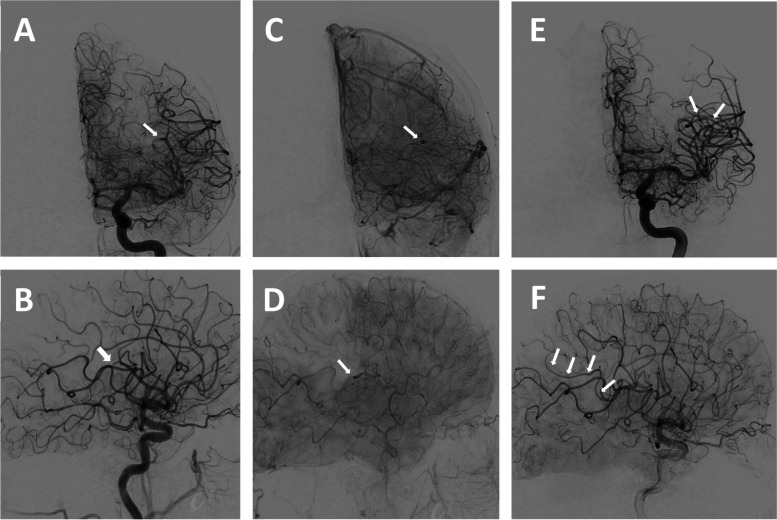
Results: Out of 5574 patients, 11 patients (0.2%, median age 80 years, 54.5% female) underwent ET for primary M3 occlusion. All patients had pre-admission mRS ≤ 1, median NIHSS on admission was 8, and successful reperfusion was achieved in 6/11 patients (54.5%). While no vasospasm, dissection or perforation was reported, symptomatic intracranial hemorrhage occurred in 2 patients (18.2%). Favorable outcome (mRS ≤ 2) was achieved in 6/11 patients (54.5%) at 90-day follow-up.
Conclusions: ET for primary M3 occlusions is rarely performed. While technically feasible, the procedure's potential benefits must be carefully weighed against its associated risks, including clinically relevant complications. Caution and further research is needed to optimize patient selection for this intervention.
Trial registration: GSR-ET; ClinicalTrials.gov Identifier: NCT03356392; Trial Registration Date: 11/29/2017.
Keywords: Clinical outcome; Endovascular treatment; MeVo; Mechanical thrombectomy; Stroke.
© 2024. The Author(s).
Conflict of interest statement
NMB received travel grants from Sanofi and Viatris. FD is a consultant/proctor for Cerenovus/Johnson&Johnson, Balt, Cerus Endovascular and Phenox. She received speaker's honoraria from Acandis, Stryker, Cerenovus/Johnson&Johnson, Asahi and research support from Cerenovus/Johnson&Johnson. MDC reports grants from the Werner Otto Stiftung outside the submitted the work. All other authors report no conflicting interests.
Figures
References
-
- Powers WJ, Rabinstein AA, Ackerson T, et al. Guidelines for the early management of patients with acute ischemic stroke: 2019 update to the 2018 guidelines for the early management of acute ischemic stroke: a guideline for healthcare professionals from the American Heart Association/American Stroke Association. Stroke. 2019;50(12):E344–E418. doi: 10.1161/STR.0000000000000211. - DOI - PubMed
Associated data
LinkOut - more resources
Full Text Sources
Medical