


Effects of 222 nm Germicidal Ultraviolet Light on Aerosol and VOC Formation from Limonene
- PMID: 39021671
- PMCID: PMC11249781
- DOI: 10.1021/acsestair.4c00065
Effects of 222 nm Germicidal Ultraviolet Light on Aerosol and VOC Formation from Limonene
Abstract
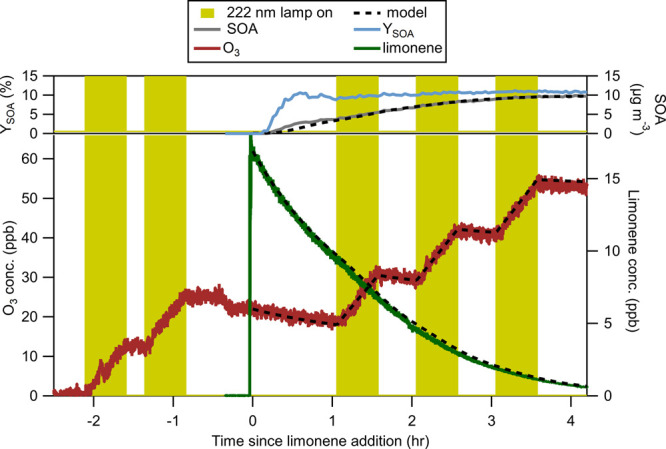
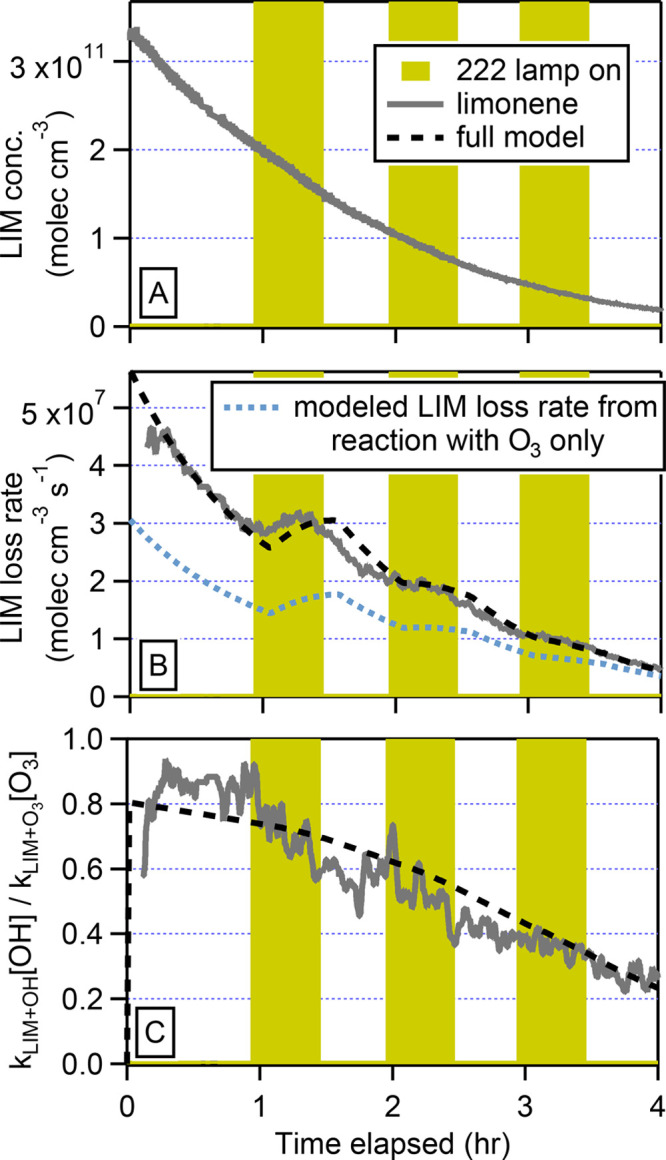
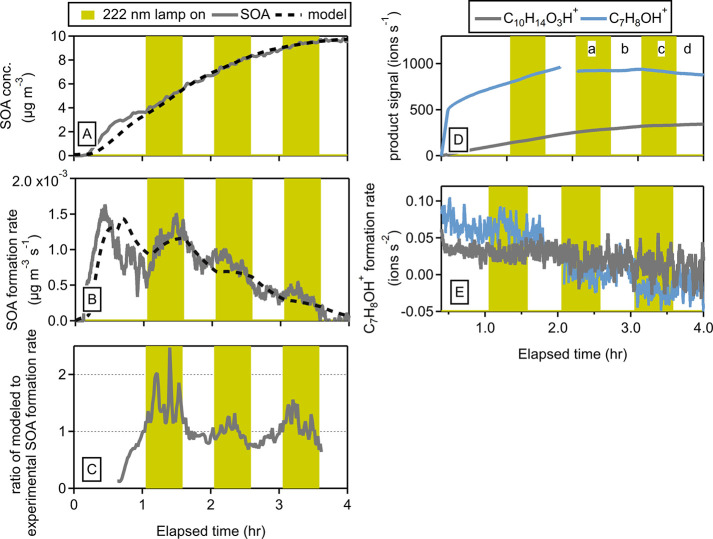
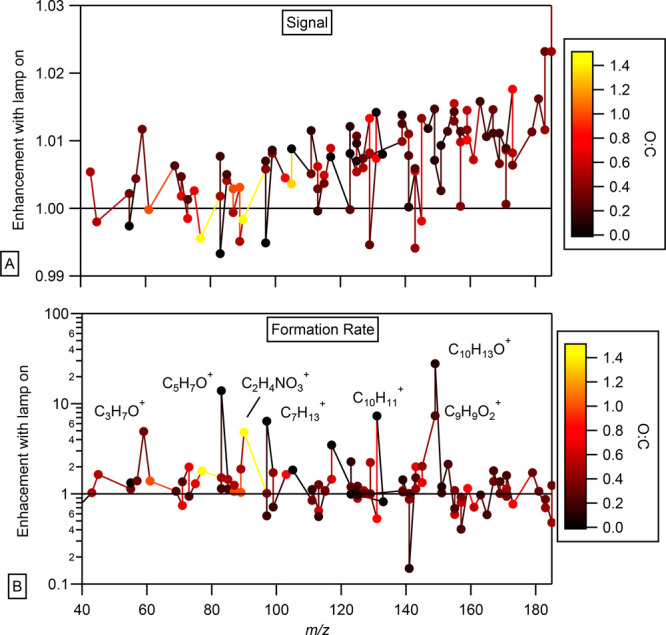
Since the 1930s, germicidal ultraviolet (GUV) irradiation has been used indoors to prevent the transmission of airborne diseases, such as tuberculosis and measles. Recently, it has received renewed attention due to the COVID-19 pandemic. While GUV radiation has been shown to be effective in inactivating airborne bacteria and viruses, few studies on the impact of GUV on indoor air quality have been published. In this work, we evaluate the effects of GUV222 (GUV at 222 nm) on the chemistry of a common indoor volatile organic compound (VOC), limonene. We found that the production of O3 by the GUV222 lamps caused the formation of particulate matter (PM) and oxygenated volatile organic compounds (VOCs). We also found that the chemistry proceeds through the ozonolysis of limonene as well as the reaction with secondary OH, and that the presence of GUV light led to observable but small perturbations to this chemistry. Understanding the effects of GUV222 on indoor air quality is important in evaluating the safety of these devices.
© 2024 The Authors. Published by American Chemical Society.
Conflict of interest statement
The authors declare no competing financial interest.
Figures
References
-
- WELLS W. F.; WELLS M. W.; WILDER T. S. The Environmental Control of Epidemic Contagion: I. An Epidemiologic Study of Radiant Disenfection of Air in Day Schools. Am. J. Epidemiol. 1942, 35 (1), 97–121. 10.1093/oxfordjournals.aje.a118789. - DOI
LinkOut - more resources
Full Text Sources