


Experiences and perspectives regarding human papillomavirus self-sampling in sub-Saharan Africa: A systematic review of qualitative evidence
- PMID: 39021965
- PMCID: PMC11253232
- DOI: 10.1016/j.heliyon.2024.e32926
Experiences and perspectives regarding human papillomavirus self-sampling in sub-Saharan Africa: A systematic review of qualitative evidence
Abstract
Introduction: Cervical cancer screening coverage remains low in sub-Saharan Africa (SSA) due to limited access and low uptake of available services by women. The use of HPV-based self-sampling intervention for cervical cancer screening has the potential to increase screening coverage in the region. This study aimed to analyse qualitative evidence on the experiences and perspectives of women, healthcare workers, and policymakers regarding HPV self-sampling.
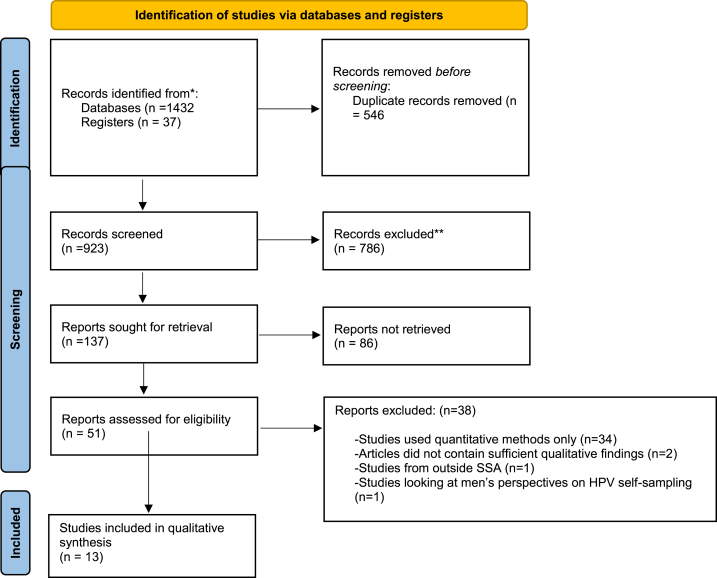
Methods: We reviewed qualitative studies from January 2011 to March 2023 in PubMed, Scopus, Medline Ovid, Cochrane, and WEB of Science databases for articles with qualitative data on HPV self-sampling from different countries in SSA. The socio-ecological model was used to guide data analysis and the study findings.
Results: Thirteen qualitative studies were included for analysis, and they revealed themes under the intrapersonal, interpersonal, community, and health systems constructs of the Socio-ecological model. Intrapersonal themes included the acceptability of self-sampling, self-efficacy, and the perceived value of self-sampling. The interpersonal construct had themes such as women's spousal relationships, peer support, and the health worker's relationship with the women. The community construct had two themes: social stigma and misinformation, and the influence of cultural norms and religion. Finally, the health systems construct had themes such as the setting for self-sampling, follow-up availability of treatment services and education and awareness.
Conclusion: This study highlights the factors influencing the acceptability and uptake of an HPV-based self-sampling intervention for cervical cancer screening in SSA. Considering these findings when designing interventions in SSA is crucial to ensure acceptance and demand among end-users. Self-sampling interventions offer the potential to reach many unscreened women and increase cervical cancer screening coverage in SSA, which is an essential strategy towards achieving the World Health Organisation's cervical cancer elimination targets by the close of the century.
Keywords: Cervical cancer; HPV; Qualitative research; Screening; Self-sampling; Sub-saharan africa.
© 2024 The Authors.
Conflict of interest statement
The authors declare that they have no known competing financial interests or personal relationships that could have appeared to influence the work reported in this paper.
Figures
References
-
- World Health Organisation . 2020. W.H.O, Cancer Today.https://gco.iarc.fr/today/home Available from: (Accessed 9 June 2022)
-
- World Health Organisation W.H.O. Cervical cancer. https://www.who.int/health-topics/cervical-cancer#tab=tab_1 Available from: 2018.
-
- Basu P., et al. Secondary prevention of cervical cancer. Best Pract. Res. Clin. Obstet. Gynaecol. 2018;47:73–85. - PubMed
LinkOut - more resources
Full Text Sources
Research Materials
