


"We chose PrEP because I wanted to be sure that this child my wife was going to conceive was indeed mine." Factors influencing the choice of safer conception methods and experiences with its use: a qualitative study among HIV sero-discordant couples in Zimbabwe
- PMID: 39030487
- PMCID: PMC11264618
- DOI: 10.1186/s12889-024-19155-9
"We chose PrEP because I wanted to be sure that this child my wife was going to conceive was indeed mine." Factors influencing the choice of safer conception methods and experiences with its use: a qualitative study among HIV sero-discordant couples in Zimbabwe
Abstract
Background: Safer conception services are needed to minimize HIV transmission among HIV sero-discordant couples desiring pregnancy. Few studies have evaluated the choices couples make when they are offered multiple safer conception methods or real-world method acceptability. This paper addresses an important knowledge gap regarding factors that influence the choice of safer conception methods, couples' actual experiences using safer conception methods, and why some couples switch safer conception methods.
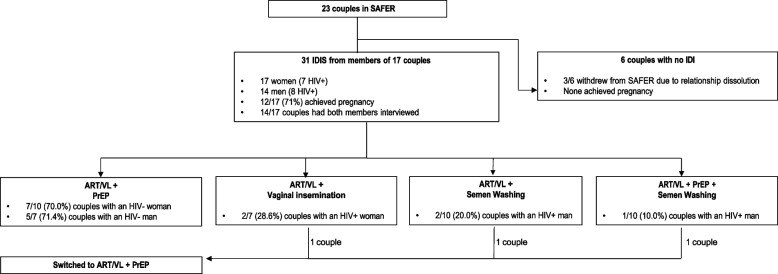
Methods: Between February and June 2019, we conducted semi-structured in-depth interviews among 14 men and 17 women, representing 17 couples who exited the SAFER study-a pilot safer conception study for HIV sero-discordant couples in Zimbabwe that offered couples a choice of ART with monthly viral load monitoring (ART/VL), oral PrEP, vaginal insemination, and semen washing. All couples in SAFER had used at least two safer conception methods.
Results: We found that safer conception method choice often centered around a desire for intimacy, condomless sex, and certainty in the conception process, particularly for men. Method-related attributes such as familiarity, perceived ease of use, side effects, and perceived level of effectiveness in preventing HIV and achieving pregnancy influenced method choice, switching, and satisfaction. Concerns were expressed about each safer conception method and couples were willing to try different methods until they found method(s) that worked for them. The majority of participants reported having positive experiences using safer conception, especially those using ART/VL + PrEP, citing that they were able to attempt pregnancy for the first time with peace of mind and experienced joy and satisfaction from being able to achieve pregnancy safely.
Conclusions: The differences in method preferences and experiences voiced by participants in this study and in other studies from the region point to the importance of having a variety of safer conception options in the service delivery package and addressing concerns about paternity, intimacy, and method-related attributes to enable HIV sero-discordant couples to safely achieve their reproductive goals.
Keywords: ART; HIV prevention; HIV-discordant couples; LMIC; PrEP; Safer conception; Semen washing; Vaginal insemination; Zimbabwe; sub-Saharan Africa.
© 2024. The Author(s).
Conflict of interest statement
The authors declare no competing interests.
Figures
References
-
- UNAIDS Data 2021, Geneva: Joint United Nations Programme on HIV/AIDS; 2021. Licence: CC BY-NC-SA 3.0 IGO.
-
- Schwartz SR, Mehta SH, Taha TE, Rees HV, Venter F, Black V. High pregnancy intentions and missed opportunities for patient-provider communication about fertility in a South African cohort of HIV-positive women on antiretroviral therapy. AIDS Behav. 2012;16(1):69–78. 10.1007/s10461-011-9981-3 - DOI - PubMed
Publication types
MeSH terms
Grants and funding
LinkOut - more resources
Full Text Sources
Medical
Miscellaneous
