


Toxicity of waterpipe tobacco smoking: the role of flavors, sweeteners, humectants, and charcoal
- PMID: 39037923
- PMCID: PMC11424890
- DOI: 10.1093/toxsci/kfae095
Toxicity of waterpipe tobacco smoking: the role of flavors, sweeteners, humectants, and charcoal
Abstract
Waterpipe tobacco (WPT) smoking is a public health concern, particularly among youth and young adults. The global spread of WPT use has surged because the introduction of pre-packaged flavored and sweetened WPT, which is widely marketed as a safer tobacco alternative. Besides flavorants and sugars, WPT additives include humectants, which enhance the moisture and sweetness of WPT, act as solvents for flavors, and impart smoothness to the smoke, thus increasing appeal to users. In the United States, unlike cigarette tobacco flavoring (with the exception of menthol), there is no FDA product standard or policy in place prohibiting sales of flavored WPT. Research has shown that the numerous fruit, candy, and alcohol flavors added to WPT entice individuals to experience those flavors, putting them at an increased risk of exposure to WPT smoke-related toxicants. Additionally, burning charcoal briquettes-used as a heating source for WPT-contributes to the harmful health effects of WPT smoking. This review presents existing evidence on the potential toxicity resulting from humectants, sugars, and flavorants in WPT, and from the charcoal used to heat WPT. The review discusses relevant studies of inhalation toxicity in animal models and of biomarkers of exposure in humans. Current evidence suggests that more data are needed on toxicant emissions in WPT smoke to inform effective tobacco regulation to mitigate the adverse impact of WPT use on human health.
Keywords: charcoal; flavorants; hookah; humectants; sugars; waterpipe.
© The Author(s) 2024. Published by Oxford University Press on behalf of the Society of Toxicology.
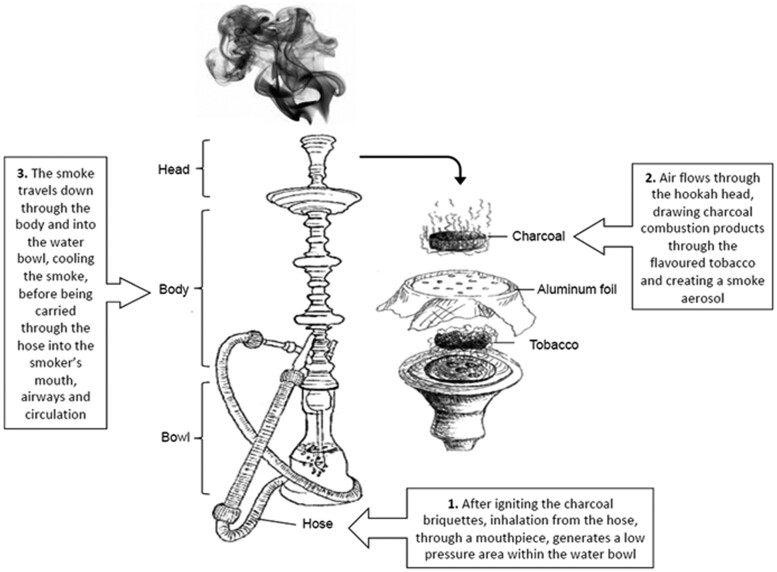
Figures
References
-
- Adetona A, Brinkman M, Strozier E, Karam H, Butler J, Kim H, Lim J, McCauley M, Clark P. 2020. Do they differ? Flavored versus unflavored waterpipe tobacco flavor ingredients. Tob Regul Sci. 6(5):336–354. 10.18001/TRS.6.5.4 - DOI
Publication types
MeSH terms
Substances
Grants and funding
- T30IR0894/Tobacco-Related Disease Research Program
- R01ES025257/FD/FDA HHS/United States
- National Institute of Drug Abuse
- Center for Tobacco Products
- U54 DA046060/DA/NIDA NIH HHS/United States
- U54DA046060/Toxicity Special Interest Group
- U54 CA228110/CA/NCI NIH HHS/United States
- R01DA051005/DA/NIDA NIH HHS/United States
- U54 DA036151/DA/NIDA NIH HHS/United States
- H23 IP001013/IP/NCIRD CDC HHS/United States
- P30 ES001247/ES/NIEHS NIH HHS/United States
- Tobacco Regulatory Science
- Food and Drug Administration's
- Center for Coordination of Analytics, Science, Enhancement and Logistics
- R01 DA051005/DA/NIDA NIH HHS/United States
- NH/NIH HHS/United States
- R01 CA255563/CA/NCI NIH HHS/United States
