


Extracellular vesicle production: A bidirectional effect in the interplay between host and Candida fungi
- PMID: 39040088
- PMCID: PMC11260599
- DOI: 10.1016/j.crmicr.2024.100255
Extracellular vesicle production: A bidirectional effect in the interplay between host and Candida fungi
Abstract
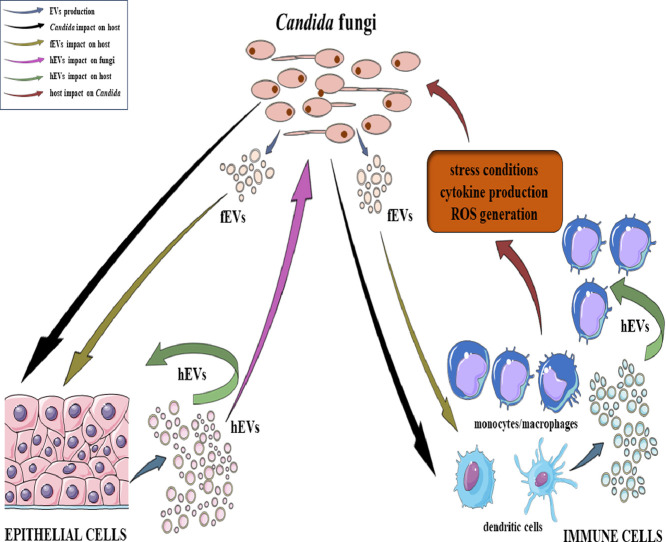
Candida fungi exploit various virulence strategies to invade the human host, while host cells employ diverse mechanisms to maintain homeostasis and respond to infection. Extracellular vesicles (EVs) are integral components of the multifaceted landscape of host-pathogen interactions, with their abundant production by all contributors involved in these complex and dynamic relations. Herein, we present the current state of knowledge regarding the host response by releasing EVs in reaction to Candida, as well as the influence of fungal EVs on the functionality of the confronted host cells. Fungal vesicles contribute to enhanced adhesion of pathogens to human cells as evidenced for C. auris, and may modulate the production of several cytokines, including IL-6, IL-8, IL-10, IL-12p40, TGF-β and TNF-α, thereby exerting pro-infective and pro-inflammatory effects, as described for C. albicans and other Candida species. Whereas the biosynthesis of EVs by host cells can dynamically modulate the proliferation and viability of fungal cells and affect the candidacidal functionality of other effector cells. The reciprocal influence of EVs from host cells and Candida pathogens is a key focus, explaining their significant role in cell signaling and interkingdom communication.
Keywords: Candida; Epithelium; Extracellular vesicles; Fungi; Host response; Inflammation; Macrophages.
© 2024 The Authors. Published by Elsevier B.V.
Conflict of interest statement
The authors declare that they have no known competing financial interests or personal relationships that could have appeared to influence the work reported in this paper.
Figures

References
Publication types
LinkOut - more resources
Full Text Sources
