. 2024 Jul 23;19(7):e0301319.
doi: 10.1371/journal.pone.0301319. eCollection 2024.

Assessing red blood cell distribution width in Vietnamese heart failure patients: A cross-sectional study

Affiliations

Assessing red blood cell distribution width in Vietnamese heart failure patients: A cross-sectional study

Hai Nguyen Ngoc Dang et al. PLoS One. .

Abstract

Background: Heart failure (HF) is becoming a growing public health concern. Diagnostic tests for determining the severity of HF often come with high costs and require specialized expertise, which makes it difficult to assess HF severity, especially in low-income countries or at primary healthcare facilities. Recently, red blood cell distribution width (RDW) has emerged as a promising, easily accessible marker associated with HF severity. The study aimed to assess changes in RDW levels in HF patients and the diagnostic value of RDW in detecting acute heart failure (AHF) among HF patients.

Methods: We conducted a cross-sectional examination involving 351 participants divided into HF and non-HF cohorts. HF was defined and categorized according to the diagnostic and treatment guidelines for AHF and chronic heart failure (CHF) set forth by the European Society of Cardiology (2021). Univariate and multivariate analysis of factors associated with AHF was performed.

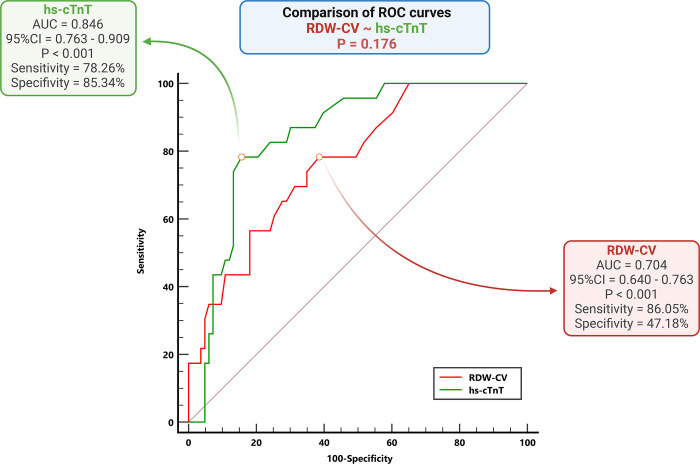
Results: The study revealed that HF patients displayed higher median RDW levels (14.90% [13.70-17.00]) compared to non-HF individuals (13.00% [12.23-13.78]). RDW was notably elevated in HF patients with left ventricular ejection fraction < 50% compared to those with left ventricular ejection fraction ≥ 50%. ROC curve analysis of RDW for AHF detection identified a cutoff value of 13.85%, with a sensitivity of 86.05% and specificity of 47.18%, statistically significant at p < 0.001. RDW > 13.85% was identified as an independent risk factor for AHF in patients with HF, with odds ratios of 2.644 (95% CI, 1.190-5.875; p = 0.017).

Conclusion: The study revealed significant RDW variations in patients with CHF and AHF compared to the control group. These findings suggest that RDW could be a biomarker for detecting HF severity.


Conflict of interest statement

The authors have declared that no competing interests exist.

Figures
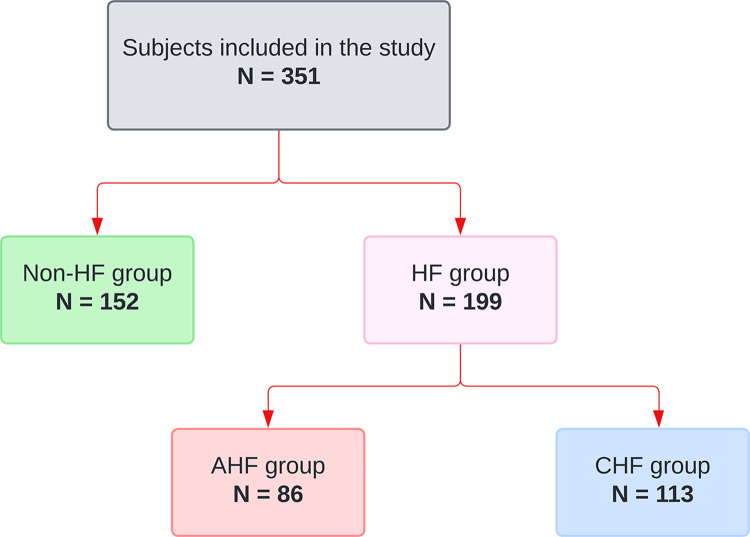
Fig 1
Fig 1. The research flowchart divides the research subjects into subgroups according to group.
HF: Heart failure; CHF: Chronic heart failure; AHF: Acute heart failure.
Fig 2
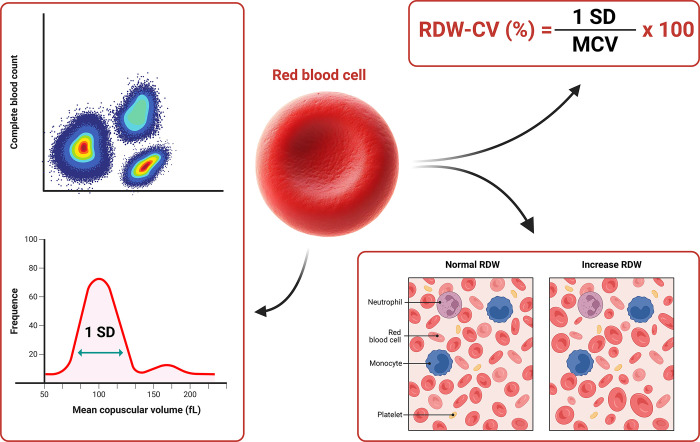
Fig 2. The RDW was calculated by the RDW-CV formula, with 1 SD divided by the MCV.
RDW-CV: Red blood cell distribution width coefficient of variation; SD: Standard deviation; MCV: Mean corpuscular volume.
Fig 3
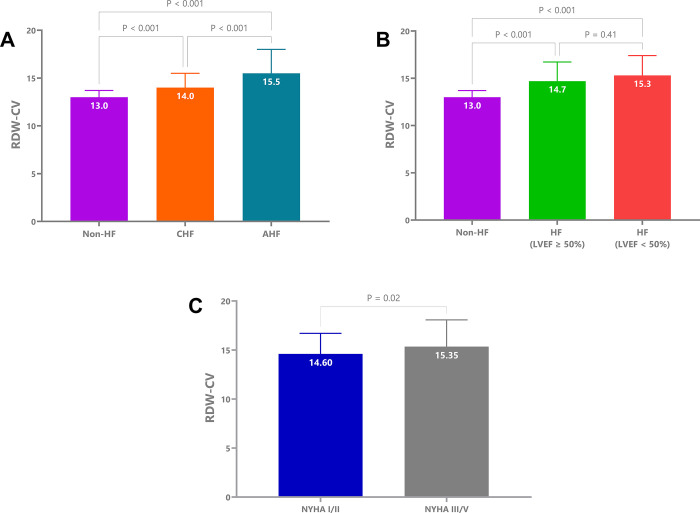
Fig 3. Comparison of RDW-CV among different study groups.
(A) Comparison of RDW-CV among the non-HF, CHF, and AHF groups. (B) Comparison of RDW-CV in HF patients with LVEF ≥ 50% and < 50%. (C) Comparison of RDW-CV between the NYHA I/II and NYHA III/IV groups. RDW-CV: Red blood cell distribution width coefficient of variation; HF: Heart failure; CHF: Chronic heart failure; AHF: Acute heart failure; LVEF: Left ventricular ejection fraction; NYHA: New York Heart Association.
Fig 4
Fig 4. Receiver operating characteristic curves for detecting AHF among HF patients.
Comparisons of the differences between the AUCs of RDW-CV and hs-cTnT using the Hanley & McNeil method. ROC: Receiver operating characteristic; AUC: Area under the curve; RDW-CV: Red blood cell distribution width coefficient of variation; hs-cTnT: High-sensitivity troponin T; AHF: Acute heart failure.
Fig 5
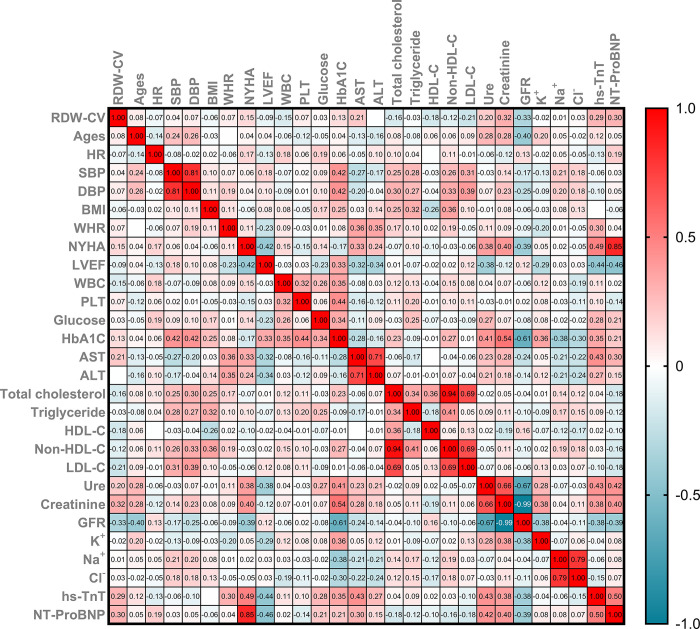
Fig 5. The heatmap shows the correlation of RDW-CV with clinical and subclinical indices in HF patients.
HR: Heart rate; SBP: Systolic blood pressure; DBP: Diastolic blood pressure; BMI: Body mass index; WHR: Waist hip ratio; NYHA: New York Heart Association; LVEF: Left ventricular ejection fraction; WBC: White blood cell; RDW-CV: Red blood cell distribution width coefficient of variation; PLT: Platelet; MPV: Mean platelet volume; HbA1c: Hemoglobin A1c; AST: Aspartate aminotransferase; ALT: Alanine aminotransferase; HDL-C: High-density lipoprotein cholesterol; non-HDL-C: Non-high-density lipoprotein cholesterol; LDL-C: Low-density lipoprotein cholesterol; eGFR: Estimated glomerular filtration rate; hs-cTnT: High-sensitivity troponin T; NT-proBNP: N-terminal pro-B-type natriuretic peptide.
Fig 6
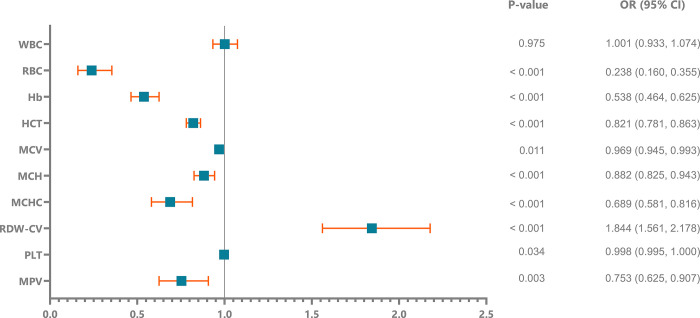
Fig 6. HF susceptibility was predicted via logistic regression using hematologic parameters as covariates.
According to the univariate analysis, elevated RDW-CV and lower RBC and Hb levels were identified as risk factors for HF. WBC: White blood cell; RBC: Red blood cell; Hb: Hemoglobin; HCT: Hematocrit; MCV: Mean corpuscular volume; MCH: Mean corpuscular hemoglobin; MCHC: Mean corpuscular hemoglobin concentration; RDW-CV: Red blood cell distribution width coefficient of variation; PLT: Platelet; MPV: Mean platelet volume.

References

    1. Savarese G, Becher PM, Lund LH, Seferovic P, Rosano GMC, Coats AJS. Global burden of heart failure: a comprehensive and updated review of epidemiology. Cardiovascular Research. 2023;118: 3272–3287. doi: 10.1093/cvr/cvac013 - DOI - PubMed
    1. Lloyd-Jones DM, Larson MG, Leip EP, Beiser A, D’Agostino RB, Kannel WB, et al. Lifetime Risk for Developing Congestive Heart Failure: The Framingham Heart Study. Circulation. 2002;106: 3068–3072. doi: 10.1161/01.cir.0000039105.49749.6f - DOI - PubMed
    1. James SL, Abate D, Abate KH, Abay SM, Abbafati C, Abbasi N, et al. Global, regional, and national incidence, prevalence, and years lived with disability for 354 diseases and injuries for 195 countries and territories, 1990–2017: a systematic analysis for the Global Burden of Disease Study 2017. The Lancet. 2018;392: 1789–1858. doi: 10.1016/S0140-6736(18)32279-7 - DOI - PMC - PubMed
    1. Kittleson MM, Panjrath GS, Amancherla K, Davis LL, Deswal A, Dixon DL, et al. 2023 ACC Expert Consensus Decision Pathway on Management of Heart Failure With Preserved Ejection Fraction. Journal of the American College of Cardiology. 2023;81: 1835–1878. doi: 10.1016/j.jacc.2023.03.393 - DOI - PubMed
    1. Ji X, Ke W. Red blood cell distribution width and all-cause mortality in congestive heart failure patients: a retrospective cohort study based on the Mimic-III database. Front Cardiovasc Med. 2023;10: 1126718. doi: 10.3389/fcvm.2023.1126718 - DOI - PMC - PubMed