


Gender medicine and sleep disorders: from basic science to clinical research
- PMID: 39050129
- PMCID: PMC11267506
- DOI: 10.3389/fneur.2024.1392489
Gender medicine and sleep disorders: from basic science to clinical research
Abstract
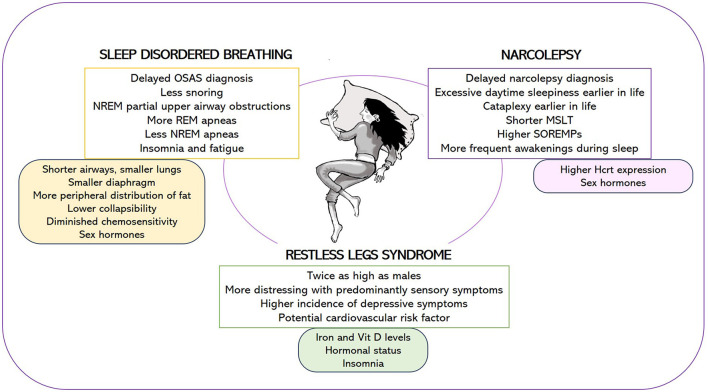
Several pivotal differences in sleep and sleep disorders are recognized between women and men. This is not only due to changes in hormonal balance during women's reproductive life, such as in pregnancy and menopause. Women are more likely to report insomnia and non-specific symptoms of apneas, such as fatigue or mood disturbance, compared to men. Thus, it is important for clinicians and researchers to take sex and gender differences into account when addressing sleep disorders in order to acknowledge the biology unique to women. We present a narrative review that delves into the primary sleep disorders, starting from basic science, to explore the impact of gender differences on sleep and the current status of research on women's sleep health.
Keywords: animal models; gender; narcolepsy; restless legs syndrome (RLS); sleep apnea; sleep disordered breathing; sleep medicine; women.
Copyright © 2024 Perger, Silvestri, Bonanni, Di Perri, Fernandes, Provini, Zoccoli and Lombardi.
Conflict of interest statement
The authors declare that the research was conducted in the absence of any commercial or financial relationships that could be construed as a potential conflict of interest.
Figures
References
-
- Levine S. Sex differences in the brain. Sci Am. (1966) 214:84–90. 10.1038/scientificamerican0466-84 - DOI
Publication types
LinkOut - more resources
Full Text Sources
