


Enhancement of Biocompatibility of High-Transparency Zirconia Abutments with Human Gingival Fibroblasts via Cold Atmospheric Plasma Treatment: An In Vitro Study
- PMID: 39057321
- PMCID: PMC11277629
- DOI: 10.3390/jfb15070200
Enhancement of Biocompatibility of High-Transparency Zirconia Abutments with Human Gingival Fibroblasts via Cold Atmospheric Plasma Treatment: An In Vitro Study
Abstract
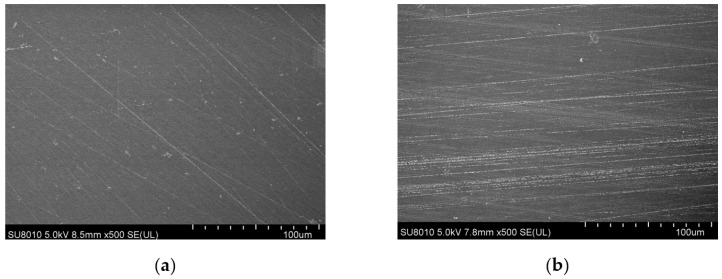
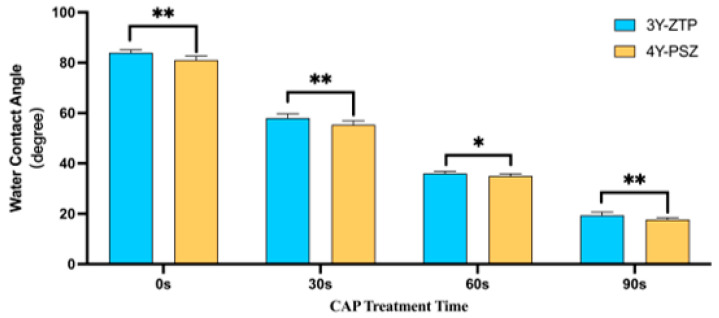
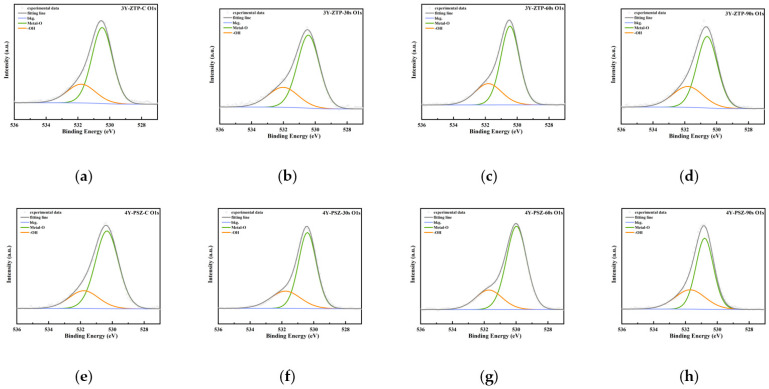
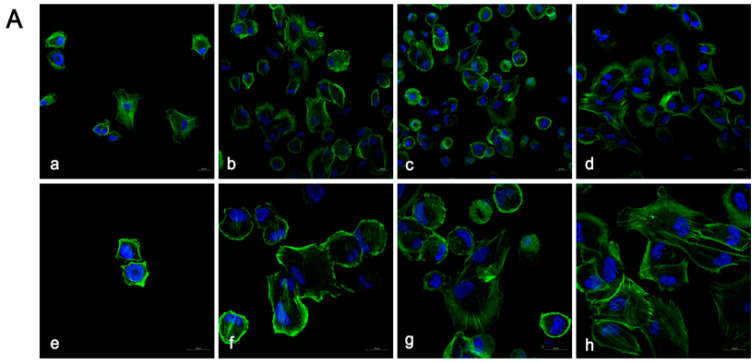
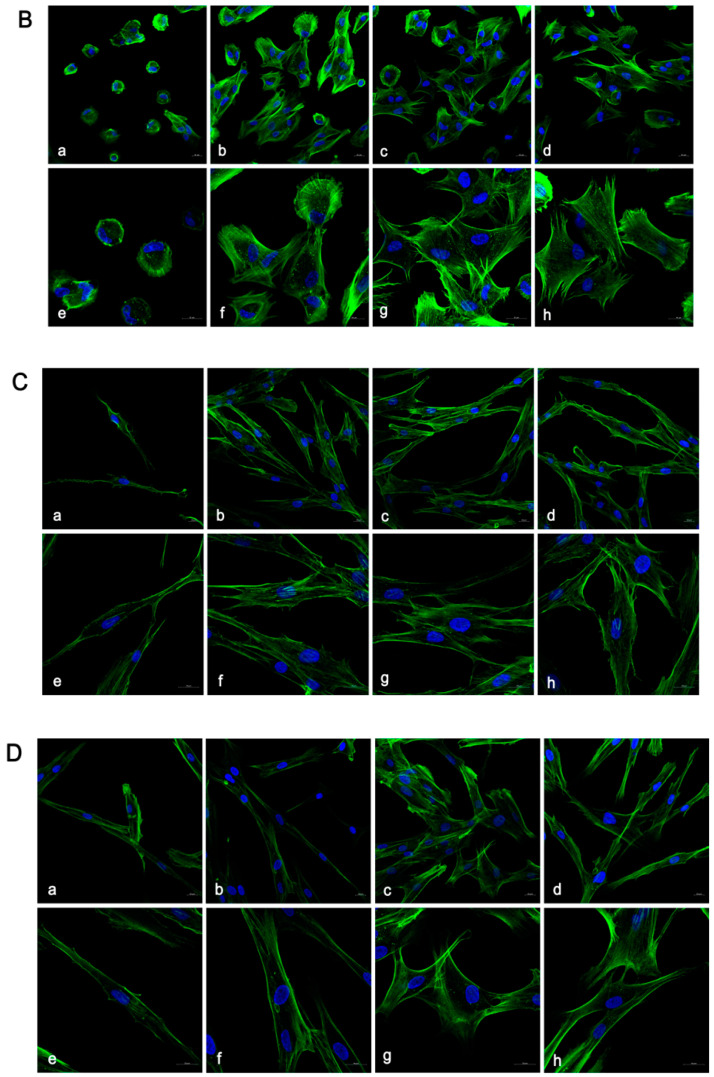
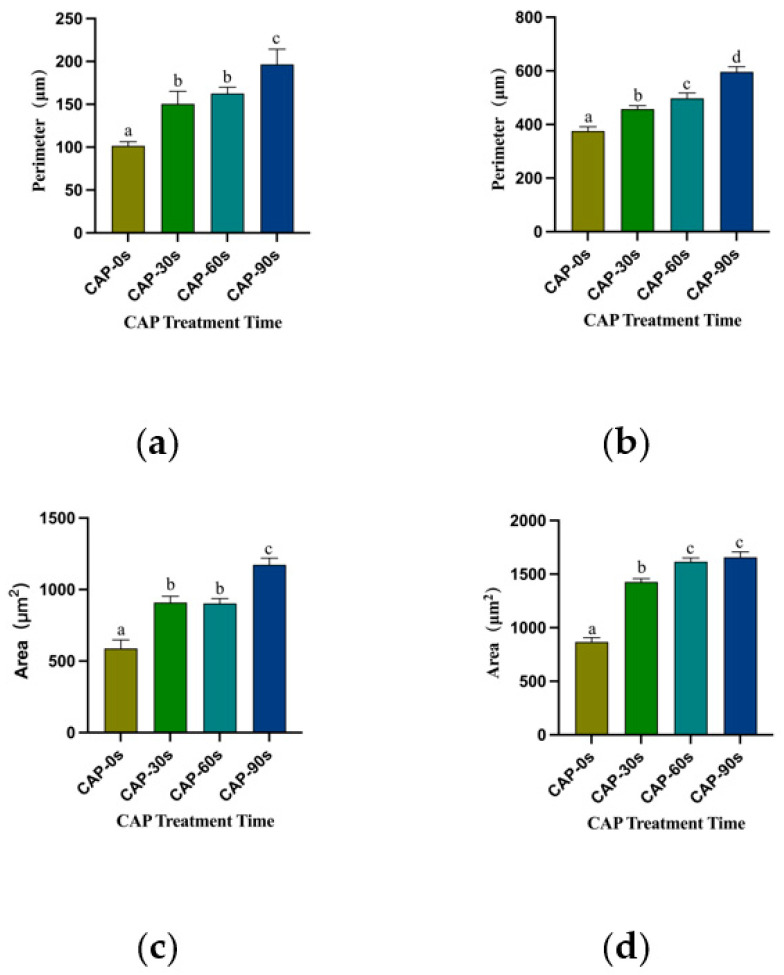
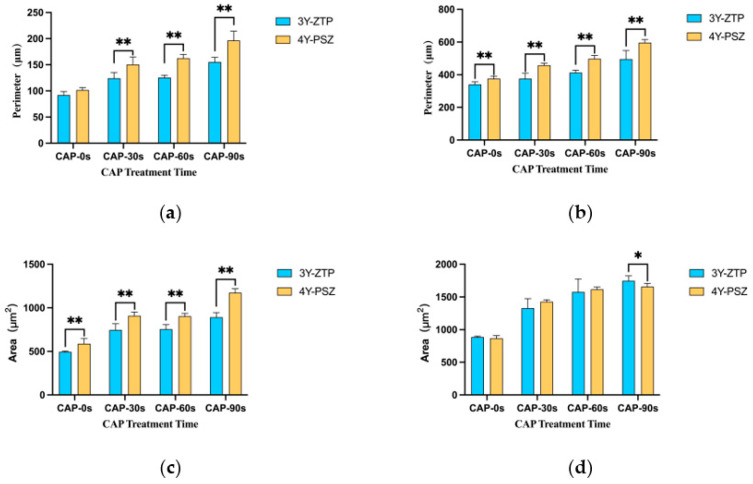
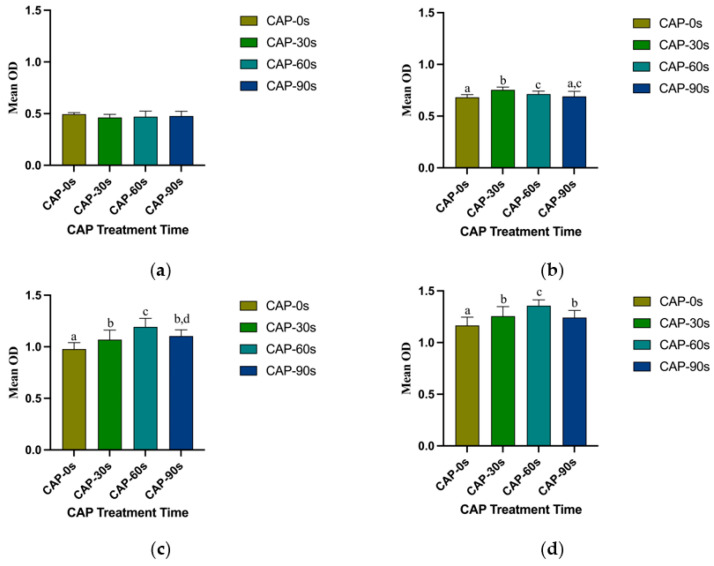
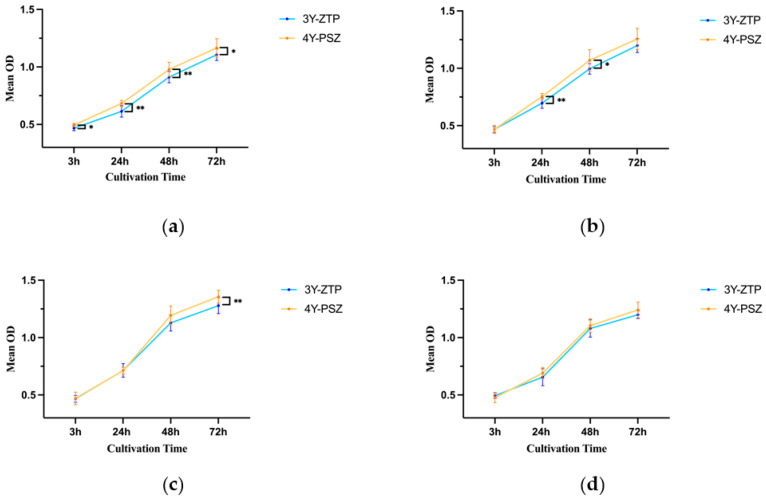
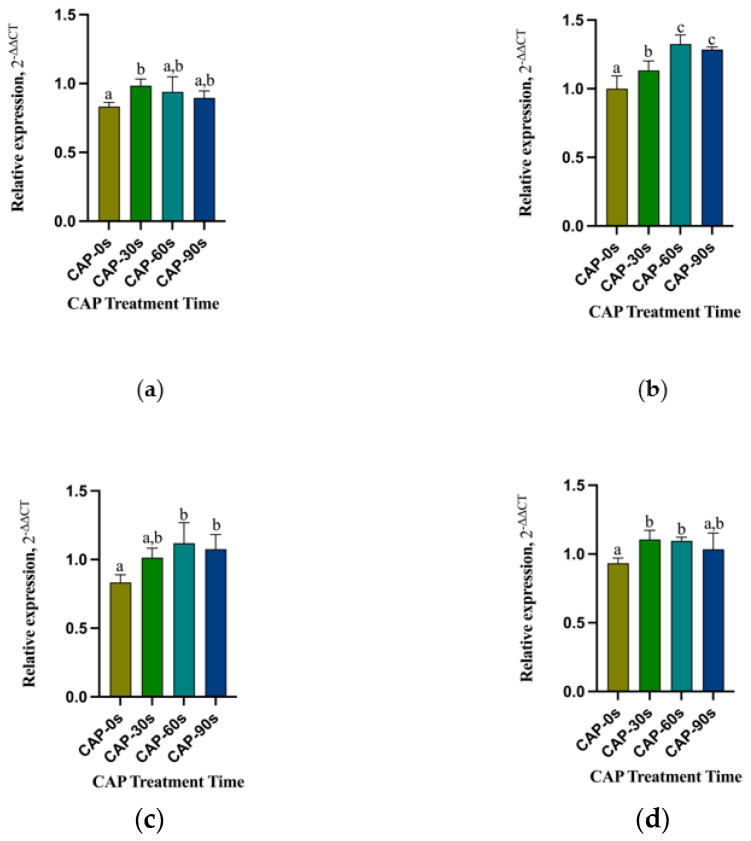
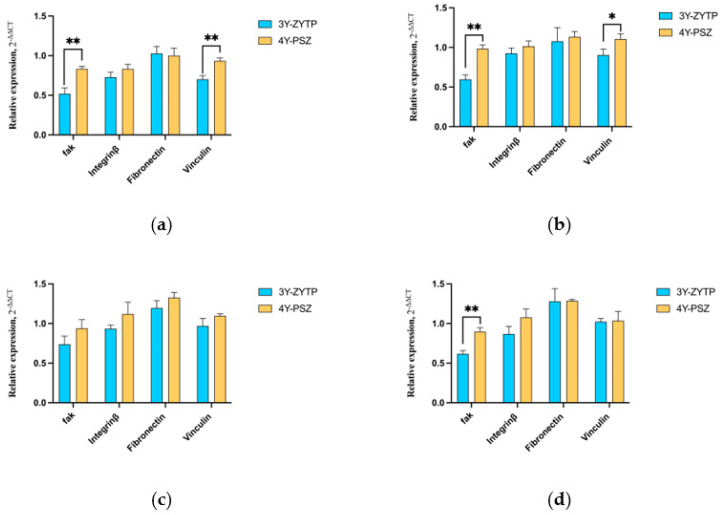
The objective of this study was to explore the effects of cold atmospheric plasma (CAP) treatment on the biological behavior of human gingival fibroblasts (HGFs) cultured on the surface of high-transparency zirconia. Two types of zirconia, 3Y-ZTP and 4Y-PSZ, were subjected to a CAP treatment for various treatment durations. Analyses of the physical and chemical properties of 3Y-ZTP and 4Y-PSZ were conducted using scanning electron microscopy, contact angle measurements, and X-ray photoelectron spectroscopy, both before and after CAP treatment. The biological responses of HGFs on both surfaces were assessed using CCK-8 assay, confocal laser scanning microscopy, and real-time PCR. Initially, the oxygen and hydroxyl contents on the surface of 4Y-PSZ exceeded those on 3Y-ZTP. CAP treatment enhanced the surface hydrophilicity and the reactive oxygen species (ROS) content of 4Y-PSZ, while not altering the surface morphology. After CAP treatment, HGFs' adhesion on 4Y-PSZ was superior, with more pronounced effects compared to 3Y-ZTP. Notably, HGFs counts and the expression of adhesion-related genes on 4Y-PSZ peaked following the CAP exposures for 30 s and 60 s. Consequently, this study demonstrates that, following identical CAP treatments, 4Y-PSZ is more effective in promoting HGFs adhesion compared to traditional 3Y-ZTP zirconia.
Keywords: abutment surface modification; cold atmosphere plasma; high-transparency zirconia; reactive oxygen species.
Conflict of interest statement
The authors declare no conflicts of interest.
Figures
References
-
- Buser D., Janner S.F., Wittneben J.G., Bragger U., Ramseier C.A., Salvi G.E. 10-year survival and success rates of 511 titanium implants with a sandblasted and acid-etched surface: A retrospective study in 303 partially edentulous patients. Clin. Implant. Dent. Relat. Res. 2012;14:839–851. doi: 10.1111/j.1708-8208.2012.00456.x. - DOI - PubMed
-
- Palombo D., Rahmati M., Vignoletti F., Sanz-Esporrin J., Haugen H.J., Sanz M. Hard and soft tissue healing around implants with a modified implant neck configuration: An experimental in vivo preclinical investigation. Clin. Oral Implant. Res. 2021;32:1127–1141. doi: 10.1111/clr.13812. - DOI - PMC - PubMed
-
- Borie M., Lecloux G., Bosshardt D., Barrantes A., Haugen H.J., Lambert F., Bacevic M. Peri-implant soft tissue integration in humans—Influence of materials: A study protocol for a randomised controlled trial and a pilot study results. Contemp. Clin. Trials Commun. 2020;19:100643. doi: 10.1016/j.conctc.2020.100643. - DOI - PMC - PubMed
Grants and funding
LinkOut - more resources
Full Text Sources
Miscellaneous
