. 2024 Jul 26;14(1):17222.
doi: 10.1038/s41598-024-68200-5.

Neurobiological modulation with REAC technology: enhancing pain, depression, anxiety, stress, and quality of life in post-polio syndrome subjects

Affiliations

Neurobiological modulation with REAC technology: enhancing pain, depression, anxiety, stress, and quality of life in post-polio syndrome subjects

Jeyce Adrielly André Nogueira et al. Sci Rep. .

Abstract

Post-polio syndrome (PPS) brings new challenges for polio survivors, including muscle decline, pain, depression, and diminished quality of life. This study explored the potential of REAC neuromodulatory treatments to ease pain, improve mood, and enhance quality of life in PPS patients. 17 individuals with PPS (average age 54.8) received three REAC treatments: Neuro Postural Optimization, Neuro Psycho Physical Optimization, and Neuro Psycho Physical Optimization-Cervico Brachial. Pain, depression, anxiety, stress, and quality of life were assessed before and after using established scales. REAC treatments significantly reduced pain across various dimensions, along with depression, anxiety, and stress levels. Additionally, patients reported improved physical and psychological quality of life. This study suggests REAC neuromodulatory treatments as a promising non-invasive option to improve pain, emotional well-being, and quality of life in individuals with PPS.

Keywords: Anxiety; Depression; Pain; Post-polio syndrome; Quality of life; REAC technology; Stress.


Conflict of interest statement

SR and VF are the authors of the REAC technology patent. A.R. is the daughters of SR and VF. The other authors declare no conflict of interest.

Figures
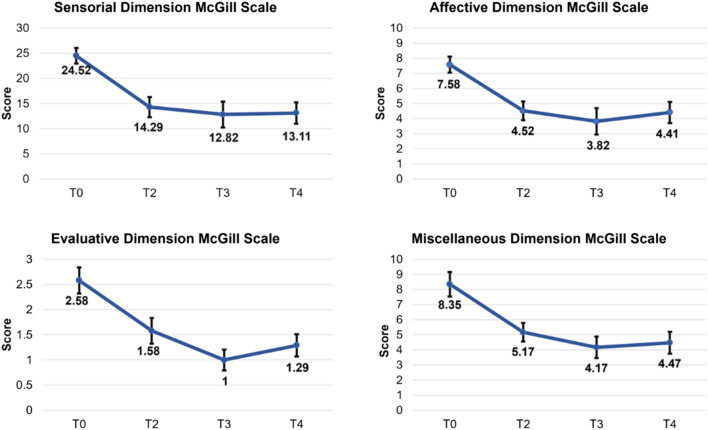
Figure 1
Figure 1
The figure displays the means of the scores for the sensory, affective, evaluative and miscellaneous dimensions of the McGill Pain Test in the T0 (N = 17), T2 (N = 17), T3 (N = 17), and T4 (N = 17) conditions.
Figure 2
Figure 2
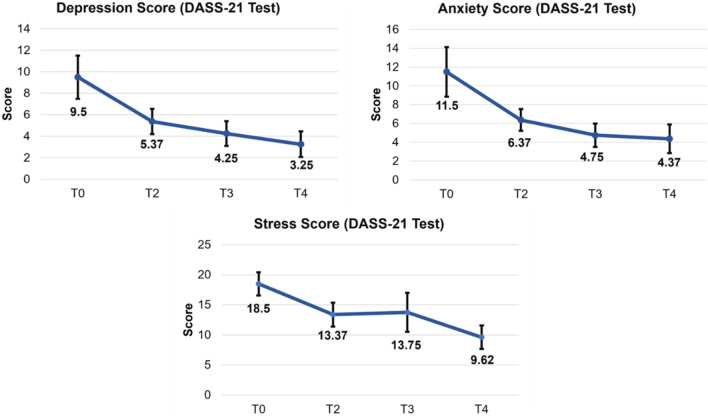
The figure displays the means of depression, anxiety and stress scores from the DASS-21 test in the T0 (N = 16), (2) T2 (N = 16), T3 (N = 16), and T4 (N = 16) conditions.
Figure 3
Figure 3
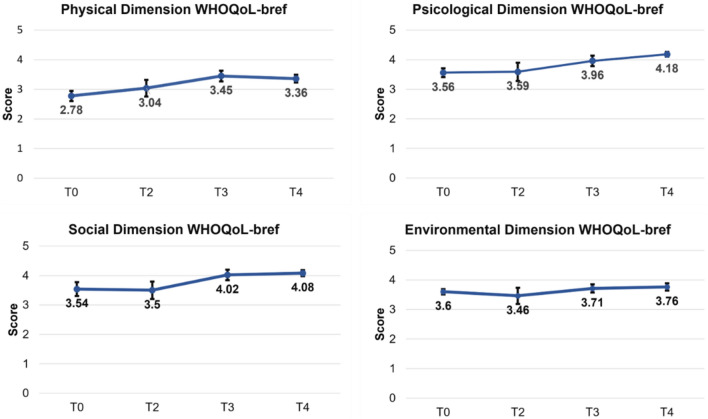
The figure shows the mean scores of the physical, phycological, social and environmental dimensions of the WHOQoL-bref test in the following conditions: T0 (N = 15), T2 (N = 15), T3 (N = 15), and T4 (N = 15).
Figure 4
Figure 4
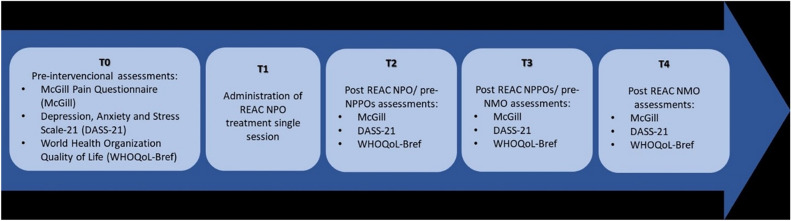
Study flowchart and phases.

References

    1. Punsoni, M., Lakis, N. S., Mellion, M. & de la Monte, S. M. Post-polio syndrome revisited. Neurol. Int.15, 569–579. 10.3390/neurolint15020035 (2023). 10.3390/neurolint15020035 - DOI - PMC - PubMed
    1. Atwal, A. et al. Polio survivors’ perceptions of the meaning of quality of life and strategies used to promote participation in everyday activities. Health Expect.18, 715–726. 10.1111/hex.12152 (2015). 10.1111/hex.12152 - DOI - PMC - PubMed
    1. Curtis, A. et al. The value of a post-polio syndrome self-management programme. J. Thorac. Dis.12, S153–S162. 10.21037/jtd-cus-2020-009 (2020). 10.21037/jtd-cus-2020-009 - DOI - PMC - PubMed
    1. Battalio, S. L., Glette, M., Alschuler, K. N. & Jensen, M. P. Anxiety, depression, and function in individuals with chronic physical conditions: A longitudinal analysis. Rehabil. Psychol.63, 532–541. 10.1037/rep0000231 (2018). 10.1037/rep0000231 - DOI - PubMed
    1. Shiri, S., Gartsman, I., Meiner, Z. & Schwartz, I. Long-standing poliomyelitis and psychological health. Disabil. Rehabil.37, 2233–2237. 10.3109/09638288.2015.1019007 (2015). 10.3109/09638288.2015.1019007 - DOI - PubMed