


Hemoglobin, albumin, lymphocytes and platelets (HALP) score as a predictor of survival in patients with glioblastoma (GBM)
- PMID: 39061000
- PMCID: PMC11282806
- DOI: 10.1186/s12883-024-03639-7
Hemoglobin, albumin, lymphocytes and platelets (HALP) score as a predictor of survival in patients with glioblastoma (GBM)
Abstract
Background: We aimed to investigate whether the HALP score was a predictor of survival in patients with Glioblastoma (GBM).
Methods: A total of 84 Glioblastoma (GBM) patients followed in our clinic were included in the study. HALP scores were calculated using the preoperative hemoglobin, albumin, lymphocyte and platelet results of the patients. For the HALP score, a cut-off value was found by examining the area below the receiver operating characteristic (ROC) curve. Patients were divided into two groups as low and high according to this cut-off value. The relationships among the clinical, dermographic and laboratory parameters of the patients were examined using these two groups.
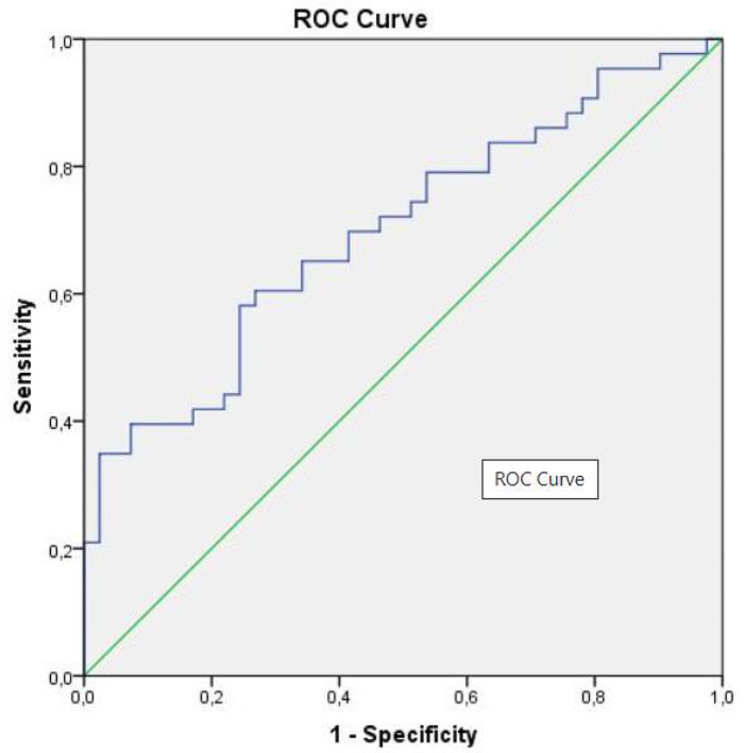
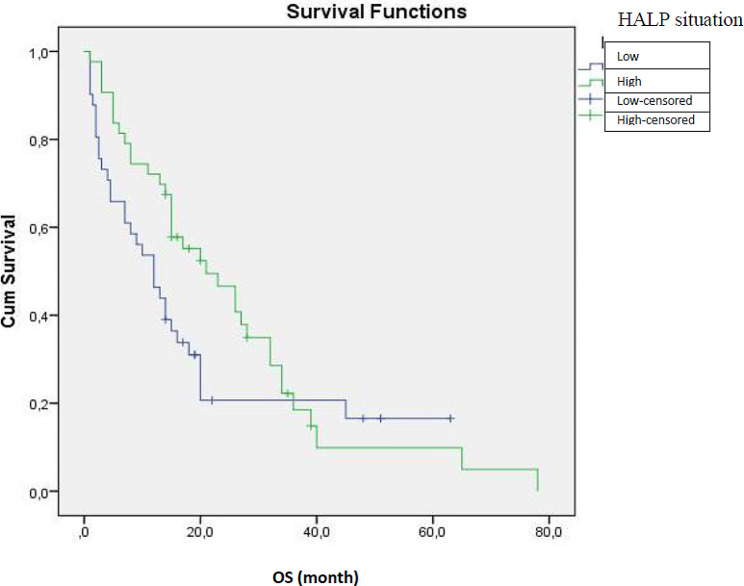
Results: Median OS, PFS, HALP score, NLR, PLR were 15 months (1.0-78.0), 8 months (1.0-66.0), 37.39 ± 23.84 (min 6.00-max 132.31), 4.14, 145.07 respectively. A statistically significant correlation was found between HALP score and OS, PFS, NLR, PLR, ECOG-PS status using Spearman's rho test (p = 0.001, p < 0.001, p < 0.001, p < 0.001, p = 0.026 respectively). For the HALP score, a cut-off value of = 37.39 (AUC = 0.698, 95% CI, p < 0.002) was found using ROC analysis. Median OS was 12 (6.99-17.01) months in the low HALP group and 21 (11.37-30.63) months in the high HALP group (p = 0.117). NLR and PLR were significantly lower in the HALP high group (p < 0.001, p < 0.001 respectively). The ratio of receiving treatment was significantly higher in the high HALP group (p < 0.05). In Multivariate analysis, significant results were found for treatment status and ECOG-PS status (p < 0.001, p = 0.038 respectively).
Conclusions: The HALP score measured at the beginning of treatment seems to have predictive importance in the prognosis of GBM patients. A HALP score of > 37.39 was associated with prolonged survival in high-grade brain tumors.
Keywords: Glioblastoma (GBM); HALP; Prognostic factor.
© 2024. The Author(s).
Conflict of interest statement
The authors declare no competing interests.
Figures
References
-
- Stupp R, Mason WP, van den Bent MJ, European Organisation for Research and Treatment of Cancer Brain Tumor and Radiotherapy Groups; National Cancer Institute of CanadaClinical Trials Group, et al. Radiotherapy plus concomitant and adjuvant temozolomide for glioblastoma. N Engl J Med. 2005;352(10):987–96. 10.1056/NEJMoa043330. 10.1056/NEJMoa043330 - DOI - PubMed
-
- Stupp R, Hegi ME, Mason WP, European Organisation for Research and Treatment of Cancer Brain Tumour and Radiation Oncology Groups; National Cancer Institute of Canada Clinical Trials Group, et al. Effects of radiotherapy with concomitant and adjuvant temozolomide versus radiotherapy alone on survival in glioblastoma in a randomised phase III study: 5-year analysis of the EORTC-NCIC trial. Lancet Oncol. 2009;10(5):459–66. 10.1016/S1470-2045(09)70025-7. 10.1016/S1470-2045(09)70025-7 - DOI - PubMed
-
- Nelson DF, Diener-West M, Horton J, et al. Combined modality approach to treatment of milignant gliomas- re- evaluation of RTOG 7401/ECOG 1374 with long-term follow-up: a joint study of the Radiation Therapy Oncology Group and the Eastern Cooperative Oncology Group. NCI Monogr. 1988;6:279–84. - PubMed
MeSH terms
Substances
LinkOut - more resources
Full Text Sources
Medical
