


The Complex Relationship between Sleep and Cognitive Reserve: A Narrative Review Based on Human Studies
- PMID: 39061395
- PMCID: PMC11274941
- DOI: 10.3390/brainsci14070654
The Complex Relationship between Sleep and Cognitive Reserve: A Narrative Review Based on Human Studies
Abstract
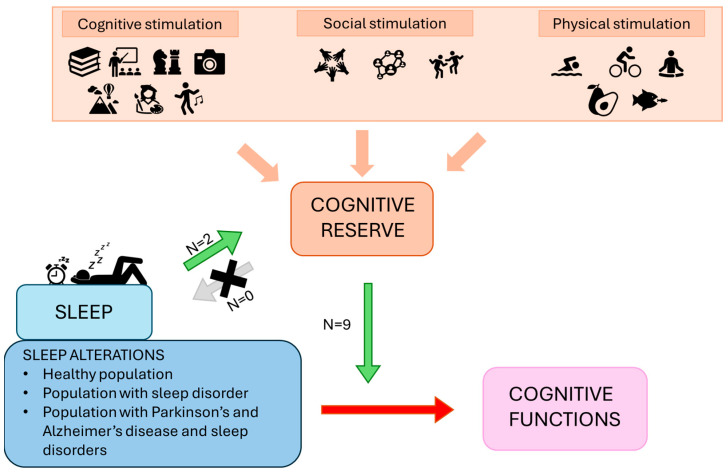
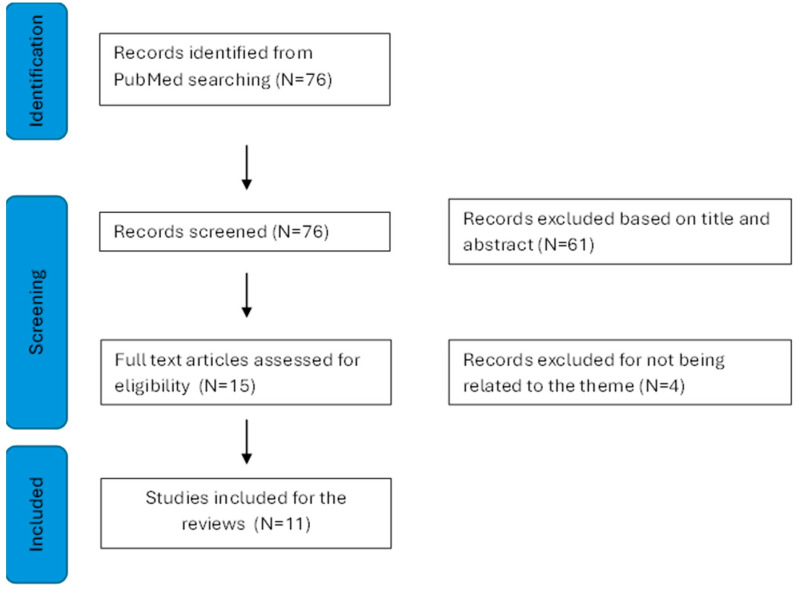
Sleep and brain/cognitive/neural reserve significantly impact well-being and cognition throughout life. This review aims to explore the intricate relationship between such factors, with reference to their effects on human cognitive functions. The specific goal is to understand the bidirectional influence that sleep and reserve exert on each other. Up to 6 February 2024, a methodical search of the literature was conducted using the PubMed database with terms related to brain, cognitive or neural reserve, and healthy or disturbed sleep. Based on the inclusion criteria, 11 articles were selected and analyzed for this review. The articles focus almost exclusively on cognitive reserve, with no explicit connection between sleep and brain or neural reserve. The results evidence sleep's role as a builder of cognitive reserve and cognitive reserve's role as a moderator in the effects of physiological and pathological sleep on cognitive functions. In conclusion, the findings of the present review support the notion that both sleep and cognitive reserve are critical factors in cognitive functioning. Deepening comprehension of the interactions between them is essential for devising strategies to enhance brain health and resilience against age- and pathology-related conditions.
Keywords: cognitive functions; cognitive reserve; humans; neuroprotection; sleep.
Conflict of interest statement
The authors declare no conflicts of interest.
Figures
References
Publication types
LinkOut - more resources
Full Text Sources
