


Effects of a Two-Year Lifestyle Intervention on Intrahepatic Fat Reduction and Renal Health: Mitigation of Inflammation and Oxidative Stress, a Randomized Trial
- PMID: 39061823
- PMCID: PMC11273830
- DOI: 10.3390/antiox13070754
Effects of a Two-Year Lifestyle Intervention on Intrahepatic Fat Reduction and Renal Health: Mitigation of Inflammation and Oxidative Stress, a Randomized Trial
Abstract
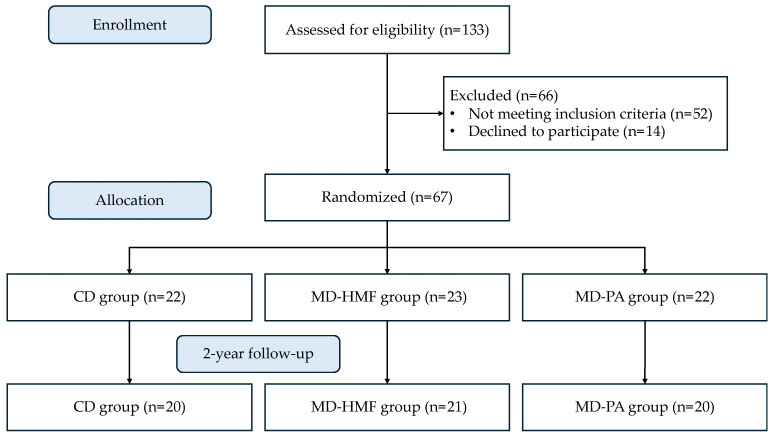
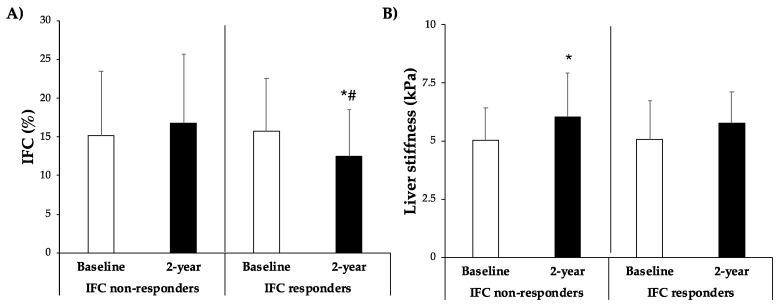
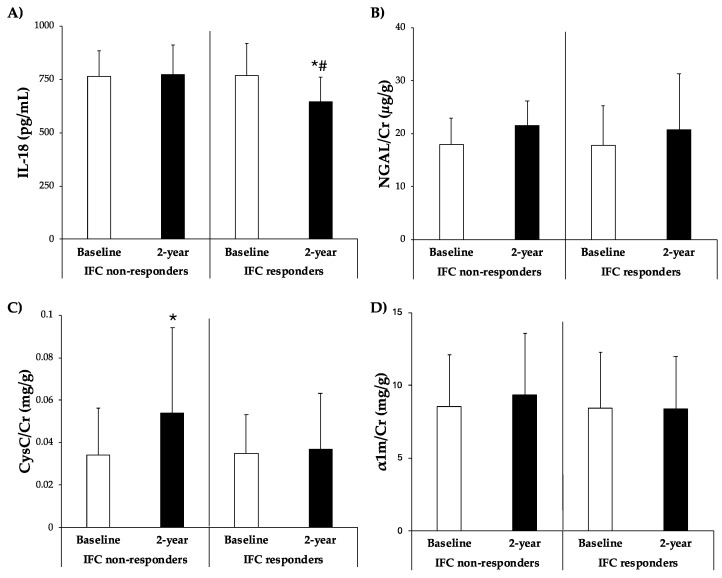
Metabolic-associated fatty liver disease (MAFLD) is the most common chronic liver disease observed in clinical practice worldwide. This disorder has been independently associated with an increased risk of developing chronic kidney disease (CKD). The aim of this study was to evaluate whether a 2-year intervention based on a Mediterranean diet (MedDiet) and physical activity focussed on reducing intrahepatic fat contents (IFC) was associated with a decreased risk of CKD. Forty adults (50% women) residing in Mallorca, aged 48 to 60 years, diagnosed with MAFLD were recruited. Participants were divided into two groups based on whether they improved IFC measured by nuclear magnetic resonance. Anthropometric and clinical parameters improved in responders, including reduced weight, body mass index (BMI), and waist circumference. Only responders showed improvements in lipid profile and liver enzymes. Haematological parameters showed favourable changes in both groups. Oxidative stress and inflammatory biomarkers differed between groups. Responders had lower plasma interleukine-18 (IL-18) levels, but higher erythrocyte malonaldehyde (MDA) levels. Non-responders showed increased erythrocyte catalase and superoxide dismutase activity. After 2 years, non-responders had higher serum creatinine, Modification of Diet in Renal Disease (MDRD), and Chronic Kidney Disease Epidemiology Collaboration (CKD-EPI) levels, while responders showed reductions in these parameters together with uric acid and urine albumin-to-creatinine ratio (UACR). Positive correlations were found between changes in IFC and kidney injury biomarkers, including MDRD and serum creatinine levels. In conclusion, a healthy diet based on the Mediterranean dietary pattern and lifestyle promotes significant improvements in parameters related to cardiovascular, hepatic, and renal health.
Keywords: MAFLD; fatty liver; inflammation; intervention; intrahepatic fat content; lifestyle change; oxidative state; renal dysfunction.
Conflict of interest statement
The authors declare no conflicts of interest.
Figures
References
-
- Eslam M., Newsome P.N., Sarin S.K., Anstee Q.M., Targher G., Romero-Gomez M., Zelber-Sagi S., Wai-Sun Wong V., Dufour J.-F., Schattenberg J.M., et al. A new definition for metabolic dysfunction-associated fatty liver disease: An international expert consensus statement. J. Hepatol. 2020;73:202–209. doi: 10.1016/j.jhep.2020.03.039. - DOI - PubMed
-
- Monserrat-Mesquida M., Quetglas-Llabrés M., Abbate M., Montemayor S., Mascaró C.M., Casares M., Tejada S., Abete I., Zulet M.A., Tur J.A., et al. Oxidative stress and pro-inflammatory status in patients with non-alcoholic fatty liver disease. Antioxidants. 2020;9:759. doi: 10.3390/antiox9080759. - DOI - PMC - PubMed
Grants and funding
LinkOut - more resources
Full Text Sources
Medical
Miscellaneous
