


Pathogenesis of Endometriosis and Endometriosis-Associated Cancers
- PMID: 39062866
- PMCID: PMC11277188
- DOI: 10.3390/ijms25147624
Pathogenesis of Endometriosis and Endometriosis-Associated Cancers
Abstract
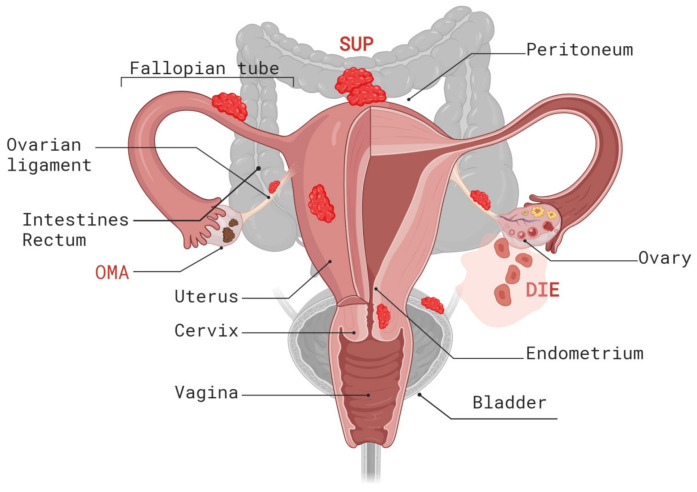
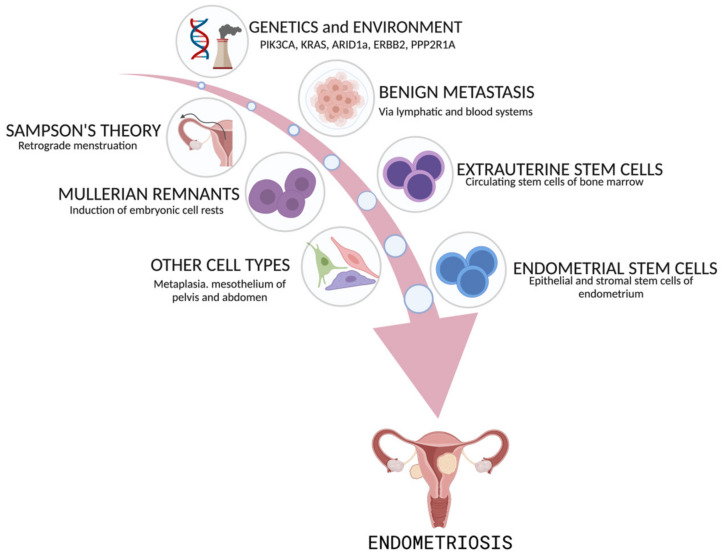
Endometriosis is a hormone-dependent, chronic inflammatory condition that affects 5-10% of reproductive-aged women. It is a complex disorder characterized by the growth of endometrial-like tissue outside the uterus, which can cause chronic pelvic pain and infertility. Despite its prevalence, the underlying molecular mechanisms of this disease remain poorly understood. Current treatment options are limited and focus mainly on suppressing lesion activity rather than eliminating it entirely. Although endometriosis is generally considered a benign condition, substantial evidence suggests that it increases the risk of developing specific subtypes of ovarian cancer. The discovery of cancer driver mutations in endometriotic lesions indicates that endometriosis may share molecular pathways with cancer. Moreover, the application of single-cell and spatial genomics, along with the development of organoid models, has started to illuminate the molecular mechanisms underlying disease etiology. This review aims to summarize the key genetic mutations and alterations that drive the development and progression of endometriosis to malignancy. We also review the significant recent advances in the understanding of the molecular basis of the disorder, as well as novel approaches and in vitro models that offer new avenues for improving our understanding of disease pathology and for developing new targeted therapies.
Keywords: ARID1A; KRAS; PI3K/mTOR; endometriosis; endometriosis-associated cancer; estrogen; inflammation; organoids; ovarian cancer; single-cell RNA sequencing.
Conflict of interest statement
The authors declare no conflicts of interest.
Figures
References
Publication types
MeSH terms
Grants and funding
LinkOut - more resources
Full Text Sources
Medical
Miscellaneous
