Review
. 2024 Jul 13;25(14):7694.
doi: 10.3390/ijms25147694.

Pharmacotherapeutic Considerations on Telomere Biology: The Positive Effect of Pharmacologically Active Substances on Telomere Length

Affiliations
Review

Pharmacotherapeutic Considerations on Telomere Biology: The Positive Effect of Pharmacologically Active Substances on Telomere Length

Miruna-Maria Apetroaei et al. Int J Mol Sci. .

Abstract

Telomeres are part of chromatin structures containing repeated DNA sequences, which function as protective caps at the ends of chromosomes and prevent DNA degradation and recombination, thus ensuring the integrity of the genome. While telomere length (TL) can be genetically inherited, TL shortening has been associated with ageing and multiple xenobiotics and bioactive substances. TL has been characterised as a reliable biomarker for the predisposition to developing chronic pathologies and their progression. This narrative review aims to provide arguments in favour of including TL measurements in a complex prognostic and diagnostic panel of chronic pathologies and the importance of assessing the effect of different pharmacologically active molecules on the biology of telomeres. Medicines used in the management of cardiovascular diseases, diabetes, schizophrenia, hormone replacement therapy at menopause, danazol, melatonin, and probiotics have been studied for their positive protective effects against TL shortening. All these classes of drugs are analysed in the present review, with a particular focus on the molecular mechanisms involved.

Keywords: ageing; anti-senescence drugs; drugs on telomere length; novel biomarker; personalised therapy; pharmacotherapy; pharmacotherapy on telomeres; telomere length.


Conflict of interest statement

The authors declare no conflicts of interest.

Figures
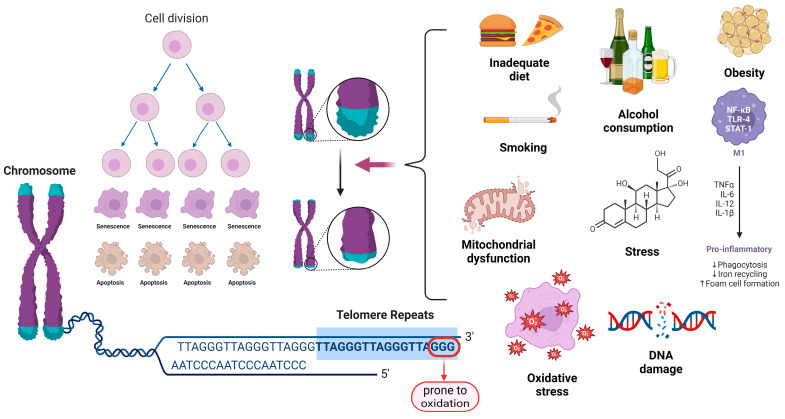
Figure 1
Figure 1
Physiological, lifestyle, and environmental causes contributing to TL shortening. Legend: IL-6—interleukin 6; IL-12—interleukin 12; IL-1β—interleukin 1β; TNFα—tumour necrosis factor alpha; DNA—deoxyribonucleic acid; ↓—decrease; ↑—increase.
Figure 2
Figure 2
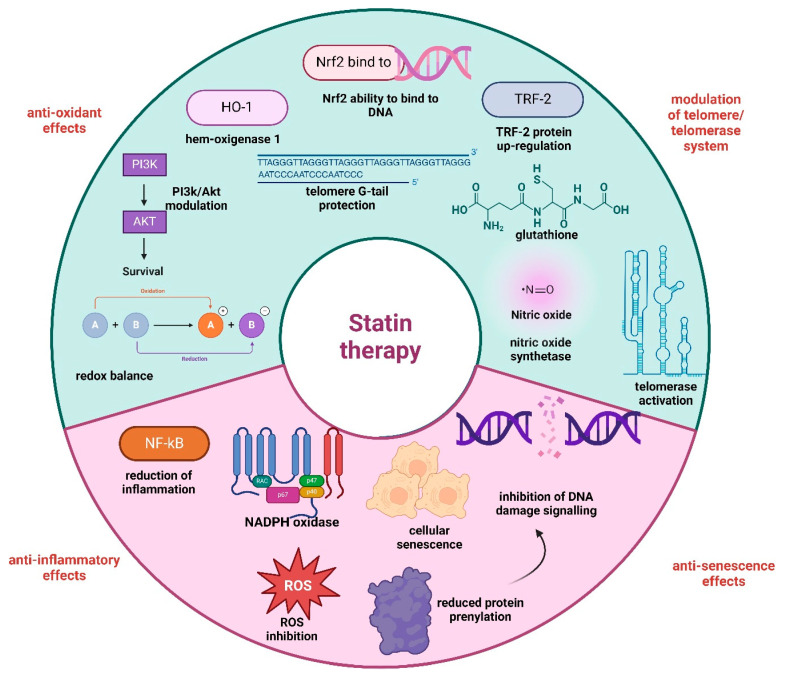
Molecular mechanisms of statin therapy on telomere maintenance. Legend: PI3k/Akt–phosphoinositide 3–kinase/protein kinase B; Nrf2–nuclear factor erythroid 2 related factor 2; TRF-2–telomeric repeat-binding factor 2; NF-kB–nuclear factor kappa-light-chain-enhancer of activated B; NADPH oxidase–nicotinamide adenine dinucleotide phosphate oxidase; ROS–reactive oxygen species; DNA–deoxyribonucleic acid.
Figure 3
Figure 3
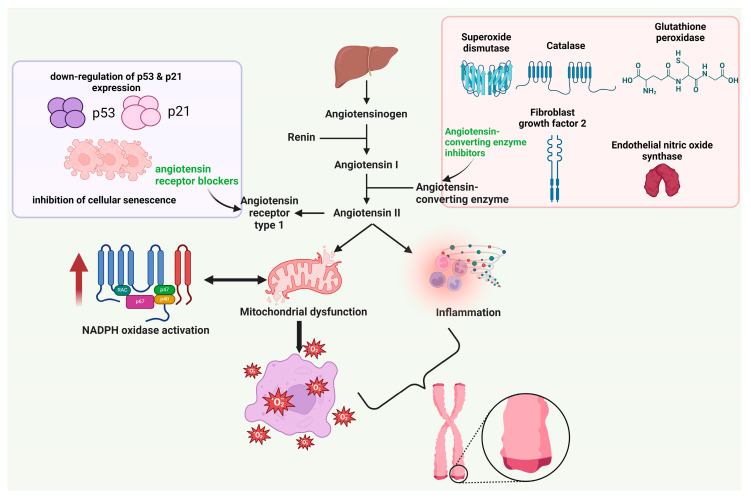
RAS on TL. Legend: ACE—angiotensin-converting enzyme; AT1R—angiotensin II receptor type 1; NADPH oxidase—nicotinamide adenine dinucleotide phosphate oxidase; ARB—angiotensin receptor blockers; ACEi—angiotensin-converting enzyme inhibitors; ↓—decrease, ↑—increase.
Figure 4
Figure 4
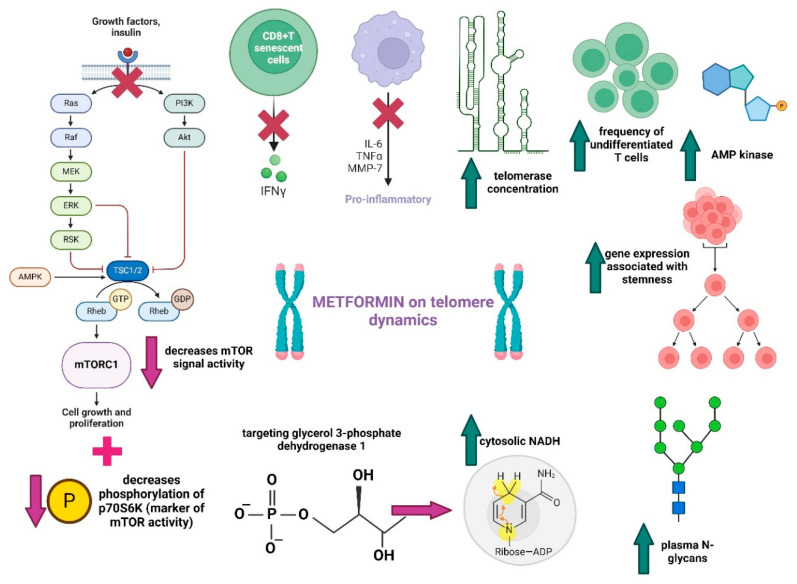
Metformin as a prospective anti-ageing drug. Legend: mTOR—mammalian target of rapamycin; Raf—rapidly accelerated fibrosarcoma; MEK—mitogen-activated and extracellular-signal-regulated kinase; ERK—extracellular-signal regulated kinases; RSK—ribosomal S6 kinase; AMPK—adenosine monophosphate-activated protein kinase; TSC1/2—tuberous sclerosis proteins 1 and 2; Rheb—Ras homolog enriched in brain; mTORC1—mammalian target of rapamycin complex 1; GTP—guanosine triphosphate; P—phosphorylation; p70S6K—p70 S6 kinase; PI3k/Akt—phosphoinositide 3-kinase/protein kinase B; IFNγ—interferon-gamma; IL-6—interleukin 6; TNFα—tumour necrosis factor alpha; MMP-7—matrix metallopeptidase 7; NADH—nicotinamide adenine dinucleotide; ↓—decrease; ↑—increase.
Figure 5
Figure 5
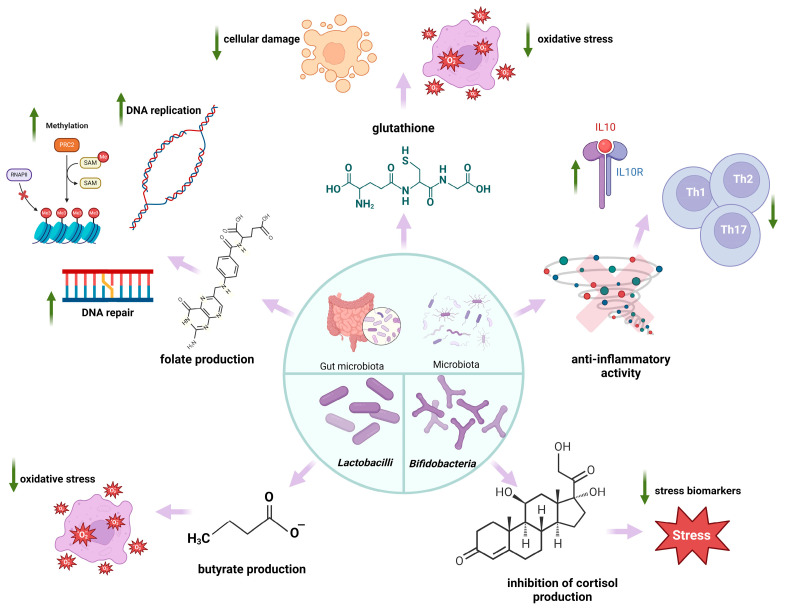
Probiotics on TL dynamics. Legend: IL-10—interleukin 10; IL-10R—interleukin 10 receptor; Th1—Type 1 T helper cells; Th2—Type 2 T helper cells; Th2—Type 2; PRC2—polycomb repressive complex 2; SAMS−adenosyl-methionine; RNAPII—RNA polymerase II; T helper cells; DNA—deoxyribonucleic acid; ↓—decrease; ↑—increase.

References

    1. Revy P., Kannengiesser C., Bertuch A.A. Genetics of Human Telomere Biology Disorders. Nat. Rev. Genet. 2023;24:86–108. doi: 10.1038/s41576-022-00527-z. - DOI - PubMed
    1. Tsatsakis A., Renieri E., Tsoukalas D., Buga A., Sarandi E., Vakonaki E., Fragkiadaki P., Alegakis A., Nikitovic D., Calina D., et al. A Novel Nutraceutical Formulation Increases Telomere Length and Activates Telomerase Activity in Middle-aged Rats. Mol. Med. Rep. 2023;28:232. doi: 10.3892/mmr.2023.13119. - DOI - PMC - PubMed
    1. Tsoukalas D., Buga A., Docea A., Sarandi E., Mitrut R., Renieri E., Spandidos D., Rogoveanu I., Cercelaru L., Niculescu M., et al. Reversal of Brain Aging by Targeting Telomerase: A Nutraceutical Approach. Int. J. Mol. Med. 2021;48:199. doi: 10.3892/ijmm.2021.5032. - DOI - PMC - PubMed
    1. Rossiello F., Jurk D., Passos J.F., d’Adda di Fagagna F. Telomere Dysfunction in Ageing and Age-Related Diseases. Nat. Cell Biol. 2022;24:135–147. doi: 10.1038/s41556-022-00842-x. - DOI - PMC - PubMed
    1. Renieri E., Vakonaki E., Karzi V., Fragkiadaki P., Tsatsakis A.M. Toxicological Risk Assessment and Multi-System Health Impacts from Exposure. Elsevier; Amsterdam, The Netherlands: 2021. Telomere Length: Associations with Nutrients and Xenobiotics; pp. 295–306.

LinkOut - more resources