


Phytochemical Analysis and Antioxidant and Antifungal Activities of Powders, Methanol Extracts, and Essential Oils from Rosmarinus officinalis L. and Thymus ciliatus Desf. Benth
- PMID: 39063231
- PMCID: PMC11276860
- DOI: 10.3390/ijms25147989
Phytochemical Analysis and Antioxidant and Antifungal Activities of Powders, Methanol Extracts, and Essential Oils from Rosmarinus officinalis L. and Thymus ciliatus Desf. Benth
Abstract
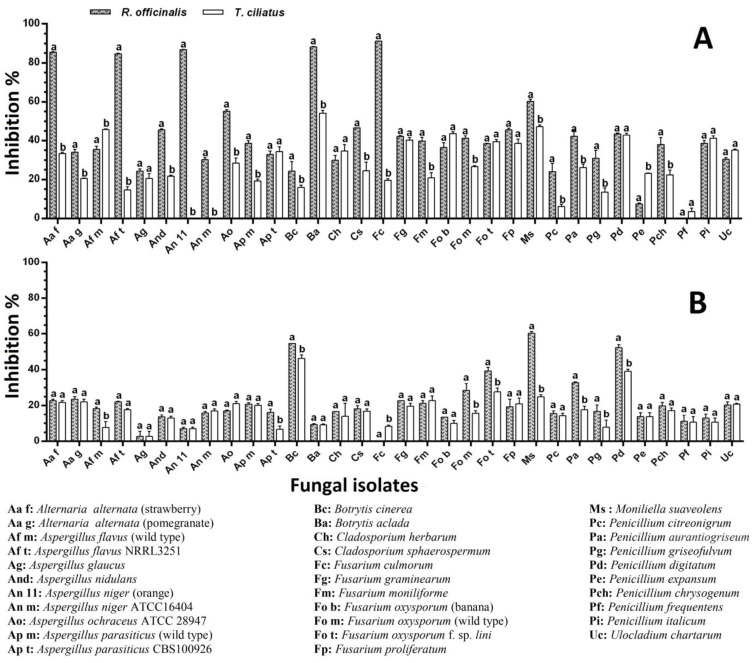
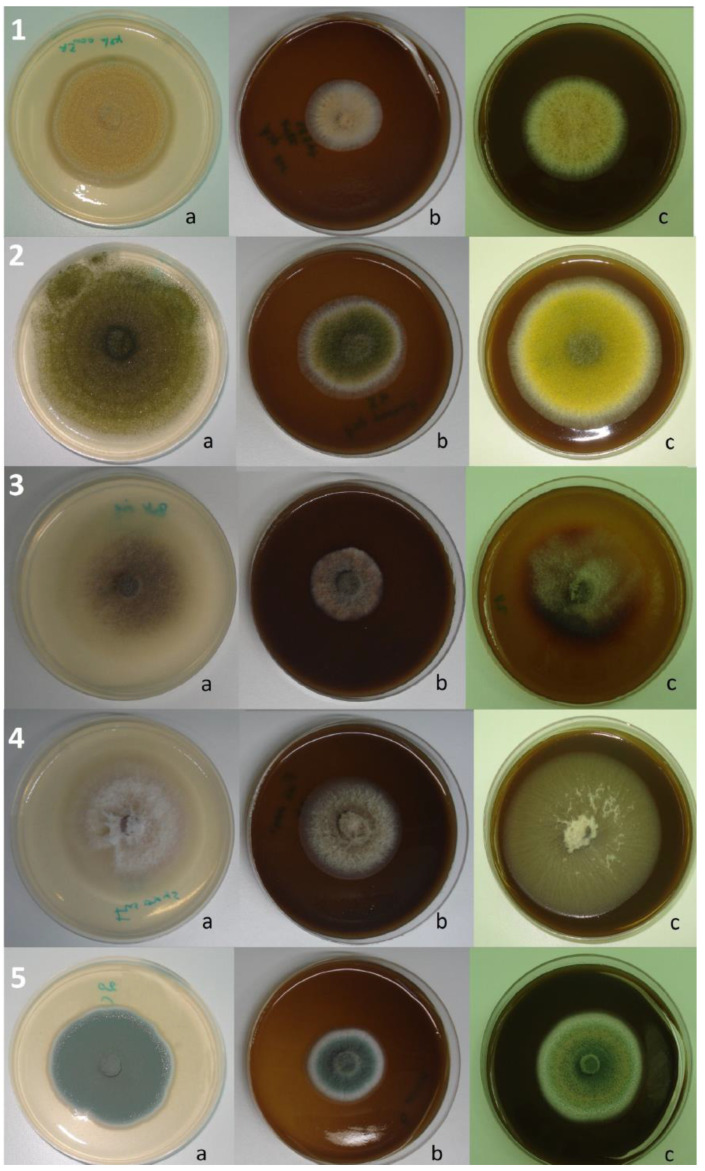
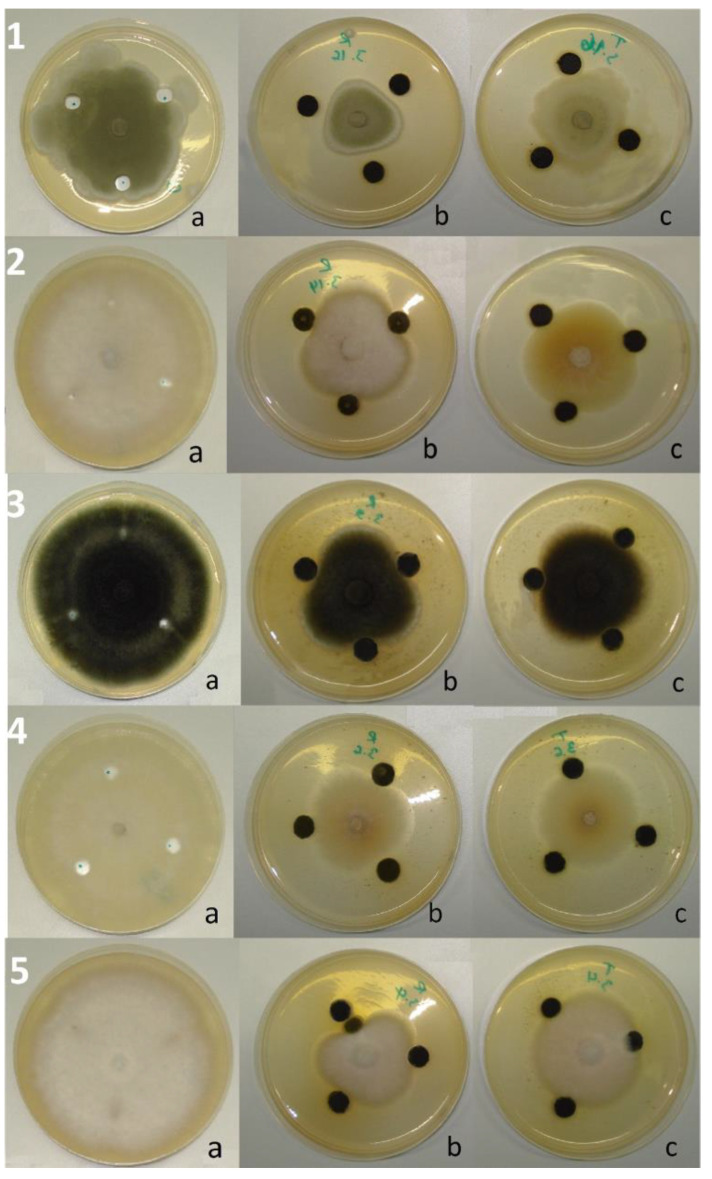
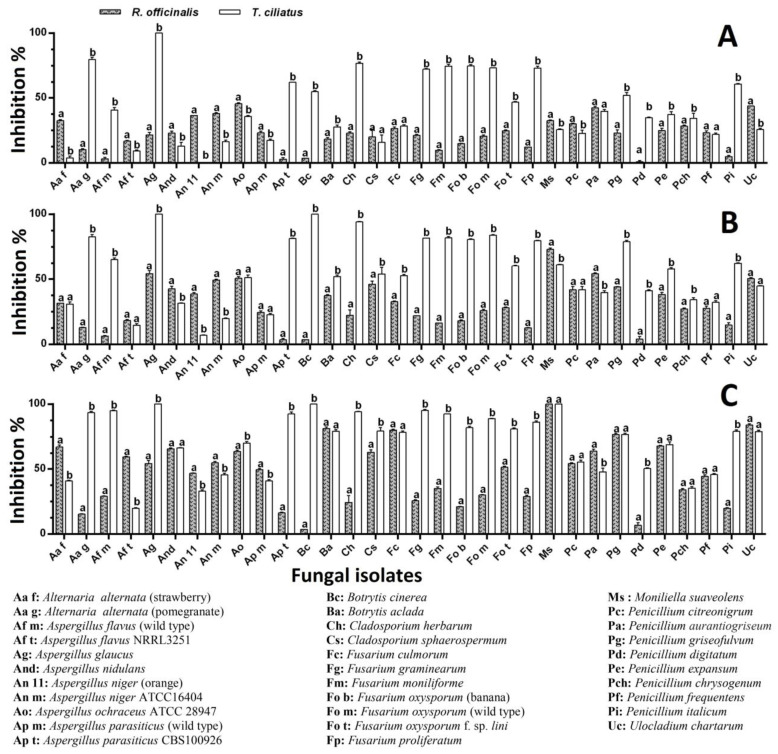
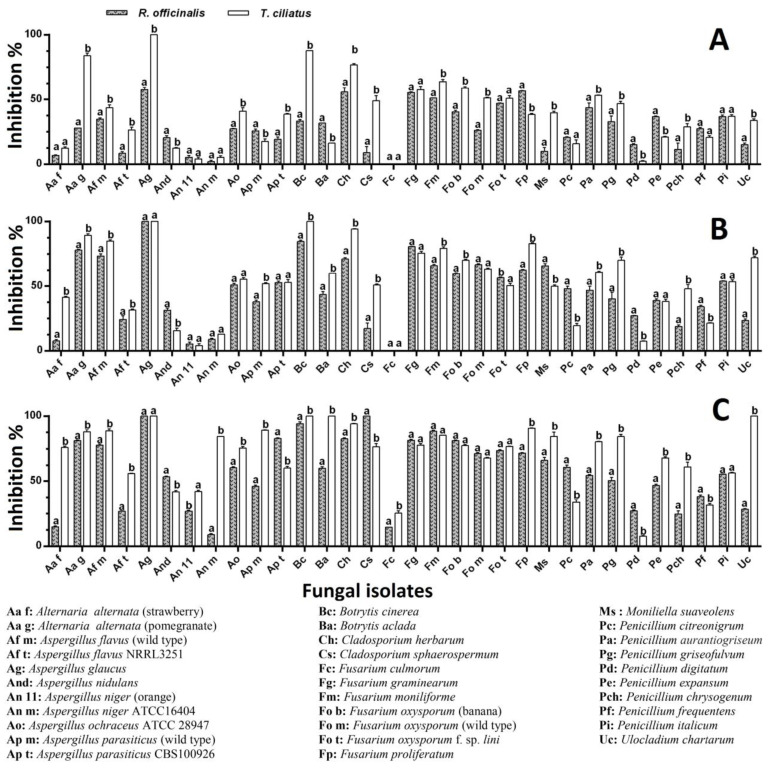
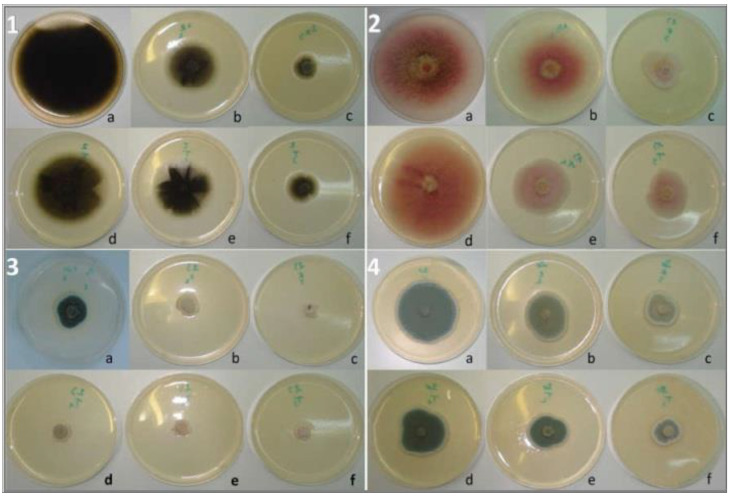
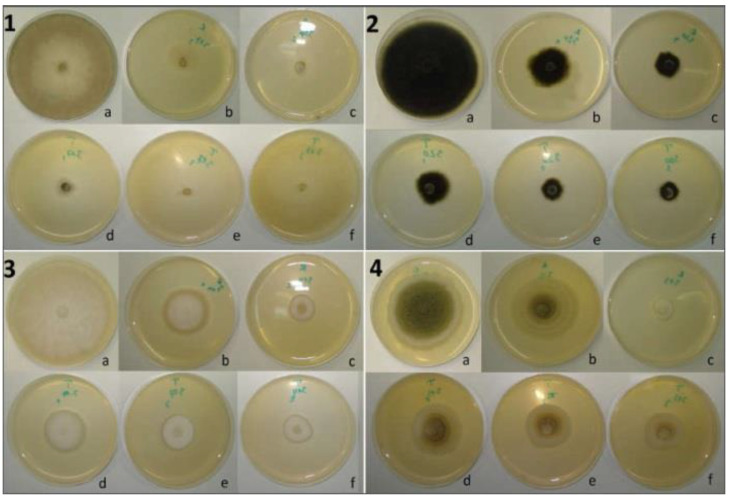
Chemical residues in food pose health risks such as cancer and liver issues. This has driven the search for safer natural alternatives to synthetic fungicides and preservatives. The aim of this study was to characterize the chemical composition of the essential oils (EO), determine the polyphenolic contents, and evaluate the in vitro antioxidant and antifungal activities of methanol extracts (ME), essential oils (EO), and powders from Rosmarinus officinalis L. (rosemary) and Thymus ciliatus (Desf) Benth. (thyme) from the M'sila region, Algeria. The chemical composition of the EOs was determined by GC-MS. R. officinalis EO was composed of 31 components, mainly camphor (41.22%), camphene (18.14%), and α-pinene (17.49%); T. ciliatus EO was composed of 58 components, mainly, in percentage, α-pinene (22.18), myrcene (13.13), β-pinene (7.73), β-caryophyllene (10.21), and germacrene D (9.90). The total phenols and flavonoids were determined spectrophotometrically, and the rosemary ME was found to possess the highest polyphenolic content (127.1 ± 2.40 µg GAE/mg), while the thyme ME had the highest flavonoid content (48.01 ± 0.99 µg QE/mg). The antioxidant activity was assessed using three methods: rosemary ME was the most potent, followed by DPPH (IC50 = 13.43 ± 0.14 µg/mL), β-carotene/linoleic acid (IC50 = 39.01 ± 2.16 μg/mL), and reducing power (EC50 = 15.03 ± 1.43 µg/mL). Antifungal activity was assessed for 32 pathogenic and foodborne fungi. Four methods were applied to the solid medium. Incorporating the powdered plant into the culture medium (at 10%) reduced the fungal growth to greater than 50% in 21.88% and 6.25% of all fungal isolates, for R. officinalis and T. ciliatus, respectively. The ME, applied by the well diffusion method (0.1 g/mL), was less effective. Different concentrations of EO were tested. Incorporating the EO into the culture medium (1500 μL/L) inhibited 50% of the molds to levels of 50 and 75% for R. officinalis and T. ciliatus, respectively, with the complete inhibition of four fungi. Fumigated EO (15 μL) inhibited 65% of the molds to levels of 65 and 81.25% for R. officinalis and T. ciliatus, respectively, with the complete inhibition of five fungi. There was little to no sporulation in conjunction with the inhibition. Our results revealed some of the potential of the studied plants to fight foodborne molds and presented their promising characteristics as a source of alternatives to chemical pesticides and synthetic preservatives. Further studies are needed to find adequate application techniques in the food safety area.
Keywords: Rosmarinus officinalis; Thymus ciliatus; antifungal activity; antioxidant activity; chemical composition; essential oils; polyphenolic contents.
Conflict of interest statement
The authors declare no conflicts of interest.
Figures
References
-
- Prieto J.A., Patiño O.J., Plazas E.A., Pabón L.C., Ávila M.C., Guzmán J.D., Delgado W.A., Cuca L.E. Natural products from plants as potential source agents for controlling Fusarium. In: Nita M., editor. Fungicides—Showcases of Integrated Plant Disease Management from Around the World. InTech; London, UK: 2013. pp. 233–278. - DOI
-
- Deravel J., Krier F., Jacques P. Les biopesticides, compléments et alternatives aux produits phytosanitaires chimiques (synthèse bibliographique) Biotechnol. Agron. Soc. Environ. 2014;18:220–232.
MeSH terms
Substances
LinkOut - more resources
Full Text Sources
Medical
Miscellaneous
