


A Lexicon of Descriptive Sensory Terms for Peas (Pisum sativum L.): A Systematic Review
- PMID: 39063374
- PMCID: PMC11276475
- DOI: 10.3390/foods13142290
A Lexicon of Descriptive Sensory Terms for Peas (Pisum sativum L.): A Systematic Review
Abstract
Background: The popularity of peas (Pisum sativum L.) and pea-derived products is constantly growing globally and is estimated to continue to do so at an average annual rate of 12%. This is partially stimulated by the increase in the consumption of meat analogues and the popularisation of animal-protein-free diets. Peas are considered a great source of protein and dietary fibre and are not depicted as allergenic, making them a good replacement ingredient for other legumes such as soy. Peas are also considered good for the environment, mainly due to their nitrogen fixation capabilities. Despite the above benefits, sensory quality is still a limiting factor in increasing consumer acceptance of peas and pea-derived products.
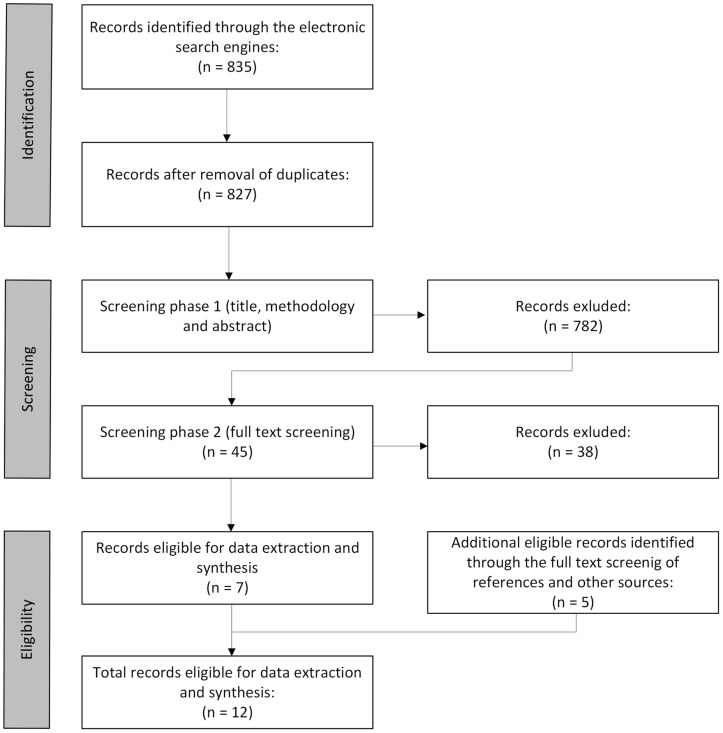
Results: This review has been conducted in accordance with the Joanna Brings Institute's guidance for systematic literature reviews. The search has been conducted on the descriptive sensory terms for Pisum sativum L., where the objectives of the study were to select, present, and analyse the identified descriptive sensory terms for peas found throughout the academic literature. The reviewers have screened 827 articles, of which 12 were eligible for data extraction. Out of the 12 articles, 205 descriptive sensory terms were identified. Those were divided into five categories: smell/odour (27%), flavour (51%), taste (10%), texture (8%), and visual (4%). These included results from sensory analyses by trained/untrained panels and instrumental analyses of texture and of volatile compounds.
Conclusion: The identified descriptive sensory terms for Pisum sativum L. could be used for future descriptive sensory evaluation of peas and other legumes, making the process less time consuming. The full list could be used for the initial sensory panel training and then adapted based on the frequency of the depicted terms that meet the criteria for the developed lexicon.
Keywords: Lathyrus oleraceus Lam; Pisum sativum L.; descriptive sensory terms for peas; peas sensory lexicon; sensory cues of peas; sensory properties of peas.
Conflict of interest statement
The authors declare that there are no known competing financial interest or personal relationships between the authors and the authors of the articles included in the review and the institutions that could have appeared to influence the work reported in this paper.
Figures
References
-
- Ahmed S., Hasan M.M. Legumes: An overview. RADS J. Pharm. Pharm. Sci. 2014;2:34–38.
-
- Albala K. Beans: A History. Bloomsbury Publishing; London, UK: 2017.
-
- Plants of the World Online|Kew Science Plants of the World Online. 2022. [(accessed on 2 November 2023)]. Available online: https://powo.science.kew.org/
-
- Ellison R. Methods of food preparation in Mesopotamia (c. 3000–600 BC) J. Econ. Soc. Hist. Orient. 1984;27:89–98. doi: 10.2307/3631938. - DOI
Publication types
LinkOut - more resources
Full Text Sources
